


Periosteal Osteosarcoma: A Single-Institutional Study of Factors Related to Oncologic Outcomes
- PMID: 30363676
- PMCID: PMC6180962
- DOI: 10.1155/2018/8631237
Periosteal Osteosarcoma: A Single-Institutional Study of Factors Related to Oncologic Outcomes
Abstract
Background: Periosteal osteosarcoma is a rare surface-based variant with a lower propensity to metastasis and better prognosis than conventional osteosarcoma. The literature supporting survival benefit with adjuvant chemotherapy is lacking. Our institutional practice is for chemotherapy to be offered to patients with high-grade disease.
Methods: We conducted a retrospective cohort study of patients managed for periosteal osteosarcoma from 1970 to 2015 analyzing the survival outcomes and assessing for any relationship of survival to patient- or treatment-related factors. 18 patients were included. The study population presented at a mean of 20.8 years and was followed for a mean of 10.7 years. Factors assessed for an association with survival included age, size of tumor, use of chemotherapy, presence of medullary involvement, presence of high-grade disease, local recurrence, and site of disease. Kaplan-Meier survival analysis and Cox proportional hazard regression were performed to calculate the survival rates and to assess for the effect of any factor on survival.
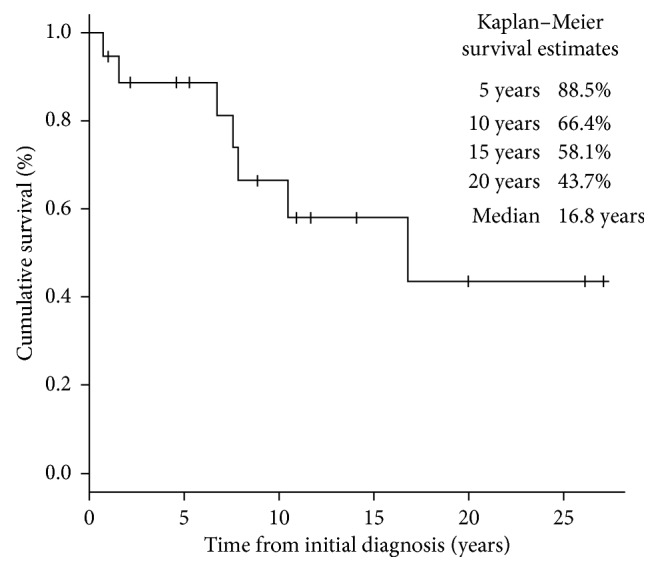
Results: 10-year overall survival rate was 77.1%, and 10-year event-free survival rate was 66.4%. No factor was found to have an association with overall or event-free survival.
Conclusion: These findings add to the available evidence which has failed to find any survival benefit from chemotherapy; patients with this rare disease and their families should be counselled regarding the unclear role of chemotherapy in this rare subtype of osteosarcoma.
Figures



References
-
- Fletcher C. D. M., Bridge J. A., Hogendoorn P. C. W., Mertens F. WHO Classification of Tumours of Soft Tissue and Bone. Lyon, France: IARC Press; 2013.
-
- Campanacci M., Giunti A. Periosteal osteosarcoma. Review of 41 cases, 22 with long-term follow-up. Italian Journal of Orthopaedics and Traumatology. 1976;2(1):23–35. - PubMed
LinkOut - more resources
Full Text Sources
