


Comprehensive, Multidisciplinary Deep Brain Stimulation Screening for Parkinson Patients: No Room for "Short Cuts"
- PMID: 30363983
- PMCID: PMC6183455
- DOI: 10.1002/mdc3.12090
Comprehensive, Multidisciplinary Deep Brain Stimulation Screening for Parkinson Patients: No Room for "Short Cuts"
Abstract
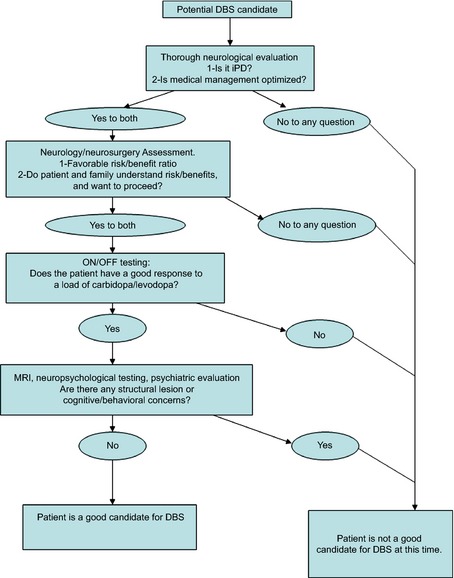
Careful, often cumbersome, screening is a fundamental part of DBS evaluation in Parkinson's disease (PD). It often involves a brain MRI, neuropsychological testing, neurological, surgical, and psychiatric evaluation, and "ON/OFF" motor testing. Given that DBS has now been a standard treatment for advanced PD, with clinicians' improved comfort and confidence in screening and referring patients for DBS, we wondered whether we can now streamline our lengthy evaluation process. We reviewed all PD patients evaluated for DBS at our center between 2006 and 2011 and analyzed the reasons for exclusion and for dropping out despite passing the screening process. A total of 223 PD patients who underwent DBS evaluation had complete charting. Only 131 (58.7%) patients were successfully implanted. Sixty-one (27.3%) patients were excluded after screening because of significant cognitive decline (32.7%), early disease with room for medication adjustment (29.5%), behavioral dysfunction (21.3%), suspected secondary parkinsonism or atypical parkinsonism syndrome (13.1%), PD, but with poor levodopa response (11.4%), unrealistic goals (9.8%), PD with predominant axial symptoms (6.5%), significant comorbidities (6.5%), or abnormal brain imaging (3.2%). In addition, 31 (13.9%) patients were cleared for surgery, but either chose not have it (18 patients), were lost to follow-up (12 patients), or were denied by medical insurance (1 patient). Through careful screening, a significant percentage of surgical candidates continue to be identified as less suitable because of a variety of reasons. This underscores the continued need for a comprehensive, multidisciplinary screening process.
Keywords: Parkinson; deep brain stimulation; screening.
Figures
References
-
- Okun MS, Fernandez HH, Pedraza O, et al. Development and initial validation of a screening tool for Parkinson disease surgical candidates. Neurology 2004;63:161–163. - PubMed
LinkOut - more resources
Full Text Sources
Miscellaneous
