Sleep deprivation and obesity in adults: a brief narrative review
- PMID: 30364557
- PMCID: PMC6196958
- DOI: 10.1136/bmjsem-2018-000392
Sleep deprivation and obesity in adults: a brief narrative review
Abstract
Background/aims: Obesity and sleep deprivation are two epidemics that pervade developed nations. Their rates have been steadily rising worldwide, especially in the USA. This short communication will explore the link between the two conditions and outline the proposed mechanisms behind their relationship.
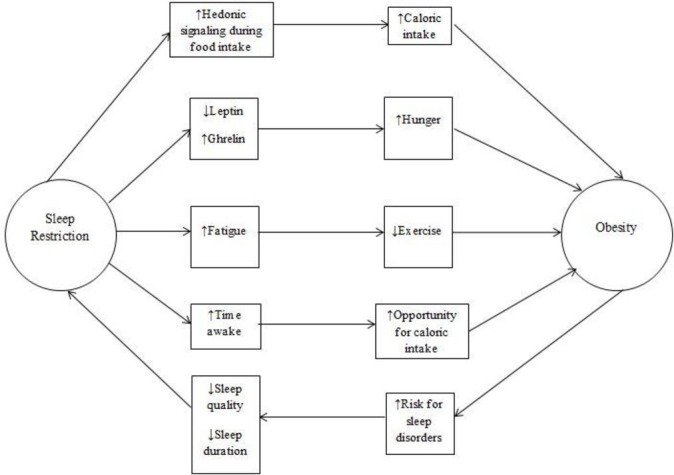
Methods: Studies on the topic of sleep and obesity were reviewed, and findings were used to develop a theoretical model for the biological link between short sleep duration and obesity.
Results: Individuals who regularly slept less than 7 hours per night were more likely to have higher average body mass indexes and develop obesity than those who slept more. Studies showed that experimental sleep restriction was associated with increased levels of ghrelin, salt retention and inflammatory markers as well as decreased levels of leptin and insulin sensitivity.
Conclusions: There may be a link between obesity and sleep deprivation. We recommend further investigations are to elucidate the potential mechanisms.
Keywords: body mass index; fatigue; ghrelin; hunger; leptin.
Conflict of interest statement
Competing interests: None declared.
Figures
References
-
- Liu Y, Wheaton AG, Chapman DP, et al. Prevalence of healthy sleep duration among adults--United States, 2014. MMWR Morb Mortal Wkly Rep 2016;65:137–41. doi:10.15585/mmwr.mm6506a1 - DOI - PubMed