


Techniques of using circulating tumor DNA as a liquid biopsy component in cancer management
- PMID: 30364656
- PMCID: PMC6197739
- DOI: 10.1016/j.csbj.2018.10.002
Techniques of using circulating tumor DNA as a liquid biopsy component in cancer management
Abstract
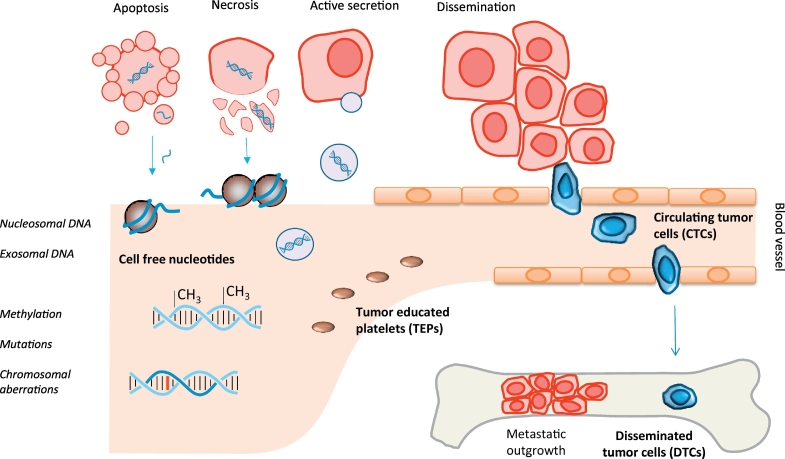
Precision medicine in the clinical management of cancer may be achieved through the diagnostic platform called "liquid biopsy". This method utilizes the detection of biomarkers in blood for prognostic and predictive purposes. One of the latest blood born markers under investigation in the field of liquid biopsy in cancer patients is circulating tumor DNA (ctDNA). ctDNA is released by tumor cells through different mechanisms and can therefore provide information about the genomic make-up of the tumor currently present in the patient. Through longitudinal ctDNA-based liquid biopsies, tumor dynamics may be monitored to predict and assess drug response and/or resistance. However, because ctDNA is highly fragmented and because its concentration can be extremely low in a high background of normal circulating DNA, screening for clinical relevant mutations is challenging. Although significant progress has been made in advancing the detection and analysis of ctDNA in the last few years, the current challenges include standardization and increasing current techniques to single molecule sensitivity in combination with perfect specificity. This review focuses on the potential role of ctDNA in the clinical management of cancer patients, the current technologies that are being employed, and the hurdles that still need to be taken to achieve ctDNA-based liquid biopsy towards precision medicine.
Keywords: Cell-free DNA (cfDNA); Circulating tumor DNA (ctDNA); Liquid biopsy.
Figures
References
Publication types
LinkOut - more resources
Full Text Sources
Other Literature Sources