Review
. 2018 Oct 25;19(11):3330.
doi: 10.3390/ijms19113330.

Hydrogel Cryopreservation System: An Effective Method for Cell Storage

Affiliations
Review

Hydrogel Cryopreservation System: An Effective Method for Cell Storage

Chaocan Zhang et al. Int J Mol Sci. .

Abstract

At present, living cells are widely used in cell transplantation and tissue engineering. Many efforts have been made aiming towards the use of a large number of living cells with high activity and integrated functionality. Currently, cryopreservation has become well-established and is effective for the long-term storage of cells. However, it is still a major challenge to inhibit cell damage, such as from solution injury, ice injury, recrystallization and osmotic injury during the thawing process, and the cytotoxicity of cryoprotectants. Hence, this review focused on different novel gel cryopreservation systems. Natural polymer hydrogel cryopreservation, the synthetic polymer hydrogel cryopreservation system and the supramolecular hydrogel cryopreservation system were presented, respectively. Due to the unique three-dimensional network structure of the hydrogel, these hydrogel cryopreservation systems have the advantages of excellent biocompatibility for natural polymer hydrogel cryopreservation systems, designability for synthetic polymer hydrogel cryopreservation systems, and versatility for supramolecular hydrogel cryopreservation systems. To some extent, the different hydrogel cryopreservation methods can confine ice crystal growth and decrease the change rates of osmotic shock in cell encapsulation systems. It is notable that the cryopreservation of complex cells and tissues is demanded in future clinical research and therapy, and depends on the linkage of different methods.

Keywords: cell storage; cryopreservation; hydrogel; supramolecular gel.


Conflict of interest statement

The authors declare no conflict of interest.

Figures
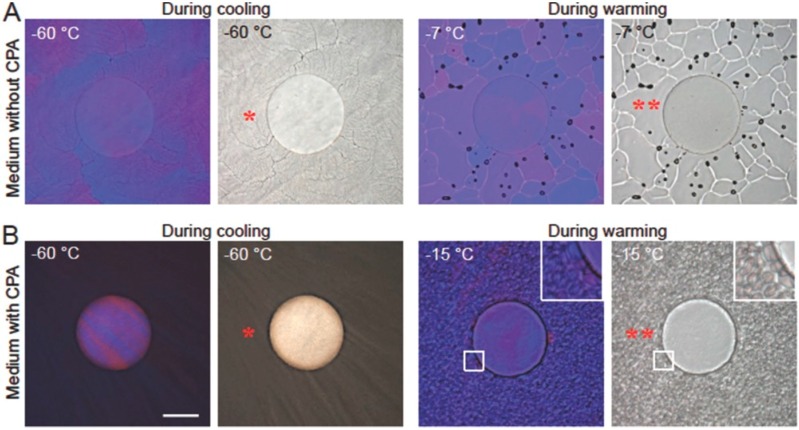
Figure 1
Figure 1
The intracellular ice was hindered in an alginate hydrogel microencapsulation [36]. (A) without CPA; (B) with CPA; CPA: 1.5 mol/L 1,2-propanediol and 0.5 mol/L trehalose; Color image: polarized; grayscale image: phase contrast; Scale bar: 100 μm.
Figure 2
Figure 2
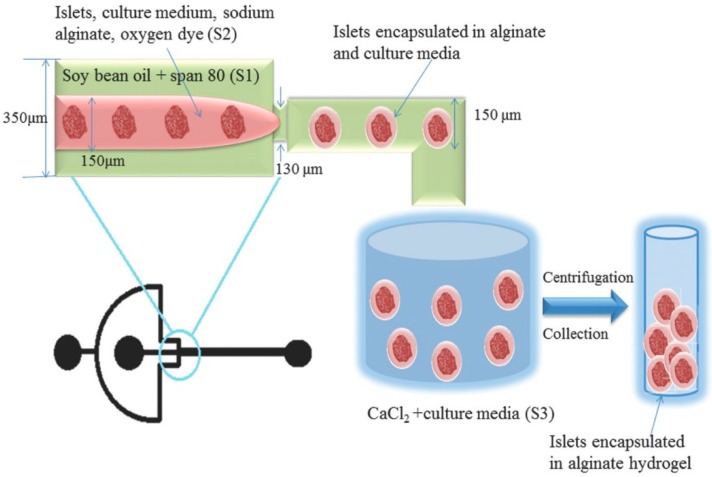
Encapsulation process of rat islets in microchannels [39].
Figure 3
Figure 3
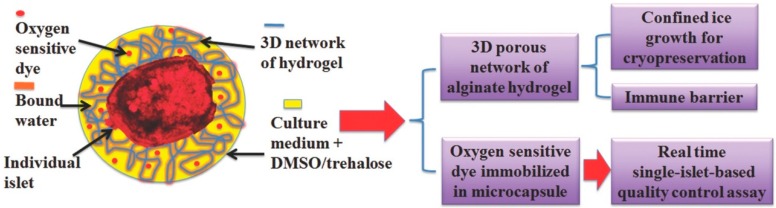
Quality control assay of cryopreserved pancreatic islets in microcapsules [39].
Figure 4
Figure 4
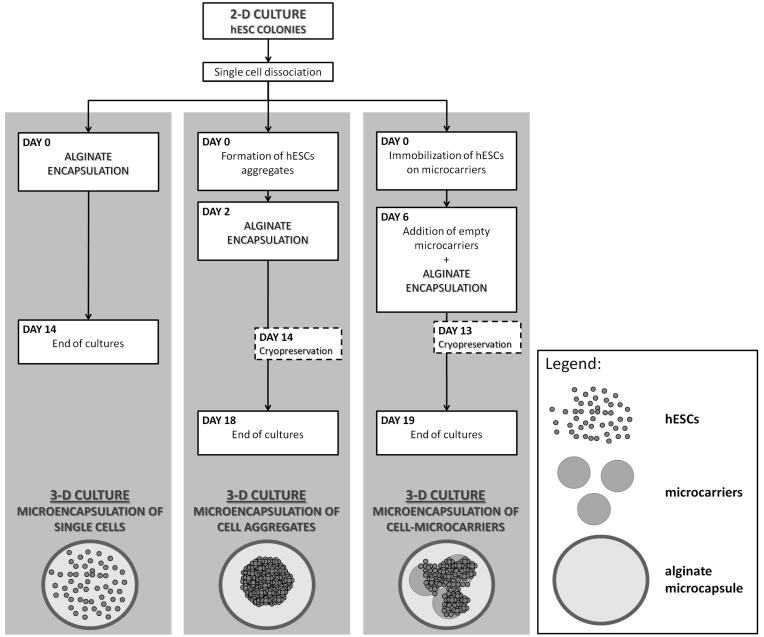
Three microencapsulated 3D culture strategies [40].
Figure 5
Figure 5
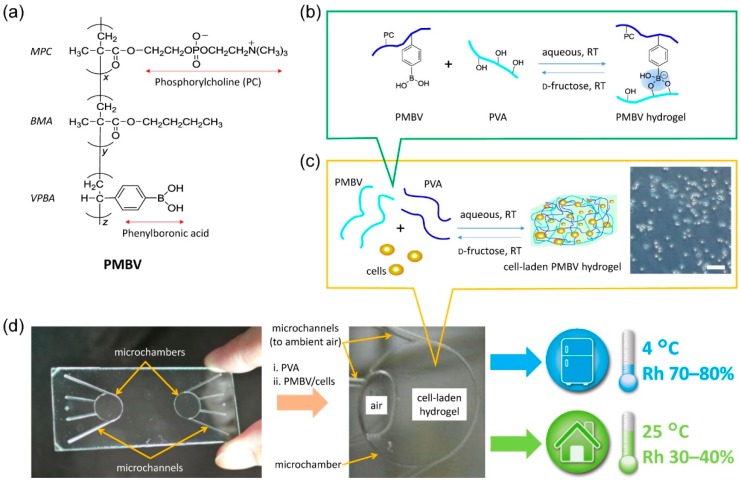
Spontaneous packaging and hypothermic storage of cells in stoichiometric conditions [56]. (a) PMBV hydrogel; (b,c) cross-linking reaction between PMBV and PVA; (d) microchanels in a glass microchip. Scale bar is 100 μm (c). PMBV: poly (2-methacryloyloxyethyl phosphorylcholine-co-n-butyl methacrylate-co-p-vinylphenylboronic acid); MPC: methacryloyloxyethyl phosphorylcholine; BMA: n-butyl methacrylate; VPBA: p-vinylphenylboronic acid; PVA: poly (vinyl alcohol).
Figure 6
Figure 6
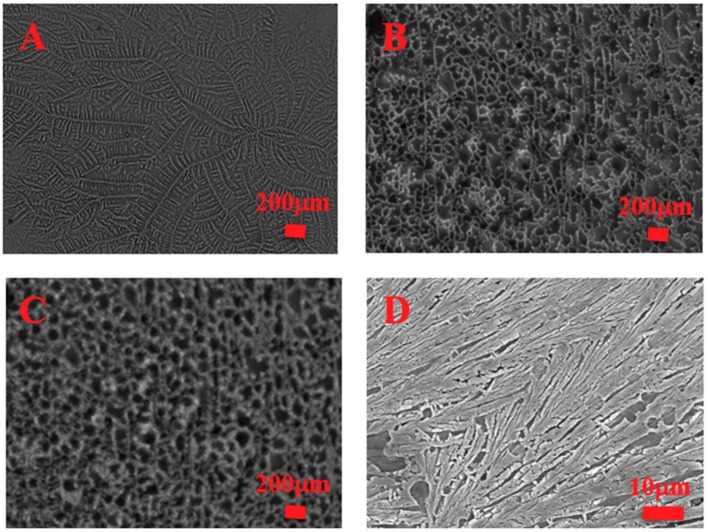
Morphology images of BDTC (Boc-O-dodecyl-l-tyrosine cultured) supramolecular gel in different conditions [6]. (A) 4 °C; (B) −20 °C; (C) −80 °C; (D) FE-SEM image of the BDTC gel.
Figure 7
Figure 7
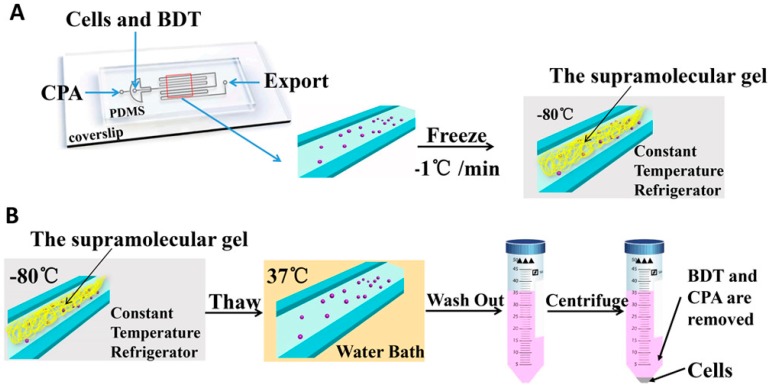
Process of cell freeze–thawing in the microchannel [72]. BDT: Boc-O-dodecyl-L-tyrosine; PDMS: polydimethylsiloxane. (A) cell cryopreservation; (B) cell thawing.

References

    1. Mandal A., Raju S., Viswanathan C. Long-term culture and cryopreservation does not affect the stability and functionality of human embryonic stem cell-derived hepatocyte-like cells. In Vitro Cell. Dev. Biol. Anim. 2016;52:243–251. doi: 10.1007/s11626-015-9956-1. - DOI - PubMed
    1. Mitchell P.D., Ratcliffe E., Hourd P., Williams D.J., Thomas R.J. A quality-by-design approach to risk reduction and optimization for human embryonic stem cell cryopreservation processes. Tissue Eng. Part C Methods. 2014;20:941–950. doi: 10.1089/ten.tec.2013.0595. - DOI - PubMed
    1. Lin P.-Y., Yang Y.-C., Hung S.-H., Lee S.-Y., Lee M.-S., Chu I.M., Hwang S.-M. Cryopreservation of human embryonic stem cells by a programmed freezer with an oscillating magnetic field. Cryobiology. 2013;66:256–260. doi: 10.1016/j.cryobiol.2013.02.061. - DOI - PubMed
    1. Nandi S., Whyte J., Taylor L., Sherman A., Nair V., Kaiser P., McGrew M.J. Cryopreservation of specialized chicken lines using cultured primordial germ cells. Poult. Sci. 2016;95:1905–1911. doi: 10.3382/ps/pew133. - DOI - PMC - PubMed
    1. Ha S.-J., Kim B.-G., Lee Y.-A., Kim Y.-H., Kim B.-J., Jung S.-E., Pang M.-G., Ryu B.-Y. Effect of antioxidants and apoptosis inhibitors on cryopreservation of murine germ cells enriched for spermatogonial stem cells. PLoS ONE. 2016;11:e0161372. doi: 10.1371/journal.pone.0161372. - DOI - PMC - PubMed

LinkOut - more resources