


Deacetylation of serine hydroxymethyl-transferase 2 by SIRT3 promotes colorectal carcinogenesis
- PMID: 30367038
- PMCID: PMC6203763
- DOI: 10.1038/s41467-018-06812-y
Deacetylation of serine hydroxymethyl-transferase 2 by SIRT3 promotes colorectal carcinogenesis
Erratum in
-
Publisher Correction: Deacetylation of serine hydroxymethyl-transferase 2 by SIRT3 promotes colorectal carcinogenesis.Nat Commun. 2019 Feb 12;10(1):774. doi: 10.1038/s41467-019-08681-5. Nat Commun. 2019. PMID: 30755608 Free PMC article.
Abstract
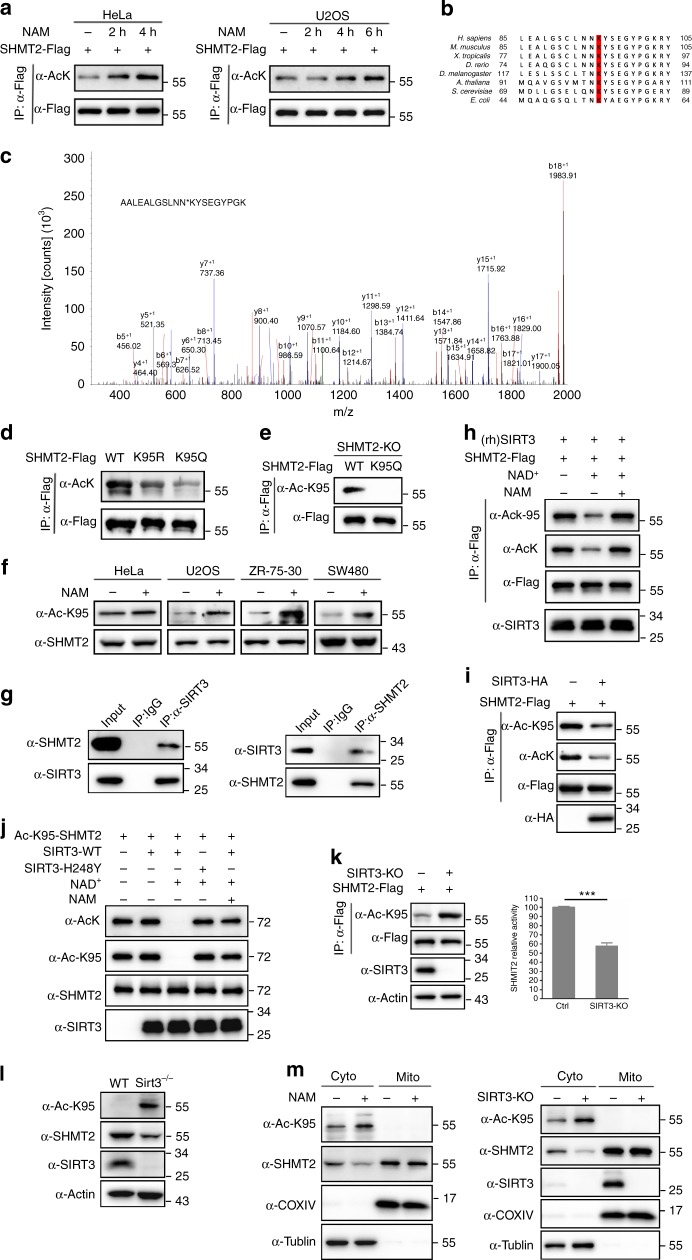
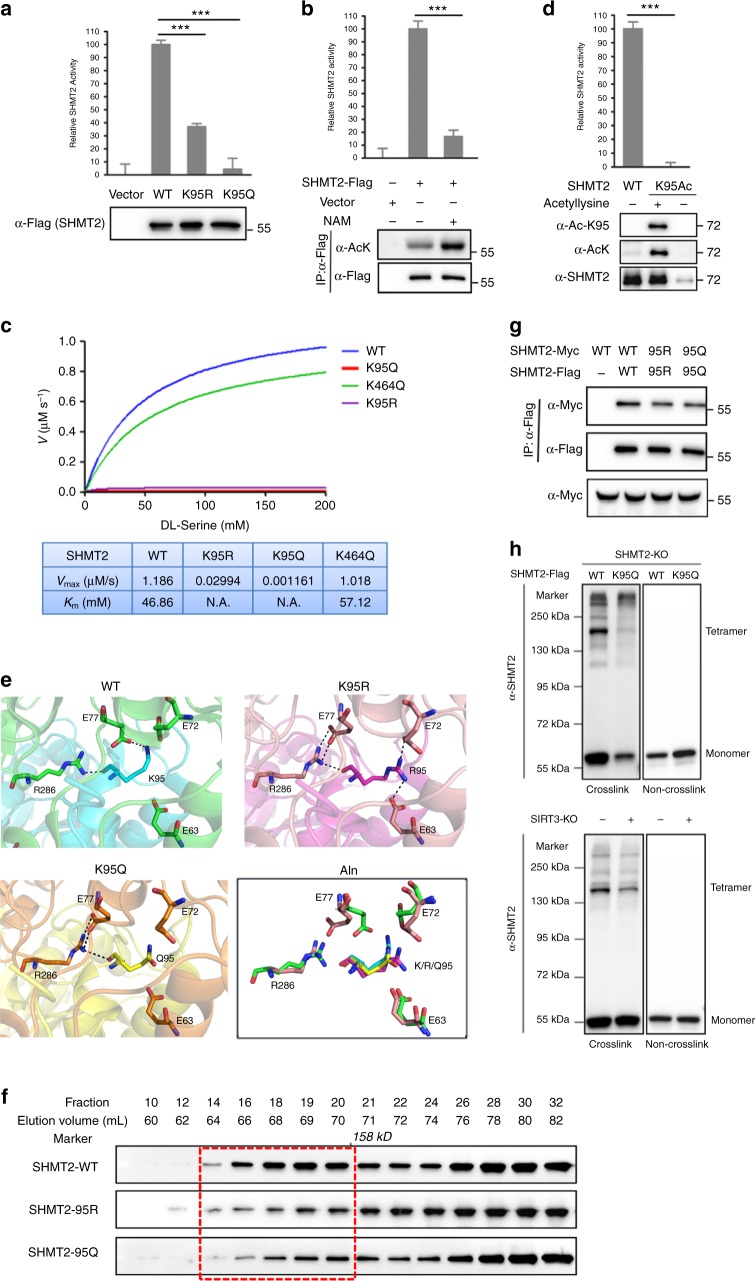
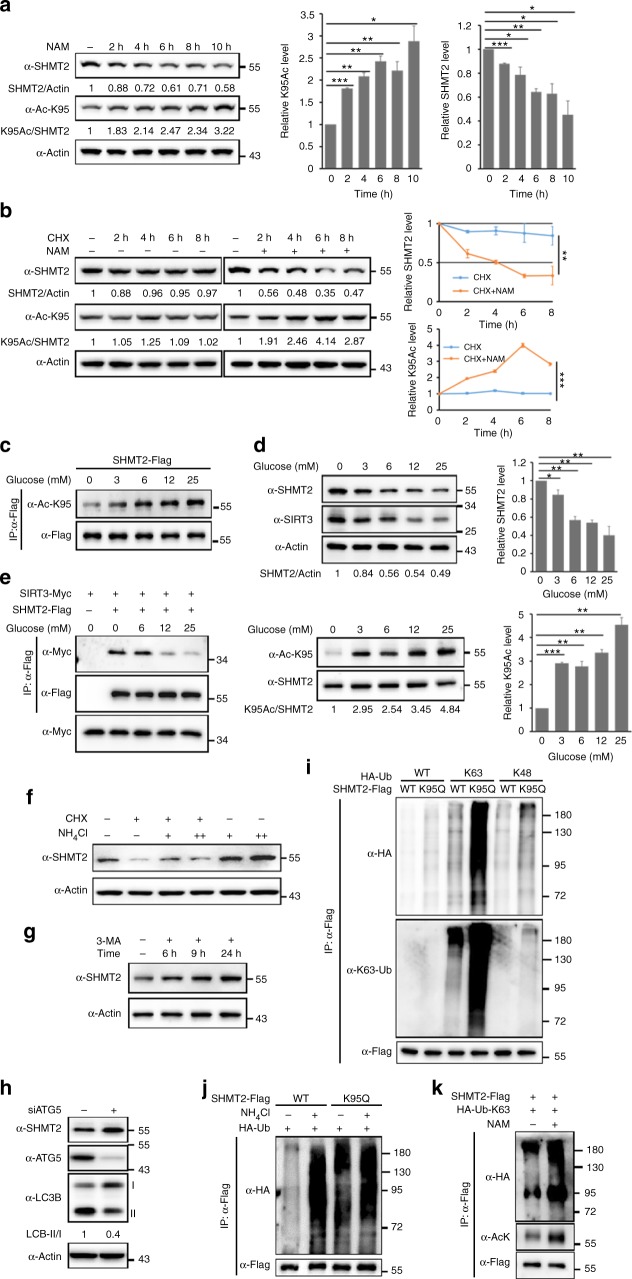
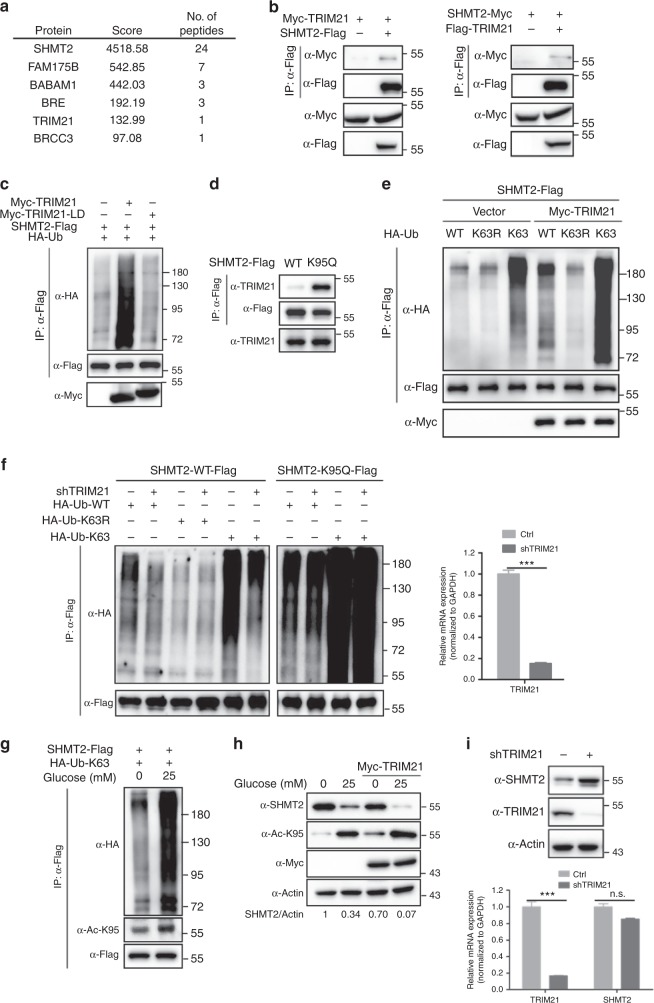
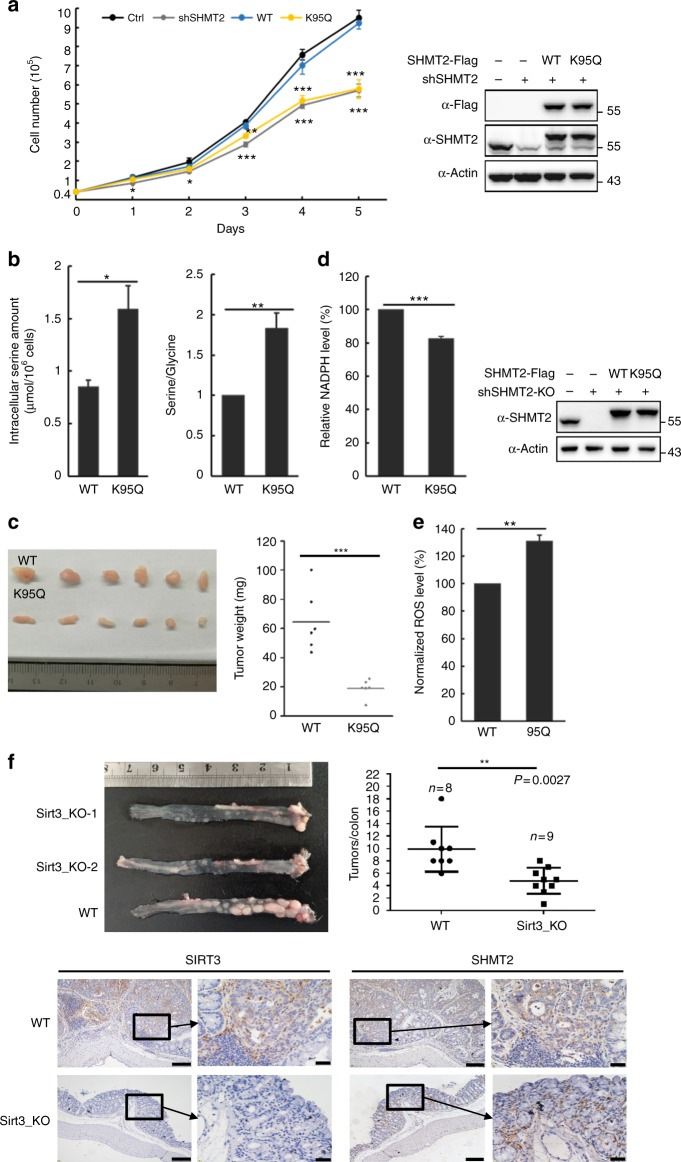
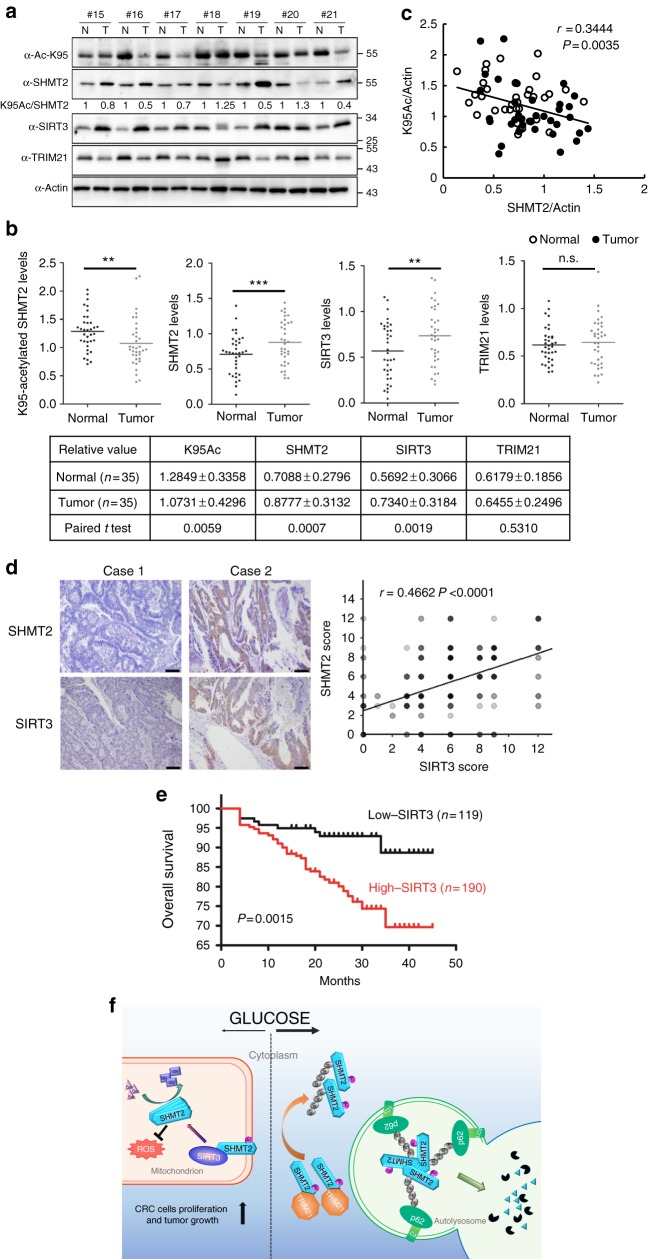
The conversion of serine and glycine that is accomplished by serine hydroxymethyltransferase 2 (SHMT2) in mitochondria is significantly upregulated in various cancers to support cancer cell proliferation. In this study, we observed that SHMT2 is acetylated at K95 in colorectal cancer (CRC) cells. SIRT3, the major deacetylase in mitochondria, is responsible for SHMT2 deacetylation. SHMT2-K95-Ac disrupts its functional tetramer structure and inhibits its enzymatic activity. SHMT2-K95-Ac also promotes its degradation via the K63-ubiquitin-lysosome pathway in a glucose-dependent manner. TRIM21 acts as an E3 ubiquitin ligase for SHMT2. SHMT2-K95-Ac decreases CRC cell proliferation and tumor growth in vivo through attenuation of serine consumption and reduction in NADPH levels. Finally, SHMT2-K95-Ac is significantly decreased in human CRC samples and is inversely associated with increased SIRT3 expression, which is correlated with poorer postoperative overall survival. Our study reveals the unknown mechanism of SHMT2 regulation by acetylation which is involved in colorectal carcinogenesis.
Conflict of interest statement
The authors declare no competing interests.
Figures
References
Publication types
MeSH terms
Substances
LinkOut - more resources
Full Text Sources
Medical
Molecular Biology Databases
