


Surveillance of CKD epidemiology in the US - a joint analysis of NHANES and KEEP
- PMID: 30367154
- PMCID: PMC6203800
- DOI: 10.1038/s41598-018-34233-w
Surveillance of CKD epidemiology in the US - a joint analysis of NHANES and KEEP
Abstract
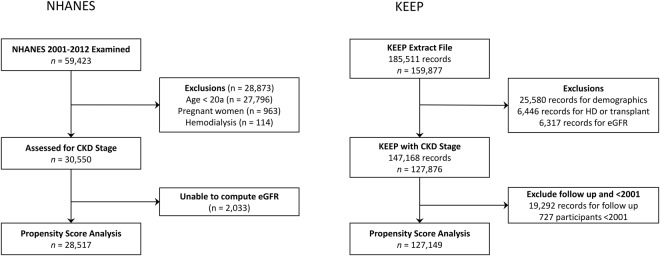
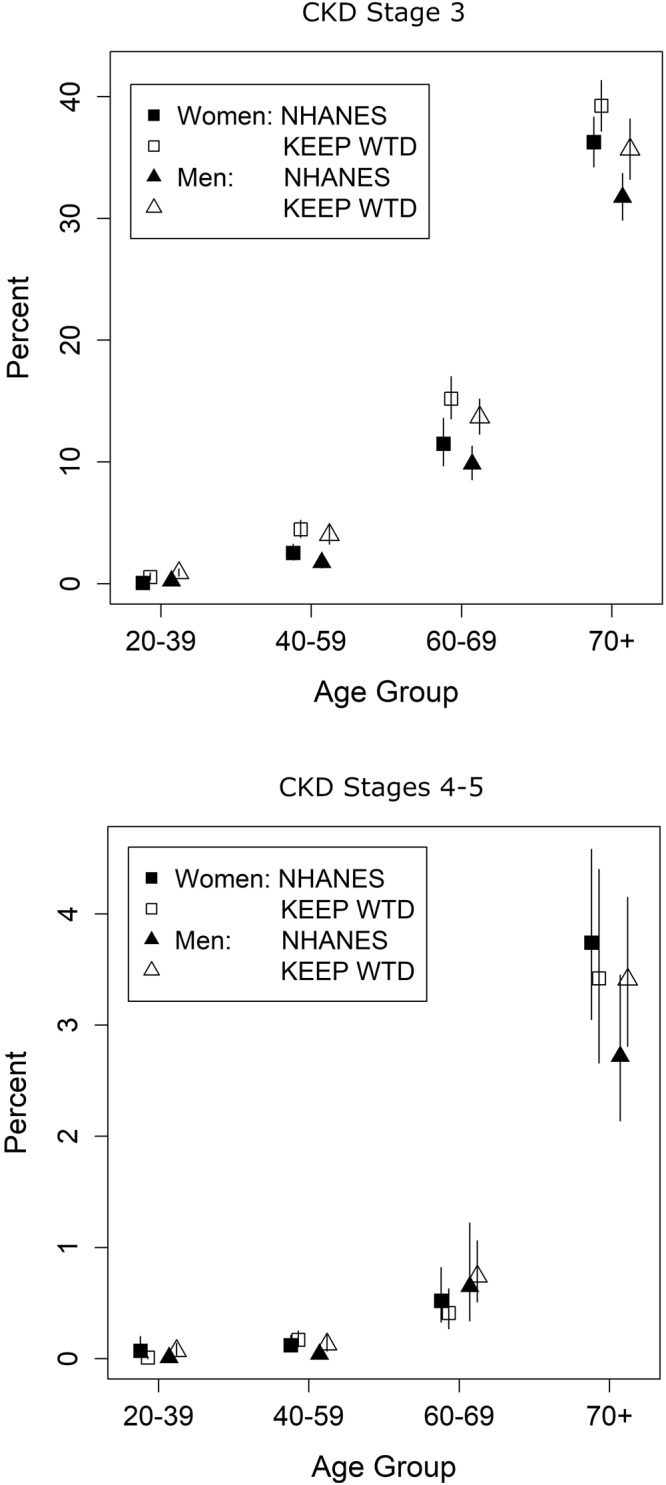
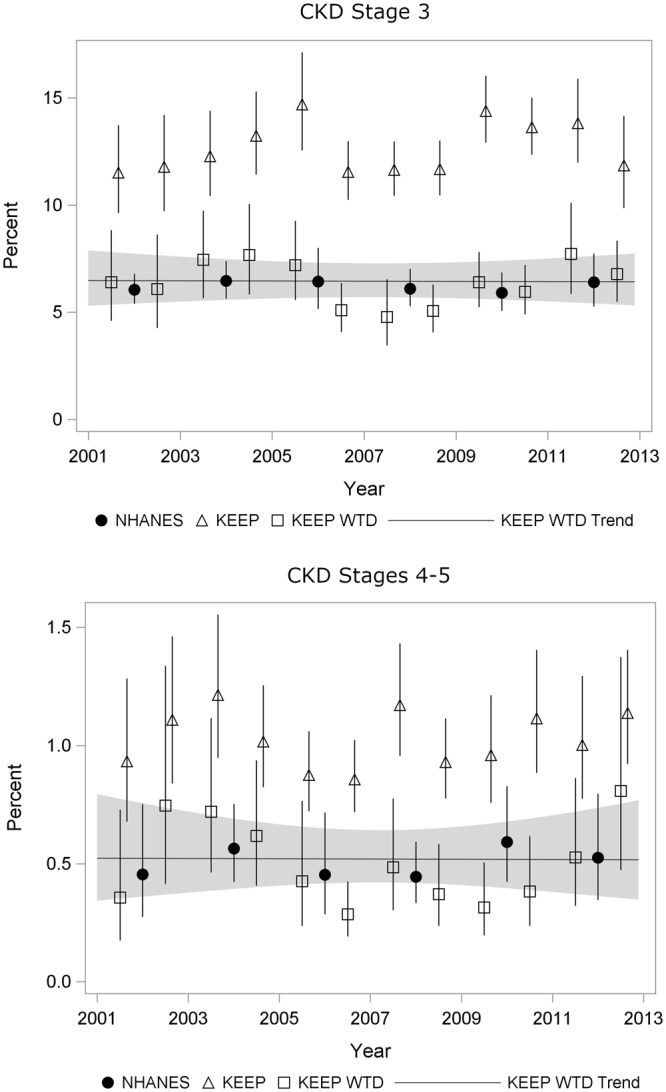
Chronic Kidney Disease (CKD), is highly prevalent in the United States. Epidemiological systems for surveillance of CKD rely on data that are based solely on the NHANES survey, which does not include many patients with the most severe and less frequent forms of CKD. We investigated the feasibility of estimating CKD prevalence from the large-scale community disease detection Kidney Early Evaluation and Program (KEEP, n = 127,149). We adopted methodologies from the field of web surveys to address the self-selection bias inherent in KEEP. Primary outcomes studied were CKD Stage 3-5 (estimated glomerular filtration rate [eGFR] <60 mL/min/1.73 m2, and CKD Stage 4-5 (eGFR <30 mL/min/1.73 m2). The unweighted prevalence of Stage 4-5 CKD was higher in KEEP (1.00%, 95%CI: 0.94-1.05%) than in NHANES (0.51%, 95% CI: 0.43-0.59%). Application of a selection model that used variables related to demographics, recruitment and socio-economic factors resulted in estimates similar to NHANES (0.55%, 95% CI: 0.50-0.60%). Weighted prevalence of Stages 3-5 CKD in KEEP was 6.45% (95% CI: 5.70-7.28%) compared to 6.73% (95% CI: 6.30-7.19%) for NHANES. Application of methodologies that address the self-selection bias in the KEEP program may allow the use of this large, geographically diverse dataset for CKD surveillance.
Conflict of interest statement
The authors declare no competing interests.
Figures
References
-
- 2015 USRDS Annual Data Report. Available at, https://www.usrds.org/2015/view/Default.aspx. (Accessed: 14th July 2016).
-
- Chronic Kidney Disease (CKD) Surveillance Project. Available at, https://nccd.cdc.gov/ckd/. (Accessed: October 18th 2018).
Publication types
MeSH terms
LinkOut - more resources
Full Text Sources
Medical
Research Materials
Miscellaneous
