


Drought stress enhances nutritional and bioactive compounds, phenolic acids and antioxidant capacity of Amaranthus leafy vegetable
- PMID: 30367616
- PMCID: PMC6203965
- DOI: 10.1186/s12870-018-1484-1
Drought stress enhances nutritional and bioactive compounds, phenolic acids and antioxidant capacity of Amaranthus leafy vegetable
Abstract
Background: Bioactive compounds, vitamins, phenolic acids, flavonoids of A. tricolor are the sources of natural antioxidant that had a great importance for the food industry as these detoxify ROS in the human body. These natural antioxidants protect human from many diseases such as cancer, arthritis, emphysema, retinopathy, neuro-degenerative cardiovascular diseases, atherosclerosis and cataracts. Moreover, previous literature has shown that drought stress elevated bioactive compounds, vitamins, phenolics, flavonoids and antioxidant activity in many leafy vegetables. Hence, we study the nutritional and bioactive compounds, phenolic acids, flavonoids and antioxidant capacity of amaranth under drought stress for evaluation of the significant contribution of these compounds in the human diet.
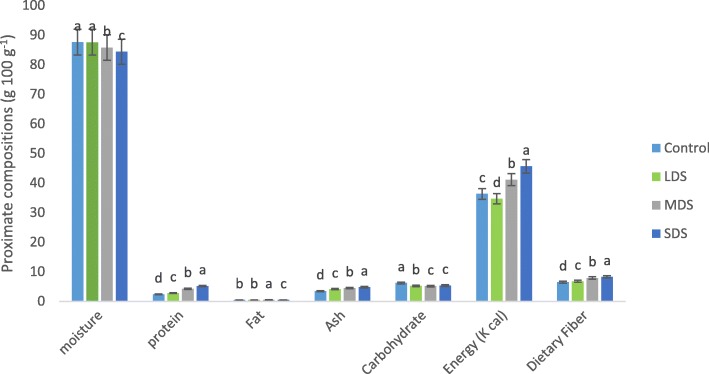
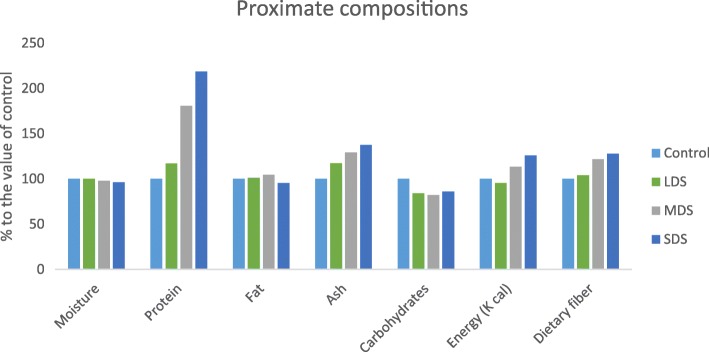
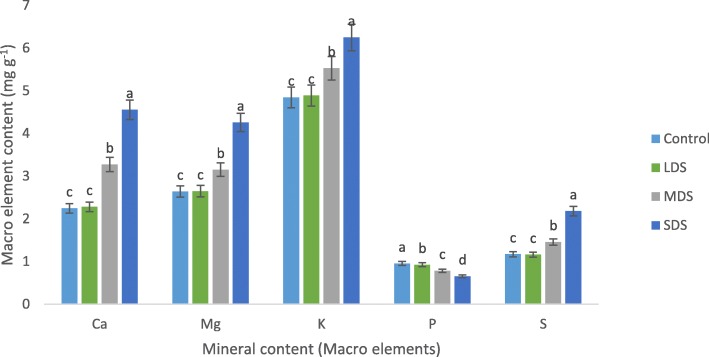
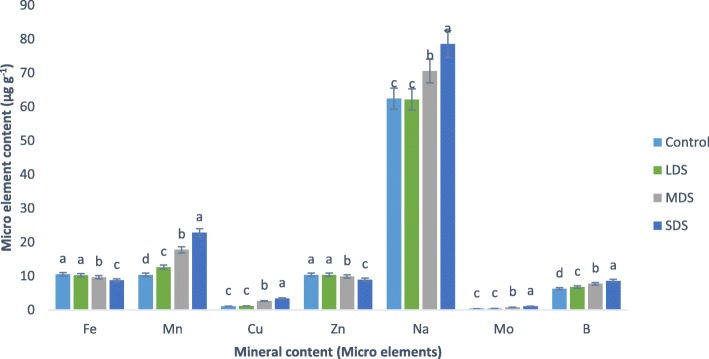
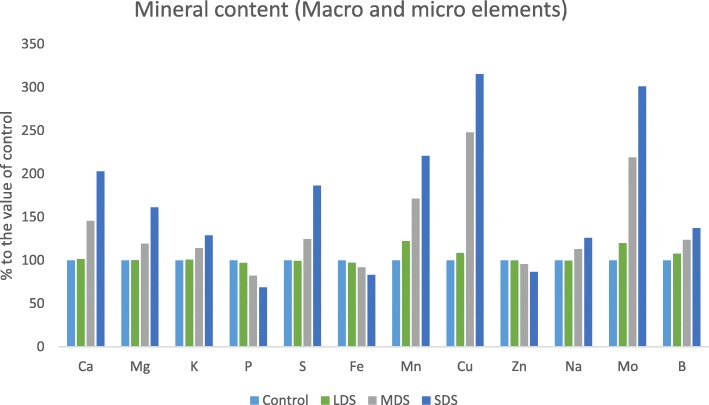
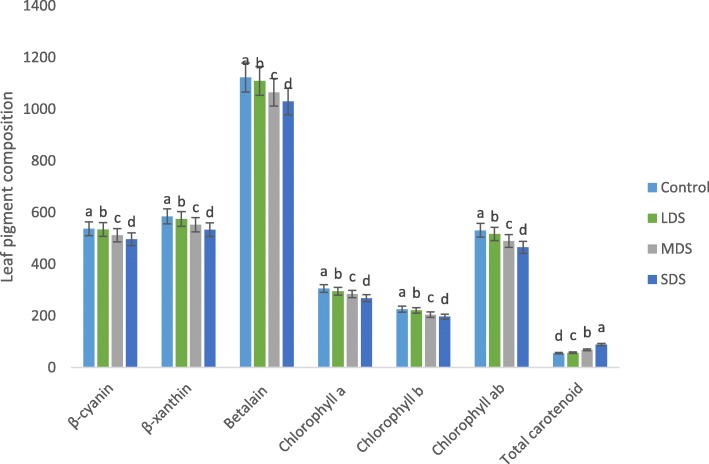
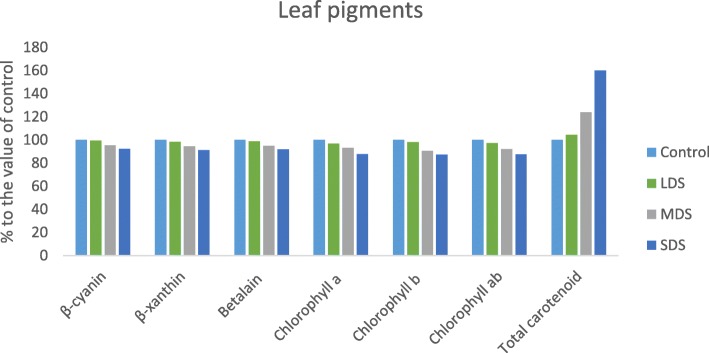
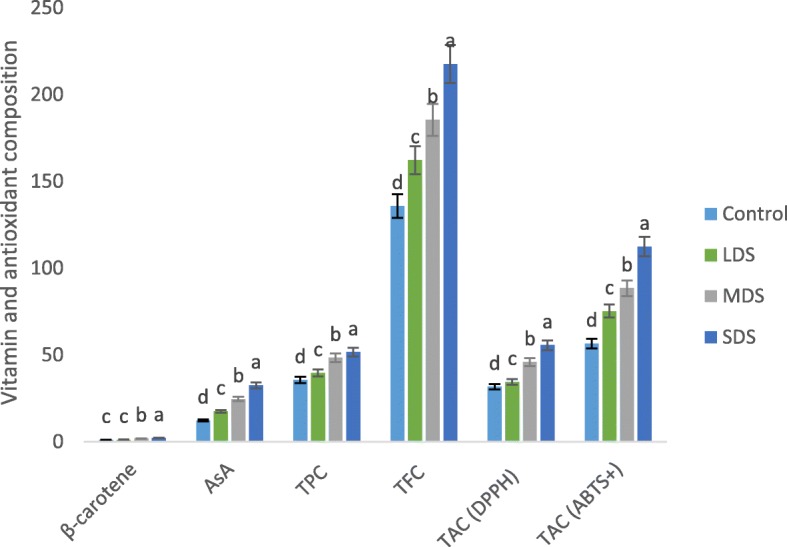
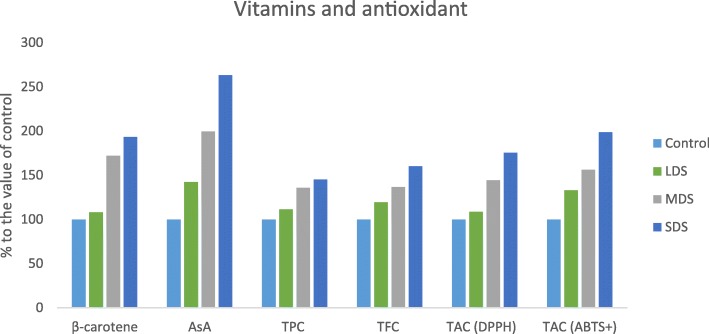
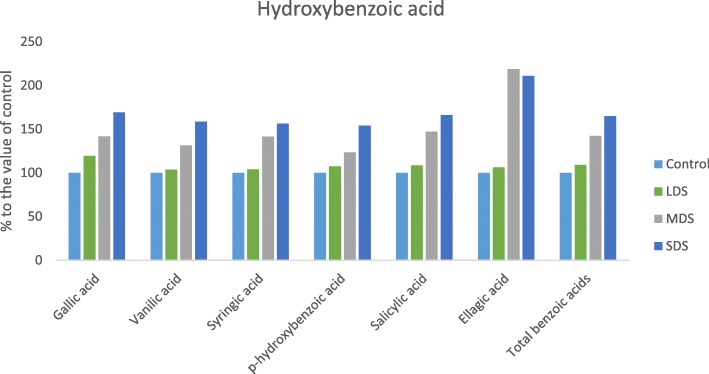
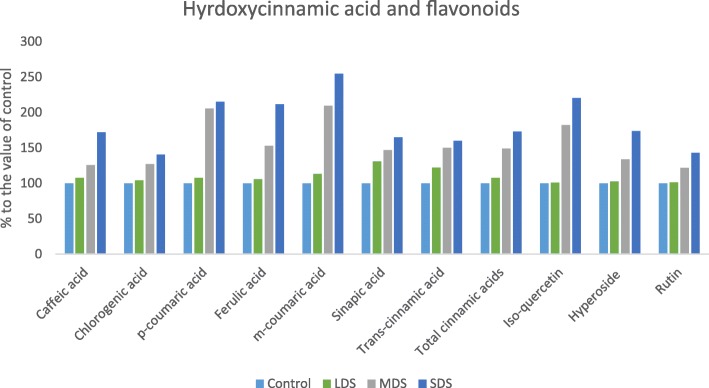
Results: The genotype VA3 was assessed at four drought stress levels that significantly affected nutritional and bioactive compounds, phenolic acids, flavonoids and antioxidant capacity. Protein, ash, energy, dietary fiber, Ca, K, Cu, S, Mg, Mn, Mo, Na, B content, total carotenoids, TFC, vitamin C, TPC, TAC (DPPH), betacarotene, TAC (ABTS+), sixteen phenolic acids and flavonoids were remarkably increased with the severity of drought stress. At moderate and severe drought stress conditions, the increments of all these components were more preponderant. Trans-cinnamic acid was newly identified phenolic acid in A. tricolor. Salicylic acid, vanilic acid, gallic acid, chlorogenic acid, Trans-cinnamic acid, rutin, isoquercetin, m-coumaric acid and p-hydroxybenzoic acid were the most abundant phenolic compounds in this genotype.
Conclusions: In A. tricolor, drought stress enhanced the quantitative and qualitative improvement of nutritional and bioactive compounds, phenolic acids, flavonoids and antioxidants. Hence, farmers of semi-arid and dry areas of the world could be able to grow amaranth as a substitute crop.
Keywords: ABTS+; Amaranthus tricolor; Antioxidant activity; DPPH; Drought; Flavonoids; HPLC-UV; LC-MS-ESI; Nutritional and bioactive compounds; Phenolics.
Conflict of interest statement
Ethics approval and consent to participate
Not applicable.
Consent for publication
Not applicable.
Competing interests
The authors declare that they have no competing interests.
Publisher’s Note
Springer Nature remains neutral with regard to jurisdictional claims in published maps and institutional affiliations.
Figures
References
-
- Dusgupta N, De B. Antioxidant activity of some leafy vegetables of India: a comparative study. Food Chem. 2007;101:471–474. doi: 10.1016/j.foodchem.2006.02.003. - DOI
-
- Repo-Carrasco-Valencia R, Hellstrom JK, Pihlava JM, Mattila PH. Flavonoids and other phenolic compounds in Andean indigenous grains: quinoa (Chenopodium quinoa), kaniwa (Chenopodium pallidicaule) and kiwicha (Amaranthus caudatus) Food Chem. 2010;120:128–133. doi: 10.1016/j.foodchem.2009.09.087. - DOI
-
- Isabelle M, Lee BL, Lim MT, Koh WP, Huang D, Ong CN. Antioxidant activity and profiles of common fruits in Singapore. Food Chem. 2010;123:77–84. doi: 10.1016/j.foodchem.2010.04.002. - DOI
-
- Steffensen SK, Rinnan A, Mortensen AG, Laursen B, Troiani RM, Noellemeyer EJ, Janovska D, Dusek K, Delano-Frier J, Taberner A, Christophersen C, Inge S, Fomsgaard IS. Variations in the polyphenol content of seeds of field grown Amaranthus genotypes. Food Chem. 2011;129:131–138. doi: 10.1016/j.foodchem.2011.04.044. - DOI
MeSH terms
Substances
LinkOut - more resources
Full Text Sources
Medical
Research Materials
Miscellaneous
