


Clarifying learning experiences in student-run clinics: a qualitative study
- PMID: 30367661
- PMCID: PMC6204044
- DOI: 10.1186/s12909-018-1352-6
Clarifying learning experiences in student-run clinics: a qualitative study
Abstract
Background: Student-run clinics (SRCs) are outpatient clinics run and organized by undergraduate medical students. While these clinics offer participating students multiple learning opportunities, little is known about how participation in an SRC contributes to learning and how this learning is influenced.
Methods: In this qualitative clarification study, we conducted semi-structured interviews with a purposive sample of 20 students and student-coordinators participating in our learner-centred SRC (LC-SRC), to gain in-depth insight into their experiences and learning. These interviews were analysed using Glaser's approach to grounded theory.
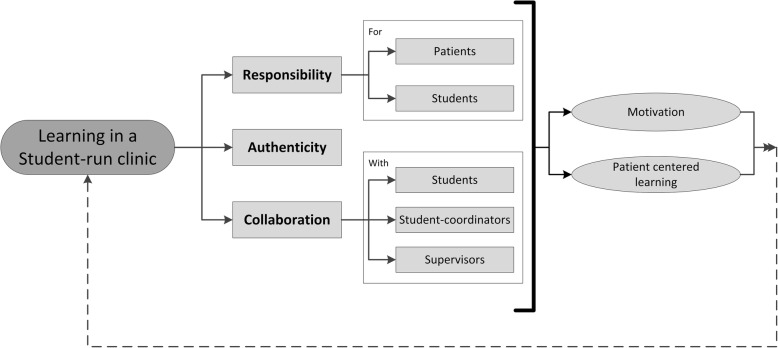
Results: Analysis revealed that responsibility, authenticity, and collaboration described how SRC participation contribute to learning. Responsibility encompassed the responsibility students had for their patients and the responsibility that the student coordinators had for the students. Authenticity reflected the context and tasks in the LC-SRC. Collaboration covered collaboration with other students, with student coordinators, and with clinical supervisors. These three themes are interrelated, and together enhanced motivation and promoted patient-centred learning in both the LC-SRC and the regular curriculum.
Conclusions: Learning in an LC-SRC is highly dependent on students' feelings of responsibility for real authentic tasks and is stimulated by extensive collaboration with fellow students and supervising doctors.
Keywords: Qualitative research; Student-run clinics; Workplace based learning.
Conflict of interest statement
Ethics approval and consent to participate
The ethics review board of the Netherlands Association for Medical Education (NVMO) approved the research proposal (ID 2016/738). All participants were informed about the study in advance, gave their written consent, and participated on a voluntary basis. All interviews were numbered and stored separately from the name of the participant, the date of interview, and other information that could identify the participant.
Consent for publication
Not applicable.
Competing interests
All authors have completed the ICMJE uniform disclosure form at
Publisher’s Note
Springer Nature remains neutral with regard to jurisdictional claims in published maps and institutional affiliations.
Figures
References
-
- Tong ST, Phillips RL, Berman R. Is exposure to a student-run clinic associated with future primary care practice? Fam Med. 2012;44(8):579–581. - PubMed
-
- Smith SD, Johnson ML, Rodriguez N, Moutier C, Beck E. Medical student perceptions of the educational value of a student-run free clinic. Fam Med. 2012;44(9):646–649. - PubMed
-
- Stephens L, Bouvier N, Thomas D, Meah Y. Voluntary participation in a medical student-organized Clinic for Uninsured Patients Significantly Augments the formal curriculum in teaching underrepresented Core competencies. Journal of Student-Run Clinics. 2015;1(1):1.
MeSH terms
LinkOut - more resources
Full Text Sources
Miscellaneous
