


Lack of Target Engagement Following Low-Frequency Deep Transcranial Magnetic Stimulation of the Anterior Insula
- PMID: 30370983
- PMCID: PMC6488455
- DOI: 10.1111/ner.12875
Lack of Target Engagement Following Low-Frequency Deep Transcranial Magnetic Stimulation of the Anterior Insula
Abstract
Objective: To evaluate the safety and efficacy of low-frequency, inhibitory, deep rTMS with a novel H-coil specifically designed to stimulate the insula.
Methods: In a randomized, crossover order, 16 healthy volunteers underwent two sessions (sham; active) of 1 Hz repetitive TMS at an intensity of 120% of individual motor threshold, over the right anterior insular cortex localized using a neuronavigation system. Before, immediately after, and one hour after rTMS, subjects performed two tasks that have previously been shown in fMRI experiments to activate insular cortex: A blink suppression task and a forced-choice risk-taking task.
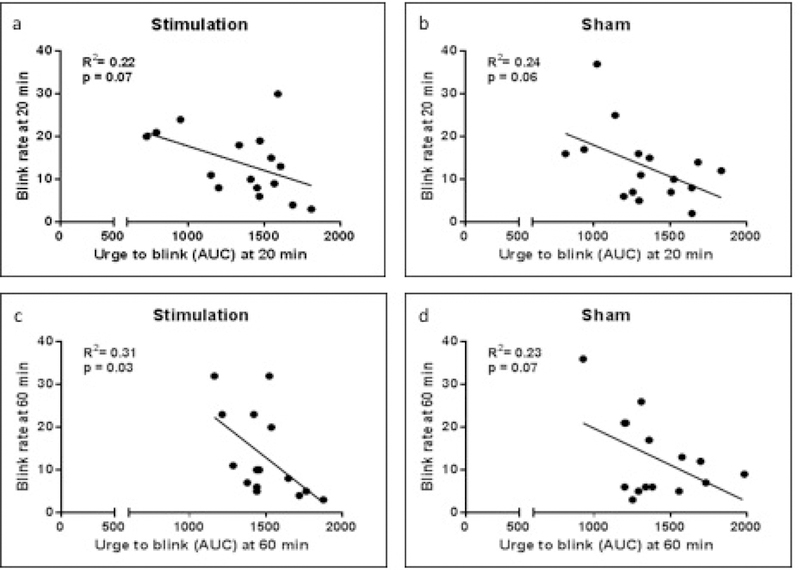
Results: No drop-outs or adverse events occurred. Active deep rTMS did not result in decreased urge to blink compared to sham. Similarly, no significant time × condition interaction on risk-taking behavior was found.
Conclusions: Low-frequency deep rTMS using a novel H8 coil was shown to be safe but did not affect any of the behavioral markers, also used to investigate modulation of insula activity. Our findings highlight the challenges of modulating the activity of deep brain regions with TMS. Further studies are necessary to identify effective stimulation parameters for deep targets, and to characterize the effects of deep TMS on overlying cortical regions.
Keywords: Deep transcranial magnetic stimulation; H-coil; insula; risk; urge.
© 2018 International Neuromodulation Society.
Conflict of interest statement
Conflict of Interest
Primavera A Spagnolo, Han Wang, Prachaya Srivanitchapoom, Melanie Schwandt, Markus Heilig have no conflict of interest to report.
Figures



References
-
- Zangen A, Roth Y, Voller B, Hallett M (2005): Transcranial magnetic stimulation of deep brain regions: evidence for efficacy of the H-coil. Clin Neurophysiol 116:775–779. - PubMed
-
- Roth Y, Zangen A, Hallett M (2002): A coil design for transcranial magnetic stimulation of deep brain regions. J Clin Neurophysiol 19:361–370. - PubMed
-
- Roth Y, Amir A, Levkovitz Y, Zangen A (2007): Three-dimensional distribution of the electric field induced in the brain by transcranial magnetic stimulation using figure-8 and deep H-coils. J Clin Neurophysiol 24:31–38. - PubMed
-
- Harel EV, Rabany L, Deutsch L, Bloch Y, Zangen A, Levkovitz Y (2014): H-coil repetitive transcranial magnetic stimulation for treatment resistant major depressive disorder: An 18-week continuation safety and feasibility study. World J Biol Psychiatry 15:298–306. - PubMed
-
- Levkovitz Y, Harel EV, Roth Y, Braw Y, Most D, Katz LN, et al. (2009): Deep transcranial magnetic stimulation over the prefrontal cortex: evaluation of antidepressant and cognitive effects in depressive patients. Brain Stimul 2:188–200. - PubMed
Publication types
MeSH terms
Grants and funding
LinkOut - more resources
Full Text Sources
Medical
