. 2018 Oct 30;9(11):1102.
doi: 10.1038/s41419-018-1101-0.

Sialyltransferase ST3GAL1 promotes cell migration, invasion, and TGF-β1-induced EMT and confers paclitaxel resistance in ovarian cancer

Affiliations

Sialyltransferase ST3GAL1 promotes cell migration, invasion, and TGF-β1-induced EMT and confers paclitaxel resistance in ovarian cancer

Xin Wu et al. Cell Death Dis. .

Abstract

Sialyltransferases transfer sialic acid to nascent oligosaccharides and are upregulated in cancer. The inhibition of sialyltransferases is emerging as a potential strategy to prevent metastasis in several cancers, including ovarian cancer. ST3GAL1 is a sialyltransferase that catalyzes the transfer of sialic acid from cytidine monophosphate-sialic acid to galactose-containing substrates and is associated with cancer progression and chemoresistance. However, the function of ST3GAL1 in ovarian cancer is uncertain. Herein, we use qRT-PCR, western blotting, and immunohistochemistry to assess the expression of ST3GAL1 in ovarian cancer tissue and cell lines and investigate whether it influences resistance to paclitaxel in vitro and in a mouse xenograft model. We found that ST3GAL1 is upregulated in ovarian cancer tissues and in the ovarian cancer cell lines SKOV-3 and OVCAR3 but downregulated in A2780 ovarian cancer cells. Overexpression of ST3GAL1 in A2780 cells increases cell growth, migration, and invasion whereas ST3GAL1 knockdown in SKOV-3 cells decreases cell growth, migration, and invasion. Furthermore, overexpression of ST3GAL1 increases resistance to paclitaxel while downregulation of ST3GAL1 decreases resistance to paclitaxel in vitro, and overexpression of ST3GAL1 increases tumorigenicity and resistance to paclitaxel in vivo. Transforming growth factor-β1 can increase ST3GAL1 expression and induce ovarian cell epithelial-mesenchymal transition (EMT). However, knockdown of ST3GAL1 inhibits EMT expression. Taken together, our findings have identified a regulatory mechanism involving ST3GAL1 in ovarian cancer. ST3GAL1 may be a promising target for overcoming paclitaxel resistance in ovarian carcinoma.


Conflict of interest statement

The authors declare that they have no conflict of interest.

Figures
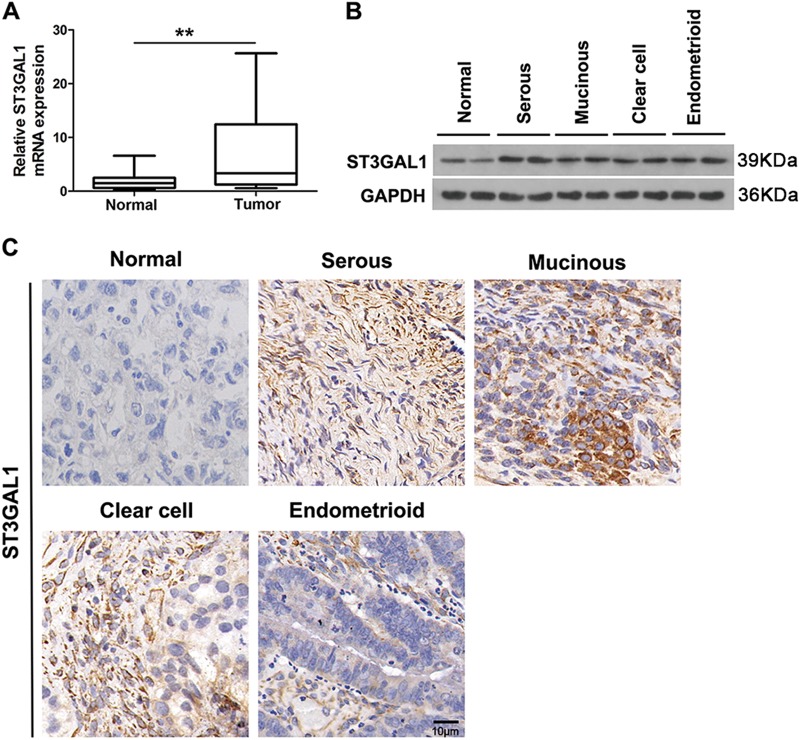
Fig. 1
Fig. 1. The expression of ST3GAL1 in ovarian cancer tissues and normal tissues.
a ST3GAL1 expression in 78 ovarian cancer tumor tissues and 15 relative normal tissues analyzed by qRT-PCR (**p < 0.01, Student’s t-test). b ST3GAL1 protein expression was analyzed by western blots in ovarian cancer tissues. c ST3GAL1 expression analyzed by immunohistochemistry in ovarian cancer tissues and normal tissues, respectively
Fig. 2
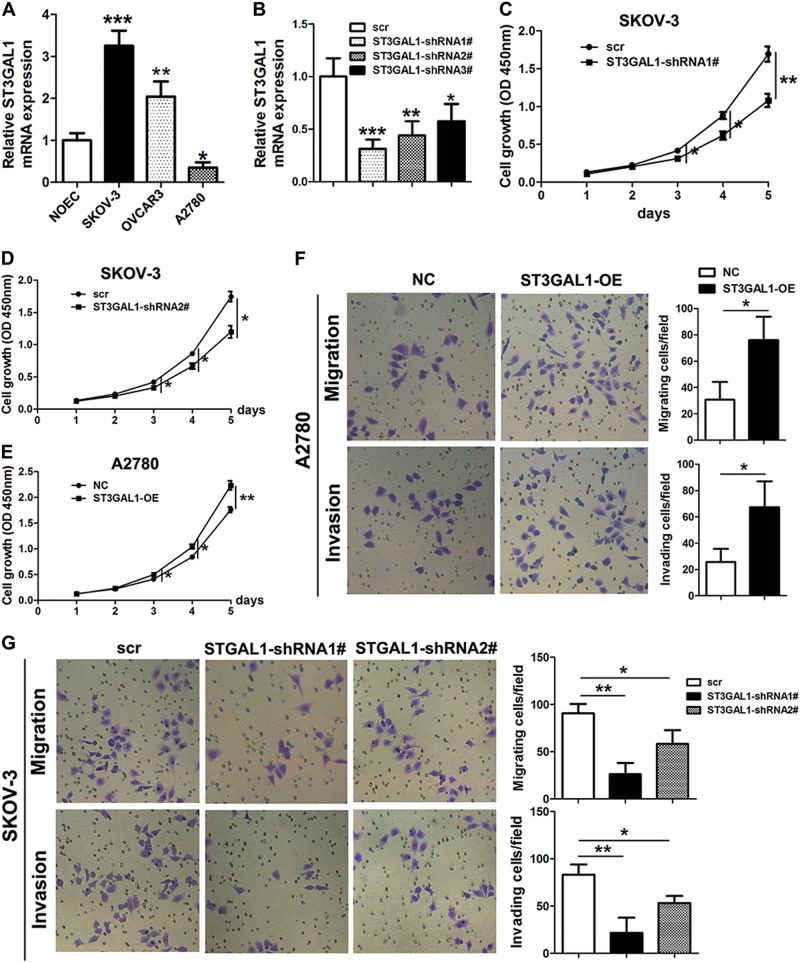
Fig. 2. ST3GAL1 promotes cell growth, migration, and invasion in ovarian cancer cells.
a qRT-PCR analysis of ST3GAL1 expression in the ovarian cancer cell lines SKOV-3, OVCAR3, and A2780 and the normal ovarian cell line NOEC (*p < 0.05, **p < 0.01, and ***p < 0.001, one-way ANOVA). b Knockdown of ST3GAL1 (ST3GAL1 shRNA1#–3#) in SKOV-3 cells and qRT-PCR assessment of ST3GAL1 expression (*p < 0.05, **p < 0.01, ***p < 0.001, one-way ANOVA). SKOV-3 cells were transfected with ST3GAL1-shRNA1# or shRNA2# and A2780 cells were transfected overexpression ST3GAL1 (ST3GAL1-OE). ce Cell growth was determined by the CCK-8 assay (*p < 0.05, **p < 0.01, one-way ANOVA). f, g Transwell assay was used to detect cell migration and invasion (*p < 0.05, and **p < 0.01, one-way ANOVA)
Fig. 3
Fig. 3. ST3GAL1 regulates epithelial–mesenchymal transition (EMT) protein expression induced by TGF-β1.
a, b SKOV-3 and A2780 cells were treated with or without 10 ng/mL TGF-β1, qRT-PCR analyzed ST3GAL1 mRNA expression (**p < 0.01, Student’s t-test). SKOV-3 cells treated with TGF-β1 or transfected with ST3GAL1-shRNA1# or shRNA2#, or both TGF-β1 and ST3GAL1-shRNA1# or shRNA2#, untransfected cells were used as a control. c, d E-cadherin, N-cadherin, and Vimentin protein expression were analyzed by western blots. A2780 cells treated with TGF-β1 or transfected with ST3GAL1-OE, or both TGF-β1 and ST3GAL1-OE, untransfected cells were used as a control. e, f E-cadherin, N-cadherin, and Vimentin protein expression were analyzed by western blots. (*p < 0.05, **p < 0.01, one-way ANOVA)
Fig. 4
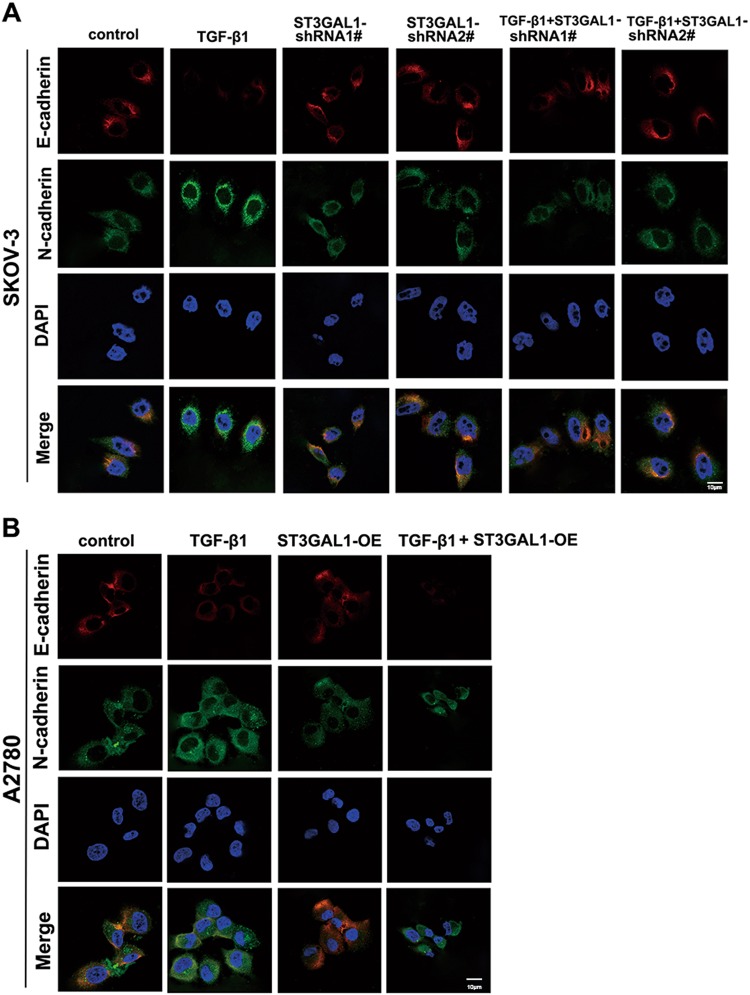
Fig. 4. ST3GAL1 regulates E-cadherin and N-cadherin expression induced by TGF-β1.
SKOV-3 cells treated with TGF-β1 or transfected with ST3GAL1-shRNA1# or shRNA2#, or both TGF-β1 and ST3GAL1-shRNA1# or shRNA2#, untransfected cells were used as a control. A2780 cells treated with TGF-β1 or transfected with ST3GAL1-OE, or both TGF-β1 and ST3GAL1-OE, untransfected cells were used as a control. a, b E-cadherin and N-cadherin protein expression were analyzed by cell immunofluorescence
Fig. 5
Fig. 5. ST3GAL1 impacts cell migration and invasion induced by TGF-β1.
SKOV-3 cells treated with TGF-β1 or transfected with ST3GAL1-shRNA1# or shRNA2#, or both TGF-β1 and ST3GAL1-shRNA1# or shRNA2#, untransfected cells were used as a control. A2780 cells treated with TGF-β1 or transfected with ST3GAL1-OE, or both TGF-β1 and ST3GAL1-OE, untransfected cells were used as a control. a, b SKOV-3 and A2780 cells migration and invasion were analyzed by Transwell assay. *p < 0.05, and **p < 0.01
Fig. 6
Fig. 6. ST3GAL1 increases resistance to paclitaxel (Taxol).
a, b SKOV-3 and A2780 cells were treated with 0, 3.125, 6.25, 12.5, 25, 50, 100, 200, 400, and 800 ng/mL Taxol for 7 days, and the half maximal inhibitory concentration (IC 50) was detected. The IC50 of A2780 is 101 ng/mL and the IC50 of SKOV-3 cells is 147 ng/mL. c, d A colony formation assay of A2780 cells transfected with ST3GAL1 (ST3GAL1-OE) for overexpression. SKOV-3 cells transduced with shRNA1# or 2# for ST3GAL1 knockdown. Cells were grown for 14 days under treatment with or without 101 ng/mL Taxol for A2780 cells or 147 ng/mL Taxol for SKOV-3 cells and stained with crystal violet. The colonies were counted and captured. The data represent the mean ± SD from three independent experiments. *p < 0.05, and **p < 0.01
Fig. 7
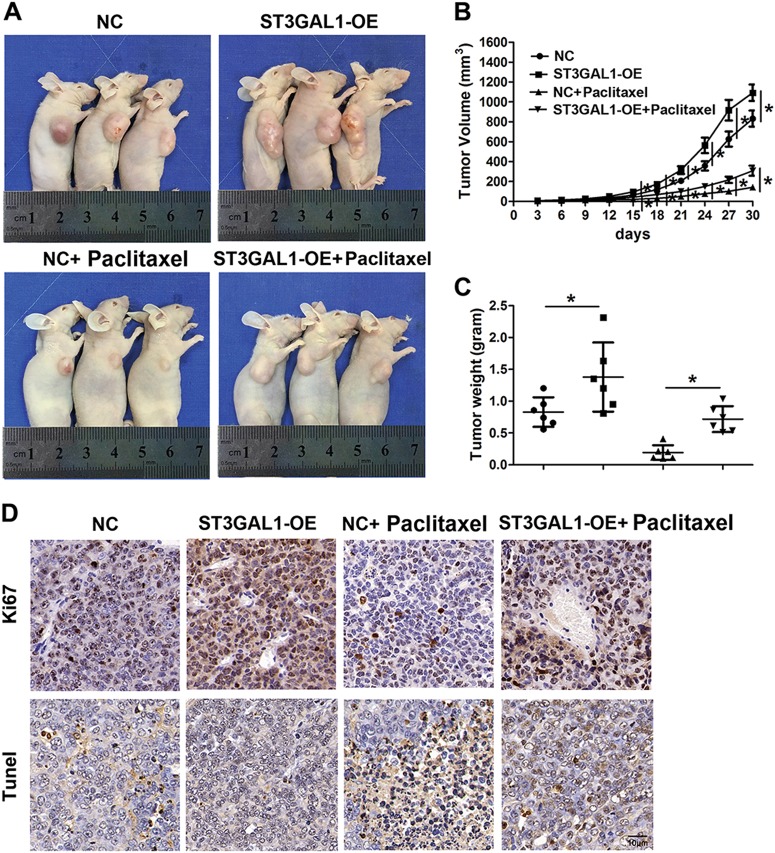
Fig. 7. Overexpression of ST3GAL1 reduces the curative effect of paclitaxel (Taxol) on tumor growth in nude mice.
a The tumor growth curve of overexpression ST3GAL1 A2780 cells was compared with vector-expressing cells after Taxol treatment. Tumor growth was assessed in nude mice that were subcutaneously injected in the right flank with 2.0 × 106 stable transfectants. b, c Average tumor weight was measured and growth curves were generated (N = 6, *p < 0.05, **p < 0.01, ***p < 0.001, one-way ANOVA). d Ki67 expression in the four groups was detected by immunohistochemistry, and TUNEL analysis in the four groups

References

    1. Permuth-Wey J, Sellers TA. Epidemiology of ovarian cancer. Methods Mol. Biol. 2009;472:413–437. doi: 10.1007/978-1-60327-492-0_20. - DOI - PubMed
    1. Vetter MH, Hays JL. Use of targeted therapeutics in epithelial ovarian cancer: a review of current literature and future directions. Clin. Ther. 2018;40:361–371. doi: 10.1016/j.clinthera.2018.01.012. - DOI - PubMed
    1. Tortorella L, et al. Ovarian cancer management in the oldest old: improving outcomes and tailoring treatments. Aging Dis. 2017;8:677–684. doi: 10.14336/AD.2017.0607. - DOI - PMC - PubMed
    1. Integrated genomic analyses of ovarian carcinoma. Nature474, 609-615 (2011). - PMC - PubMed
    1. Sun Y, et al. Key nodes of a microRNA network associated with the integrated mesenchymal subtype of high-grade serous ovarian cancer. Chin. J. Cancer. 2015;34:28–40. doi: 10.5732/cjc.014.10284. - DOI - PMC - PubMed

Publication types

MeSH terms