


Effectiveness of weekly cell phone counselling calls and daily text messages to improve breastfeeding indicators
- PMID: 30376823
- PMCID: PMC6206669
- DOI: 10.1186/s12887-018-1308-3
Effectiveness of weekly cell phone counselling calls and daily text messages to improve breastfeeding indicators
Abstract
Background: Every year, nearly one million deaths occur due to suboptimal breastfeeding. If universally practiced, exclusive breastfeeding alone prevents 11.6% of all under 5 deaths. Among strategies to improve exclusive breastfeeding rates, counselling by peers or health workers, has proven to be highly successful. With growing availability of cell phones in India, they are fast becoming a medium to spread information for promoting healthcare among pregnant women and their families. This study was conducted to assess effectiveness of cell phones for personalized lactation consultation to improve breastfeeding practices.
Methods: This was a two arm, pilot study in four urban maternity hospitals, retrained in Baby Friendly Hospital Initiative. The enrolled mother-infant pairs resided in slums and received healthcare services at the study sites. The control received routine healthcare services, whereas, the intervention received weekly cell phone counselling and daily text messages, in addition to counselling the routine healthcare services.
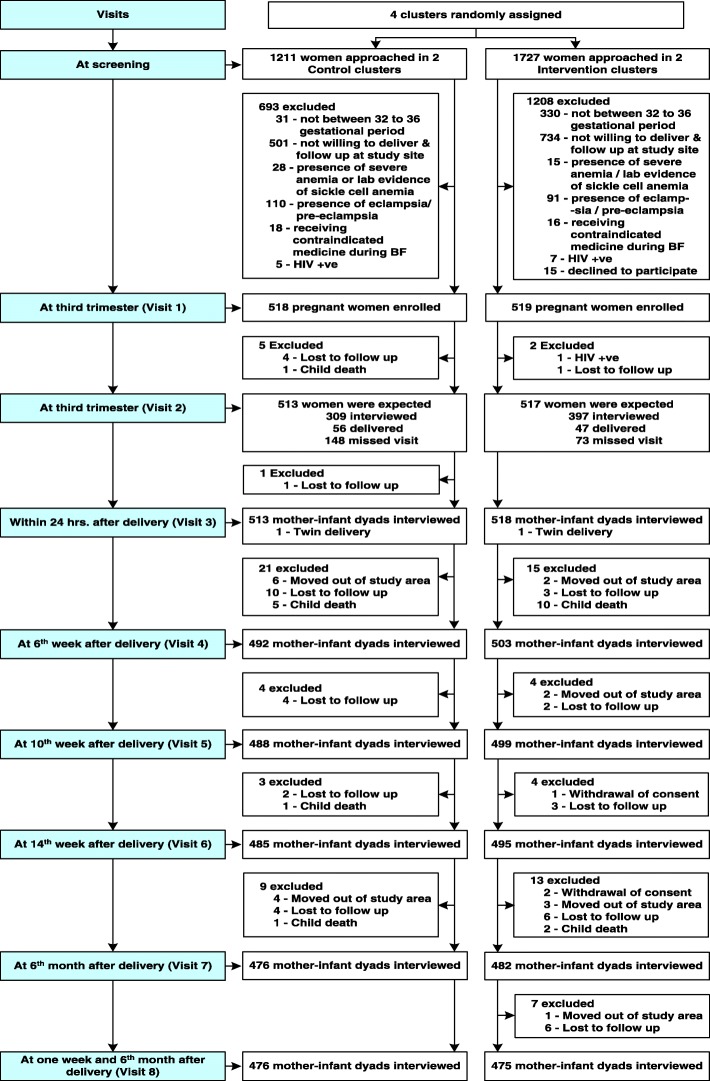
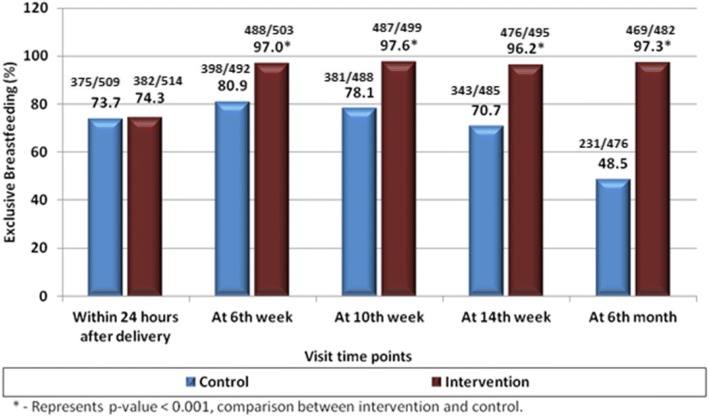
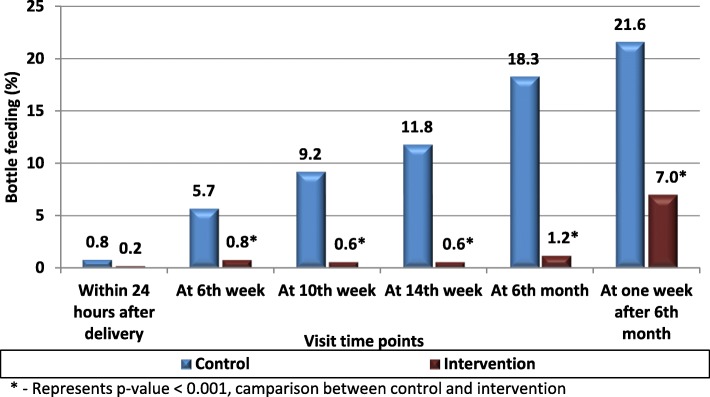
Results: 1036 pregnant women were enrolled (518 - intervention and 518 - control). Rates of timely initiation of breastfeeding were significantly higher in intervention as compared to control (37% v/s 24%, p < 0.001). Pre-lacteal feeding rates were similar and low in both groups (intervention: 19%, control: 18%, p = 0.68). Rate of exclusive breastfeeding was similar between groups at 24 h after delivery, but significantly higher in the intervention at all subsequent visits (control vs. intervention: 24 h: 74% vs 74%, p = 1.0; 6 wk.: 81% vs 97%, 10 wk.: 78% vs 98%, 14 wk.: 71% vs 96%, 6 mo: 49% vs 97%, p < 0.001 for the last 4 visits). Adjusting for covariates, women in intervention were more likely to exclusively breastfeed than those in the control (AOR [95% CI]: 6.3 [4.9-8.0]).
Conclusion: Using cell phones to provide pre and postnatal breastfeeding counselling to women can substantially augment optimal practices. High rates of exclusive breastfeeding at 6 months were achieved by sustained contact and support using cell phones. This intervention shows immense potential for scale up by incorporation in both, public and private health systems.
Trial registration: This study was retrospectively registered with Clinical Trial Registry of India ( http://www.ctri.nic.in/Clinicaltrials/pmaindet2.php?trialid=3060 ) Trial Number: CTRI/2011/06/001822 on date 20/06/2011.
Keywords: Breastfeeding counselling; Cell phone counselling; Exclusive breastfeeding; Infant and young child feeding; Infant nutrition; Lactation; Maternal health; Post-natal counselling.
Conflict of interest statement
Ethics approval and consent to participate
The trial was approved by two Institutional Review Boards (local IRB: Lata Medical Research Foundation and Sir Gangadharrao Chitnavis Trust and by the National IRB: Indian Council of Medical Research). A signed informed consent was obtained from each woman in the presence of a witness. A copy of the consent was also handed over to the woman for her reference.
Consent for publication
Not Applicable.
Competing interests
The authors declare that they have no competing interests.
Publisher’s Note
Springer Nature remains neutral with regard to jurisdictional claims in published maps and institutional affiliations.
Figures
References
-
- Lim SS, Vos T, Flaxman AD, et al. A comparative risk assessment of burden of disease and injury attributable to 67 risk factors and risk factor clusters in 21 regions, 1990–2010: a systematic analysis for the global burden of disease study 2010. Lancet. 2012;380(9859):2224–2260. doi: 10.1016/S0140-6736(12)61766-8. - DOI - PMC - PubMed
-
- Horta BL, Bahl R, Martines JC, Victora CG, editors. Evidence on the long-term effects of breastfeeding: systematic reviews and meta-analysis. Geneva: World Health Organization; 2007.
Publication types
MeSH terms
Associated data
Grants and funding
LinkOut - more resources
Full Text Sources
Medical
