


Action observation for upper limb rehabilitation after stroke
- PMID: 30380586
- PMCID: PMC6517007
- DOI: 10.1002/14651858.CD011887.pub2
Action observation for upper limb rehabilitation after stroke
Update in
-
Action observation for upper limb rehabilitation after stroke.Cochrane Database Syst Rev. 2022 Aug 5;8(8):CD011887. doi: 10.1002/14651858.CD011887.pub3. Cochrane Database Syst Rev. 2022. PMID: 35930301 Free PMC article.
Abstract
Background: Action observation (AO) is a physical rehabilitation approach that facilitates the occurrence of neural plasticity through the activation of the mirror-neural system, promoting motor recovery in people with stroke.
Objectives: To assess whether action observation enhances motor function and upper limb motor performance and cortical activation in people with stroke.
Search methods: We searched the Cochrane Stroke Group Trials Register (last searched 4 September 2017), the Central Register of Controlled Trials (24 October 2017), MEDLINE (1946 to 24 October 2017), Embase (1974 to 24 October 2017) and five additional databases. We also searched trial registries and reference lists.
Selection criteria: Randomized controlled trials (RCTs) of AO, alone or associated with physical practice in adults after stroke. The primary outcome was upper limb motor function. Secondary outcomes included dependence on activities of daily living (ADL), motor performance, cortical activation, quality of life, and adverse effects.
Data collection and analysis: Two review authors independently selected trials according to the pre-defined inclusion criteria, extracted data, assessed risk of bias, and applied the GRADE approach to assess the quality of the evidence. The reviews authors contacted trial authors for clarification and missing information.
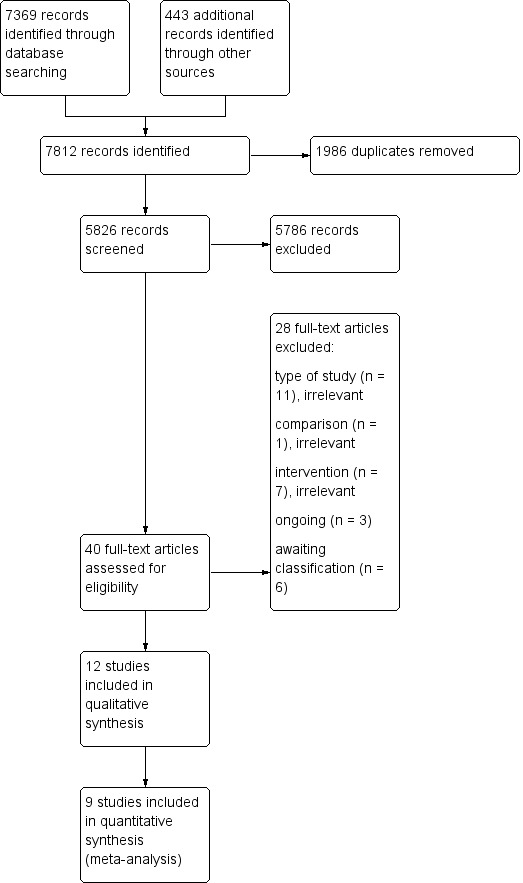
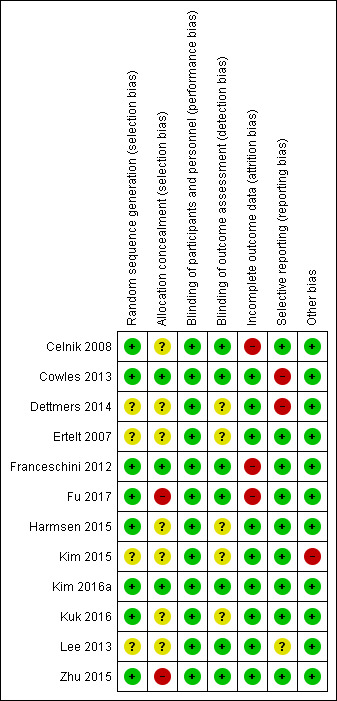
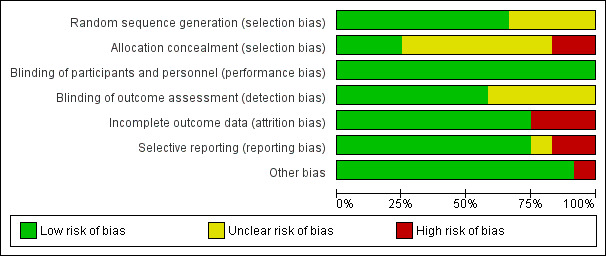
Main results: We included 12 trials involving 478 individuals. A number of trials showed a high risk of bias and others an unclear risk of bias due to poor reporting. The quality of the evidence was 'low' for most of the outcomes and 'moderate' for hand function, according to the GRADE system. In most of the studies, AO was followed by some form of physical activity.
Primary outcome: the impact of AO on arm function showed a small significant effect (standardized mean difference (SMD) 0.36, 95% CI 0.13 to 0.60; 8 studies; 314 participants; low-quality evidence); and a large significant effect (mean difference (MD) 2.90, 95% CI 1.13 to 4.66; 3 studies; 132 participants; moderate-quality evidence) on hand function.
Secondary outcomes: there was a large significant effect for ADL outcome (SMD 0.86, 95% CI 0.11 to 1.61; 4 studies, 226 participants; low-quality evidence). We were unable to pool other secondary outcomes to extract the evidence. Only two studies reported adverse effects without significant adverse AO events.
Authors' conclusions: We found evidence that AO is beneficial in improving upper limb motor function and dependence in activities of daily living (ADL) in people with stroke, when compared with any control group; however, we considered the quality of the evidence to be low. We considered the effect of AO on hand function to be large, but it does not appear to be clinically relevant, although we considered the quality of the evidence as moderate. As such, our confidence in the effect estimate is limited because it will likely change with future research.
Conflict of interest statement
Lorenna RDM Borges: none known. Aline Fernandes: none known. Luciana Melo: none known. Ricardo O Guerra: none known. Tania F Campos: none known.
Figures
References
References to studies included in this review
Celnik 2008 {published and unpublished data}
Cowles 2013 {published and unpublished data}
-
- Cowles T, Clark A, Mares K, Peryer G, Stuck R, Pomeroy V. Observation‐to‐imitate plus practice could add little to physical therapy benefits within 31 days of stroke: translational randomized controlled trial. Neurorehabilitation and Neural Repair 2013;27(2):173‐82. [DOI: 10.1177/1545968312452470] - DOI - PubMed
Dettmers 2014 {published and unpublished data}
-
- Dettmers C, Nedelko V, Hassa T, Starrost K, Schoenfeld MA. Video therapy: promoting hand function after stroke by action observation training – a pilot randomized controlled rial. International Journal of Physical Medicine and Rehabilitation 2014;2(189):2. [2329‐9096 ]
Ertelt 2007 {published and unpublished data}
-
- Ertelt D, Hemmelmann C, Dettmers C, Ziegler A, Binkofski F. Observation and execution of upper‐limb movements as a tool for rehabilitation of motor deficits in paretic stroke patients: protocol of a randomized clinical trial. BMC Neurology 2012;12(1):42. [DOI: 10.1186/1471-2377-12-42] - DOI - PMC - PubMed
Franceschini 2012 {published and unpublished data}
-
- Franceschini M, Ceravolo MG, Agosti M, Cavallini P, Bonassi S, Dall’Armi V, et al. Clinical relevance of action observation in upper‐limb stroke rehabilitation a possible role in recovery of functional dexterity. A randomized clinical trial. Neurorehabilitation and Neural Repair 2012;26(5):456‐62. [DOI: 10.1177/1545968311427406] - DOI - PubMed
Fu 2017 {published data only}
Harmsen 2015 {published and unpublished data}
Kim 2015 {published data only}
Kim 2016a {published data only}
-
- Kim C, Bang D. Action observation training enhances upper extremity function in subacute stroke survivor with moderate impairment: a double‐blind, randomized controlled pilot trial. Journal of the Korean Society of Physical Medicine 2016;11(1):133‐40. [10.13066/kspm.2016.11.1.133]
Kuk 2016 {published data only}
Lee 2013 {published and unpublished data}
Zhu 2015 {published and unpublished data}
-
- Zhu MH, Wang J, Gu XD, Shi MF, Zeng M, Wang CY, et al. Effect of action observation therapy on daily activities and motor recovery in stroke patients. International Journal of Nursing Sciences 2015;2(3):279‐82. [DOI: 10.1016/j.ijnss.2015.08.006] - DOI
References to studies excluded from this review
Brunner 2014 {published data only}
Cha 2015 {published data only}
-
- Cha Y, Yoo E, Jung M, Park S, Park J, Lee J. Effects of mental practice with action observation training on occupational performance after stroke. Journal of Stroke and Cerebrovascular Diseases 2015;24(6):1405‐13. - PubMed
Chang 2017 {published data only}
Emmerson 2017 {published data only}
-
- Emmerson K, Harding K, Taylor N. Home exercise programmes supported by video and automated reminders compared with standard paper‐based home exercise programmes in patients with stroke: a randomized controlled trial. Clinical Rehabilitation 2017;31(8):1068‐77. - PubMed
Ertelt 2012 {published data only}
-
- Ertelt D, Hemmelmann C, Dettmers C, Ziegler A, Binkofsk F. Observation and execution of upper‐limb movements as a tool for rehabilitation of motor deficits in paretic stroke patients: protocol of a randomized clinical trial. BMC Neurology 2012;12(1):42. [DOI: 10.1186/1471-2377-12-42] - DOI - PMC - PubMed
Franceschini 2010 {published data only}
-
- Franceschini M, Agosti M, Cantagallo A, Sale P, Mancuso M, Buccino G. Mirror neurons: action observation treatment as a tool in stroke rehabilitation. European Journal of Physical and Rehabilitation Medicine 2010;46(4):517‐23. [MEDLINE: ] - PubMed
Frenkel‐Toledo 2014 {published data only}
-
- Frenkel‐Toledo S, Bentin S, Perry A, Liebermann D, Soroker N. Mirror‐neuron system recruitment by action observation: effects of focal brain damage on mu suppression. NeuroImage 2014;87:127‐37. - PubMed
Kim 2013a {published data only}
Kim 2013b {published data only}
Kim 2014 {published data only}
Kim 2016b {published data only}
-
- Kim T, Kim S, Lee B. Effects of action observational training plus brain‐computer interface‐based functional electrical stimulation on paretic arm motor recovery in patient with stroke: a randomized controlled trial. Occupational Therapy International 2016;23(1):39‐47. [DOI: 10.1002/oti.1403] - DOI - PubMed
Liepert 2014 {published data only}
Lubart 2017 {published data only}
-
- Lubart A, Leibovitz A, Peleg L, Yarovoy A, Gal G, Mizrahi E, et al. Action observation of motor skills followed by immediate sleep enhances the motor rehabilitation of older adults with stroke. Journal of Geriatric Physical Therapy 2017; Vol. [Epub ahead of print]. [2152‐0895] - PubMed
Marangon 2014 {published data only}
Sale 2012 {published data only}
-
- Sale P, Franceschini M. Action observation and mirror neuron network: a tool for motor stroke rehabilitation. European Journal of Physical and Rehabilitation Medicine 2012;48(2):313‐8. [22522432] - PubMed
Sugg 2015 {published data only}
Sun 2016 {published data only}
-
- Sun Y, Wei W, Luo Z, Gan H, Hu X. Improving motor imagery practice with synchronous action observation in stroke patients. Topics in Stroke Rehabilitation 2016;23(4):245‐53. - PubMed
Szameitat 2012 {published data only}
-
- Szameitat A, Shen S, Conforto A, Sterr A. Cortical activation during executed, imagined, observed, and passive wrist movements in healthy volunteers and stroke patients. NeuroImage 2012;62(1):266‐80. - PubMed
References to studies awaiting assessment
Gu 2013 {published data only}
-
- Gu Y, Kim B. An impact of action‐observation training and task‐oriented training on activities of daily living of stroke patients. Journal of the Korean Society of Integrative Medicine 2013;1(3):19‐28. [10.15268/ksim.2013.1.3.019]
Jin‐Woo 2011 {published data only}
-
- Jin‐Woo J, Soon BY, Lee MK. The effect of action observation training on upper extremity function in chronic stroke patients. Journal of Korean Society of Occupational Therapy 2011;19:15–24.
Kim 2010 {published data only}
-
- Kim J, Yang B, Lee M. The effect of action observational physical training on manual dexterity in stroke patients. Physical Therapy Korea 2010;17(2):17‐24.
Ko 2014 {published data only}
-
- Ko HE, Park JJ, Lee KJ, Lee EH, Oh MH. The effect of action‐observational physical training based on mirror neuron system on upper extremity function and activities of daily living in stroke patient. Journal of the Korea Institute of Electronic Communication Sciences 2014;9(1):123‐30. [DOI: 10.13067/JKIECS.2014.9.1.123] - DOI
Lee 2016 {published data only}
-
- Lee H, Kim H, Kwon H, Cho Y, Lee S. Effects off the distant action observation training program on function restorations of chronic stroke patients. Journal of Korean Society of Occupational Therapy 2016;24(1):1‐13. [DOI: 10.14519/jksot.2016.24.1.01] - DOI
Yun 2011 {published data only}
-
- Yun TW, Lee MK. The change of mu rhythm during action observation in people with stroke. Journal of the Korean Society of Physical Medicine 2011;6(3):361‐8.
References to ongoing studies
NCT02235350 {published data only}
-
- NCT02235350. Study on the effectiveness of action observation treatment (AOT) as a rehabilitation tool in acute stroke patients and in chronic stroke patients with apraxia: a randomized controlled trial. http://clinicaltrials.gov/ct2/show/study/NCT02235350 (first received 9 September 2014). [NCT02235350]
NCT02871700 {published data only}
-
- NCT02871700. Comparative efficacy study of action observation therapy and mirror therapy after stroke: rehabilitation outcomes and neural mechanisms by MEG. http://clinicaltrials.gov/ct2/show/record/NCT02871700 (accessed October 2016) (first received 18 August 2016). [NCT02871700]
RBR‐26q4z9 {published data only}
-
- RBR‐26q4z9. Comparative study between action observation training and hydrotherapy in upper limb recovery after stroke: randomized clinical trial. http://ensaiosclinicos.gov.br/rg/RBR‐26q4z9/ (first received 22 April 2015).
Additional references
Buccino 2014
Calvo‐Merino 2005
-
- Calvo‐Merino B, Glaser DE, Grèzes J, Passingham RE, Haggard P. Action observation and acquired motor skills: an FMRI study with expert dancers. Cerebral Cortex 2005;15(8):1243‐9. - PubMed
Chen 2009
-
- Chen HM, Chen CC, Hsueh IP, Huang SL, Hsieh CL. Test‐retest reproducibility and smallest real difference of 5 hand function tests in patients with stroke. Neurorehabilitation and Neural Repair 2009;23(5):435‐40. - PubMed
Cowles 2012
-
- Cowles T, Clark A, Mares K, Peryer G, Stuck R, Pomeroy V. Observation‐to‐imitate plus practice could add little to physical therapy benefits within 31 days of stroke: translational randomized controlled trial. Neurorehabilitation and Neural Repair 2012;27(2):173‐82. - PubMed
Feigin 2014
Fitts 1967
-
- Fitts PM, Posner MI. Human Performance. Belmont: Brooks/Colemann, 1967.
Garrison 2010
Garrison 2013
GRADEpro GDT
-
- GRADEpro GDT: GRADEpro Guideline Development Tool [Software]. McMaster University, 2015 (developed by Evidence Prime, Inc). Available from www.gradepro.org.
Higgins 2011
-
- Higgins JP, Green S (editors). Cochrane Handbook for Systematic Reviews of Interventions Version 5.1.0 [updated March 2011]. The Cochrane Collaboration, 2011. Available from handbook.cochrane.org.
Jeannerod 2001
-
- Jeannerod M. Neural simulation of action: a unifying mechanism for motor cognition. NeuroImage 2001;14(1):S103‐9. - PubMed
Johansson 2011
-
- Johansson BB. Current trends in stroke rehabilitation. A review with focus on brain plasticity. Acta Neurologica Scandinavica 2011;123(3):147‐59. - PubMed
Kwakkel 2003
-
- Kwakkel G, Kollen BJ, Grond J, Prevo AJ. Probability of regaining dexterity in the flaccid upper limb impact of severity of paresis and time since onset in acute stroke. Stroke 2003;34(9):2181‐6. - PubMed
Langhorne 2009
-
- Langhorne P, Coupar F, Pollock A. Motor recovery after stroke: a systematic review. Lancet Neurology 2009;8(8):741‐54. - PubMed
Lozano 2012
Magill 1989
-
- Magill RA. Motor Learning: Concepts and Applications. 3rd Edition. Dubuque: Wm C Brown, 1989.
Moher 2001
Moher 2009
-
- Moher D, Liberati A, Tetzlaff J, Altman DG. Preferred reporting items for systematic reviews and meta‐analyses: the PRISMA statement. Annals of Internal Medicine 2009;151(4):264‐9. - PubMed
Mukherjee 2011
-
- Mukherjee D, Patil CH. Epidemiology and global burden of stroke. World Neurosurgery 2011;76(65):585‐90. - PubMed
Murray 2012
-
- Murray CJ, Vos T, Lozano R, Naghavi M, Flaxman AD, Michaud C, et al. Disability‐adjusted life years (DALYs) for 291 diseases and injuries in 21 regions, 1990–2010: a systematic analysis for the Global Burden of Disease Study 2010. Lancet 2012;380(9859):2197‐223. - PubMed
Review Manager 2014 [Computer program]
-
- Nordic Cochrane Centre, The Cochrane Collaboration. Review Manager 5 (RevMan 5). Version 5.3. Copenhagen: Nordic Cochrane Centre, The Cochrane Collaboration, 2014.
Sarasso 2015
Small 2012
-
- Small SL, Buccino G, Solodkin A. The mirror neuron system and treatment of stroke. Developmental Psychobiology 2012;54(3):293‐310. - PubMed
van Kuijk 2009
-
- Kuijk AA, Pasman JW, Hendricks HT, Zwarts MJ, Geurts AC. Predicting hand motor recovery in severe stroke: the role of motor evoked potentials in relation to early clinical assessment. Neurorehabilitation and Neural Repair 2009;23(1):45‐51. - PubMed
Publication types
MeSH terms
LinkOut - more resources
Full Text Sources
Medical
Research Materials
