. 2019 Jan 1;316(1):L144-L156.
doi: 10.1152/ajplung.00372.2018. Epub 2018 Nov 1.

MicroRNA-30a as a candidate underlying sex-specific differences in neonatal hyperoxic lung injury: implications for BPD

Affiliations

MicroRNA-30a as a candidate underlying sex-specific differences in neonatal hyperoxic lung injury: implications for BPD

Yuhao Zhang et al. Am J Physiol Lung Cell Mol Physiol. .

Abstract

Premature male neonates are at a greater risk of developing bronchopulmonary dysplasia (BPD). The reasons underlying sexually dimorphic outcomes in premature neonates are not known. The role of miRNAs in mediating sex biases in BPD is understudied. Analysis of the pulmonary transcriptome revealed that a large percentage of angiogenesis-related differentially expressed genes are miR-30a targets. We tested the hypothesis that there is differential expression of miR-30a in vivo and in vitro in neonatal human pulmonary microvascular endothelial cells (HPMECs) upon exposure to hyperoxia. Neonatal male and female mice (C57BL/6) were exposed to hyperoxia [95% fraction of inspired oxygen (FiO2), postnatal day ( PND) 1-5] and euthanized on PND 7 and 21. HPMECs (18-24-wk gestation donors) were subjected to hyperoxia (95% O2 and 5% CO2) or normoxia (air and 5% CO2) up to 72 h. miR-30a expression was increased in both males and females in the acute phase ( PND 7) after hyperoxia exposure. However, at PND 21 (recovery phase), female mice showed significantly higher miR-30a expression in the lungs compared with male mice. Female HPMECs showed greater expression of miR-30a in vitro upon exposure to hyperoxia. Delta-like ligand 4 (Dll4) was an miR-30a target in HPMECs and showed sex-specific differential expression. miR-30a increased angiogenic sprouting in vitro in female HPMECs. Lastly, we show decreased expression of miR-30a and increased expression of DLL4 in human BPD lung samples compared with controls. These results support the hypothesis that miR-30a could, in part, contribute to the sex-specific molecular mechanisms in play that lead to the sexual dimorphism in BPD.

Keywords: BPD; Dll4; angiogenesis; hyperoxia; miR-30a; sex.


Conflict of interest statement

No conflicts of interest, financial or otherwise, are declared by the authors.

Figures
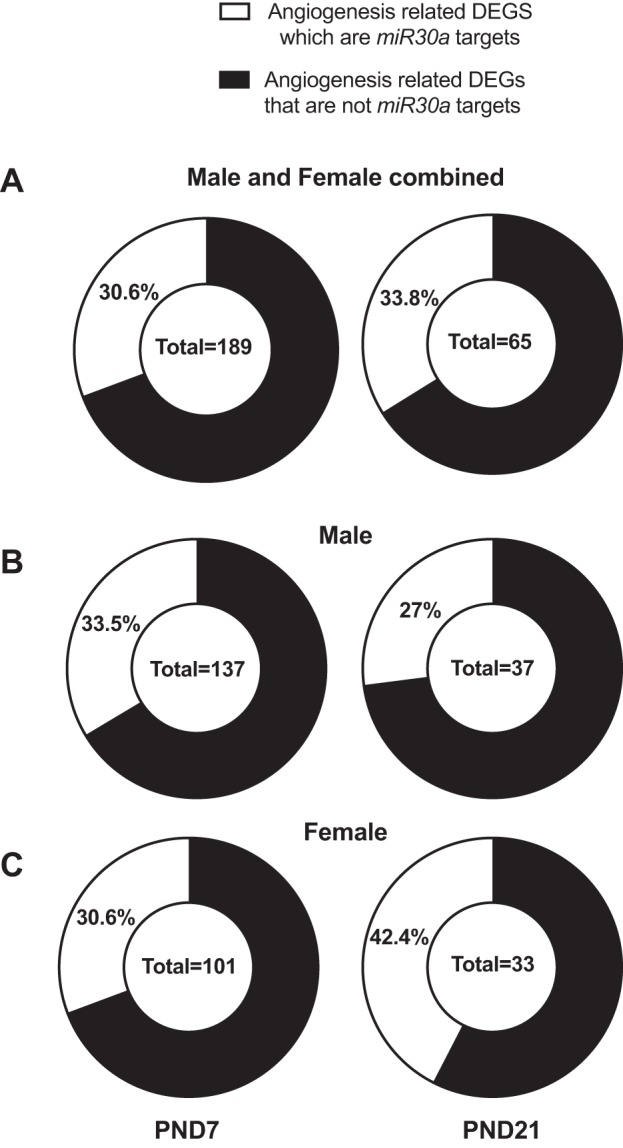
Fig. 1.
Fig. 1.
miR-30a targets among differentially expressed angiogenesis genes. We interrogated the hyperoxia RNA sequencing signatures in the lung for male and female neonatal mice, at PND 7 and PND 21 as inferred in our previous report (10). We further determined angiogenic targets using the Molecular Signatures Database (MSigDB) pathway compendium. We determined miR-30a targets in the mouse genome using the mirWalk database. The overall number of angiogenic DEGs for each signature is represented in the center of each circle diagram. Fig. 1 shows percentage of miR-30a targets among the differentially regulated angiogenesis related genes at PND 7 and PND 21 in both males and females (A). We further show the distribution of miR-30a targets as a subset of angiogenesis related DEGs in males (B) and females (C). DEG, differentially expressed gene; PND, postnatal day.
Fig. 2.
Fig. 2.
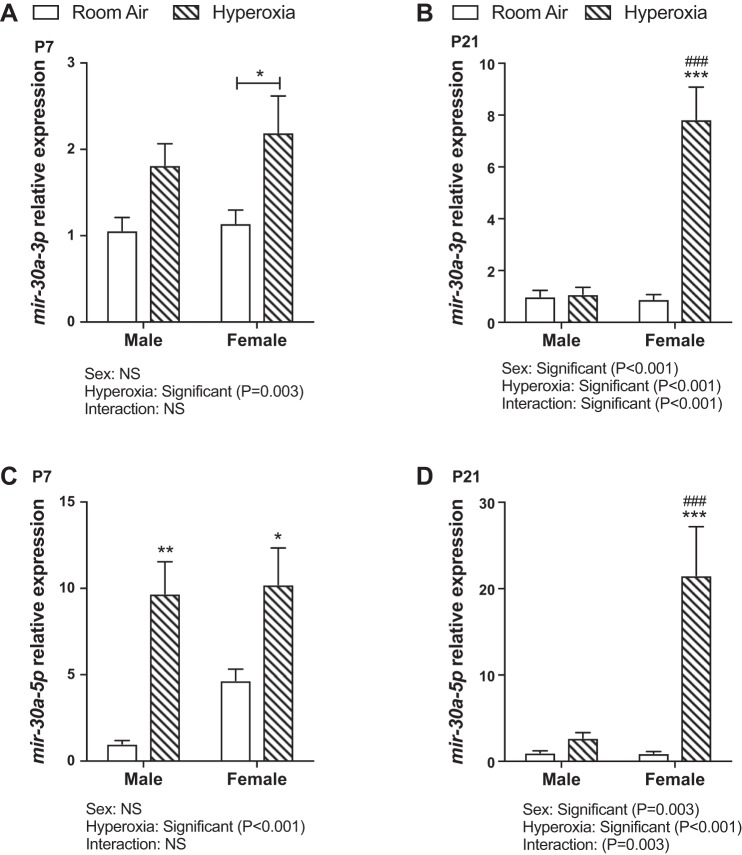
Differential sex-specific expression on miR-30a in vivo. A and B: miR-30a-3p expression in male and female neonatal mice exposed to hyperoxia (95% FiO2, PND 1–5) at PND 7 and PND 21 (n = 6 animals/group). C and D: miR-30a-5p expression in male and female neonatal mice exposed to hyperoxia at PND 7 and PND 21 (n = 6 animals/group). Values are means ± SE. Significant differences between room air and hyperoxia within each sex are indicated by *P < 0.05, **P < 0.01, and ***P < 0.001. Significant differences between male and female mice in normoxia or hyperoxia are indicated by ###P < 0.001. FiO2, fraction of inspired oxygen; NS, not significant; PND, postnatal day.
Fig. 3.
Fig. 3.
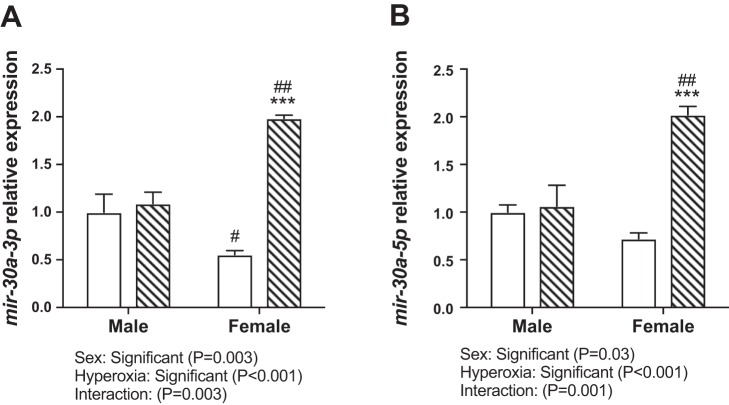
Differential sex-specific expression on miR-30a in vitro. A and B: miR-30a-3p and miR-30a-5p expression in human pulmonary microvascular endothelial cells (HPMECs) exposed to room air (RA) (RA-5% CO2) and 72 h of hyperoxia (95% O2-5% CO2) (n = 3/group). Values are means ± SE. Significant differences between RA and hyperoxia within each sex are indicated by ***P < 0.001. Significant differences between male and female mice in normoxia or hyperoxia are indicated by #P < 0.05 and ##P < 0.01.
Fig. 4.
Fig. 4.
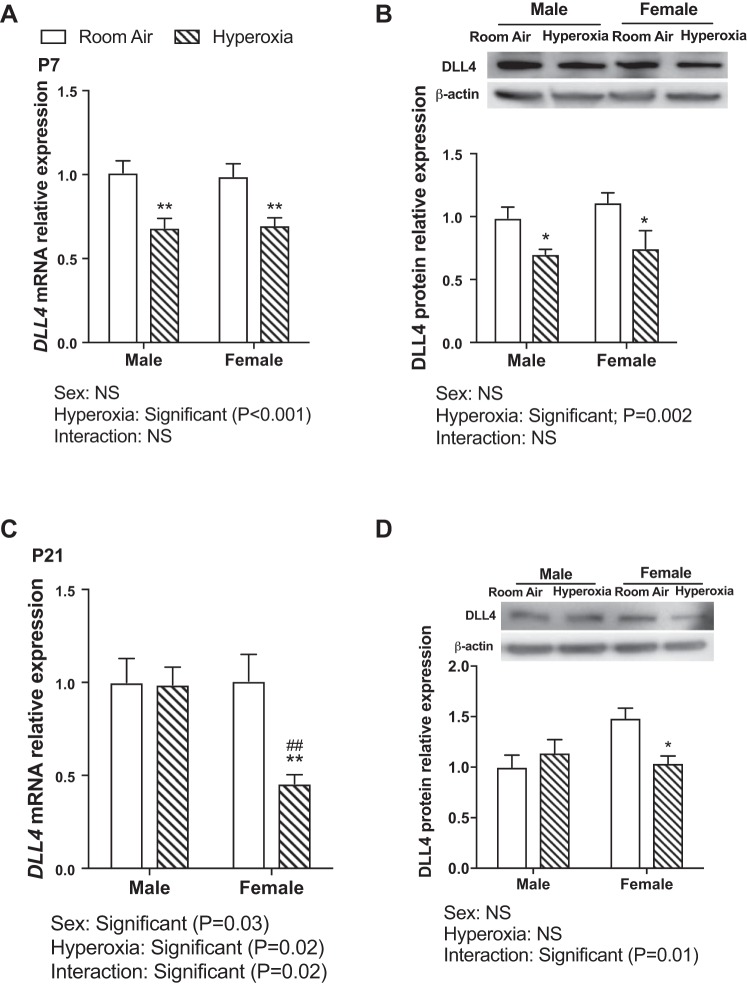
Delta-like ligand (Dll) 4 expression in male and female murine lung upon exposure to hyperoxia in vivo: DLL4 mRNA (A and C) and protein (B and D) expression in male and female neonatal mice exposed to hyperoxia (95% FiO2, PND 1–5) at PND 7 (A and B) and PND 21 (C and D) (n = 6 animals /group). Values are means ± SE. Significant differences between room air and hyperoxia within each sex are indicated by *P < 0.05 and **P < 0.01. Significant differences between male and female mice in normoxia or hyperoxia are indicated by ##P < 0.01. FiO2, fraction of inspired oxygen; NS, not significant; PND, postnatal day.
Fig. 5.
Fig. 5.
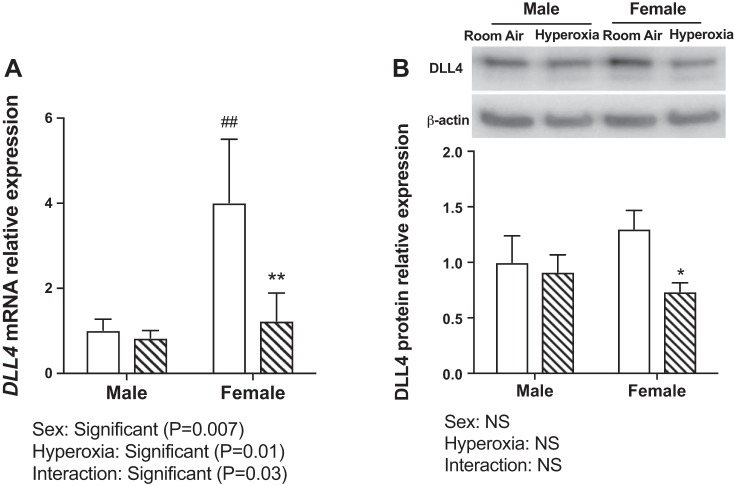
Delta-like ligand 4 (Dll4) expression in male and female human neonatal pulmonary microvascular endothelial cells upon exposure to hyperoxia in vitro: DLL4 mRNA (A) and protein (B) expression in male and female neonatal human pulmonary microvascular endothelial cells (HPMECs) exposed to room air (RA) (RA-5% CO2) and 72 h of hyperoxia (95% O2-5% CO2) (n = 3/group). Values are means ± SE. Significant differences between RA and hyperoxia within each sex are indicated by *P < 0.05 and **P < 0.01. Significant differences between male and female mice in normoxia or hyperoxia are indicated by ##P < 0.01. NS, not significant.
Fig. 6.
Fig. 6.
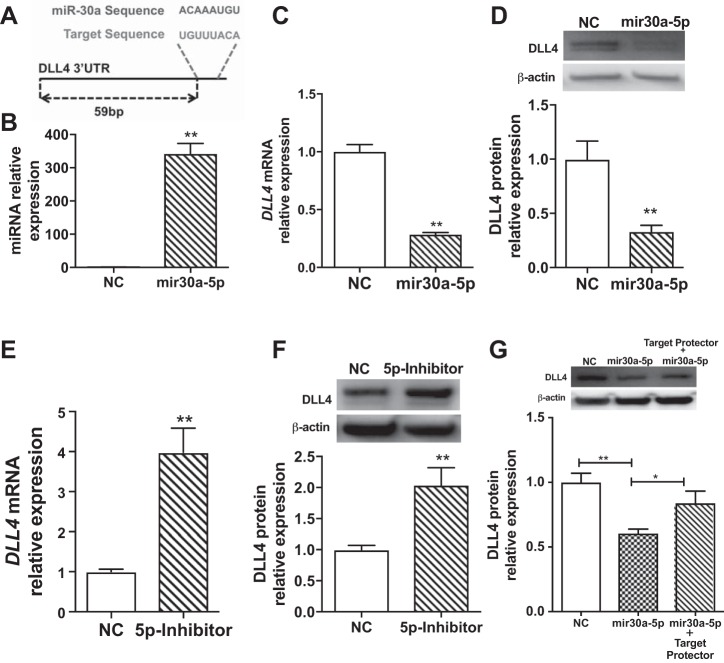
Delta-like ligand 4 (Dll4) is an miR-30a-5p target in neonatal human pulmonary microvascular endothelial cells. TargetScan reported miR-30a binding sites 59–66bp in the 3′UTR of DLL4 (A). Increased mir30a-5p expression after mir30a-5p mimic transfection in HPMECs (B). DLL4 mRNA (C) and protein (D) expression after mir30a-5p mimic transfection in HPMECs. DLL4 mRNA (E) and protein (F) expression after mir30a-5p inhibitor transfection in HPMECs. DLL4 protein expression (G) after mir30a-5p mimic transfection with and without target protector in HPMECs. Values are means ± SE from 3 independent experiments (n = 3/group). Significant differences between indicated groups are indicated by *P < 0.05 and **P < 0.01. HPMEC, human pulmonary microvascular endothelial cell; UTR, untranslated region; NC, normal control.
Fig. 7.
Fig. 7.
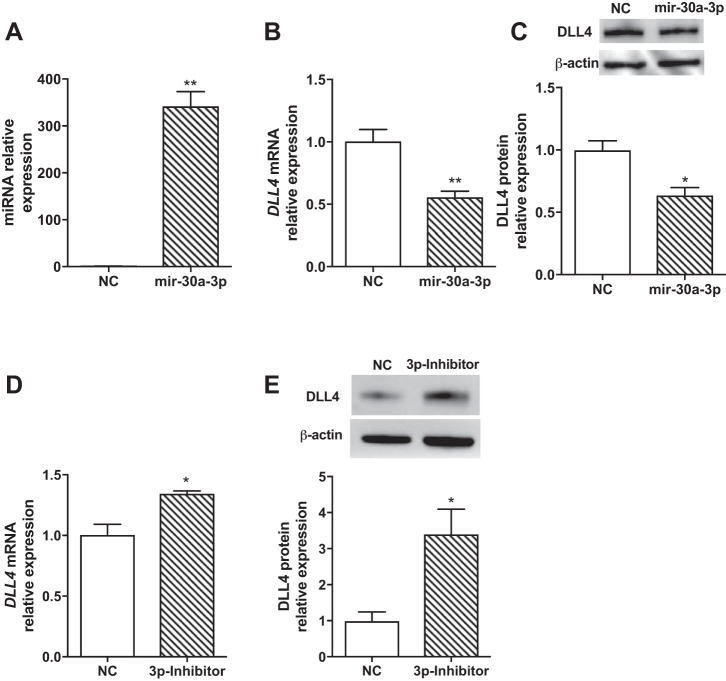
Effect of miR30a-3p overexpression and inhibition on DLL4 expression in HPMECs. Increased mir30a-3p expression after mir30a-3p mimic transfection in HPMECs (A). DLL4 mRNA (B) and protein (C) expression after mir30a-3p mimic transfection in HPMECs. DLL4 mRNA (D) and protein (E) expression after mir30a-3p inhibitor transfection in HPMECs. Values are means ± SE from three independent experiments (n = 3/group). Significant differences between indicated groups are indicated by *P < 0.05 and **P < 0.01. DLL4, delta-like ligand 4; HPMEC, human pulmonary microvascular endothelial cell. NC, normal control.
Fig. 8.
Fig. 8.
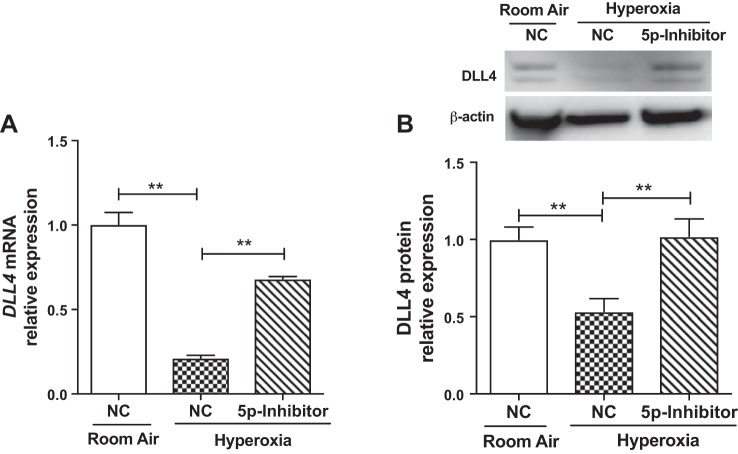
miR30a-5p inhibition under hyperoxic conditions decreases increases Dll4 expression in female HPMECs. DLL4 mRNA (A) and protein (B) expression after inhibition of mir30a-5p in HPMECs upon exposure to hyperoxia. Values are means ± SE from three independent experiments (n = 3/group). Significant differences between indicated groups are indicated by **P < 0.01. DLL4, delta-like ligand 4; HPMEC, human pulmonary microvascular endothelial cell. NC, normal control.
Fig. 9.
Fig. 9.
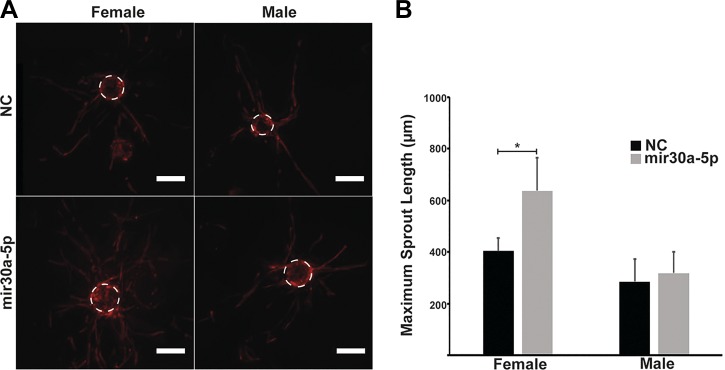
miR30a-5p mimic increases sprouting angiogenesis in female HPMECs. Angiogenic potential was quantified based on the maximum length of sprouts protruding from HPMEC-coated cytodex-3 microcarrier beads suspended in a fibrin gel (n = 3/group). A: representative images from male and female HPMECs subjected to sprouting angiogenesis assay treated with miR30a-5p mimic or negative control. Scale bar represents 200 μm. B: maximum sprouting distance in male and female HPMECs. Values are means ± SE. Significant differences between treatment and control groups is indicated by *P < 0.05. HPMEC, human pulmonary microvascular endothelial cell.
Fig. 10.
Fig. 10.
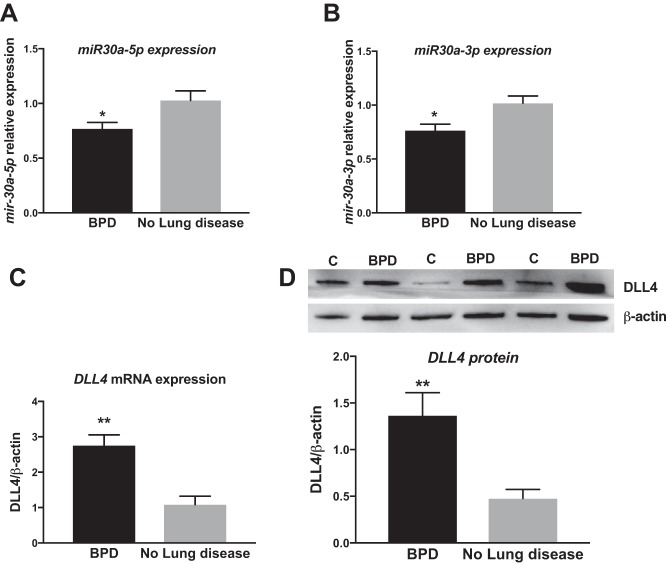
miR30a-5p (A), miR30a-3p (B), and DLL4 mRNA (C) and protein (D) expression in human BPD and control (C) lung samples. Significant differences between BPD and no lung disease are indicated by *P < 0.05 and **P < 0.01. BPD, bronchopulmonary dysplasia; DLL4, delta-like ligand 4.
Fig. 11.
Fig. 11.
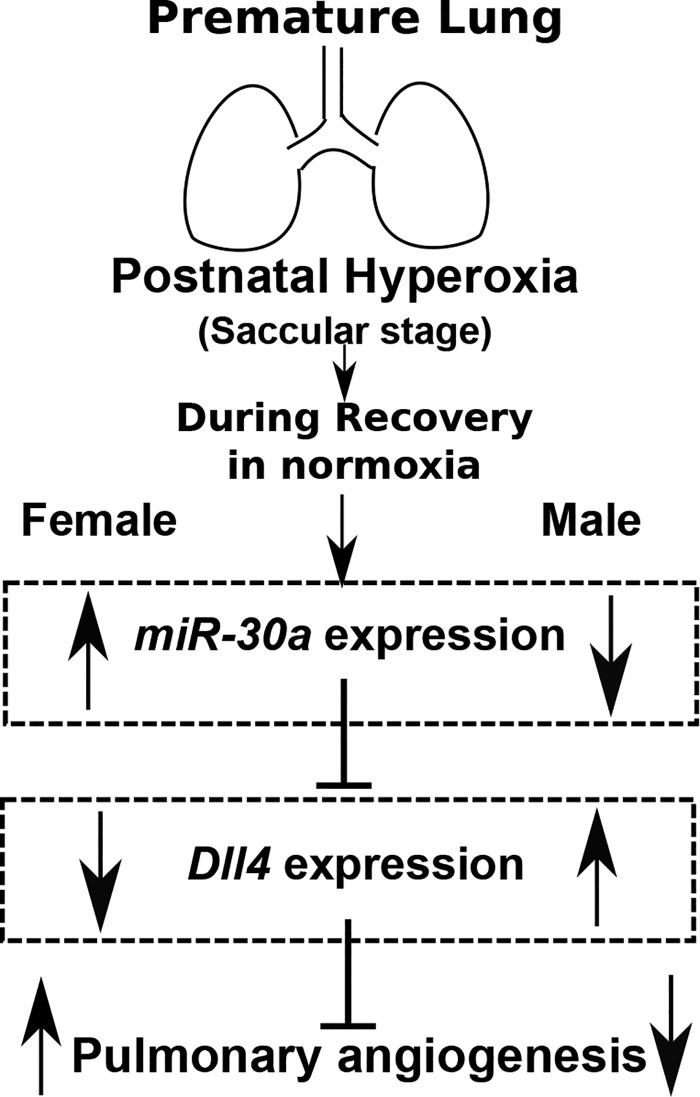
Overall schema supporting a hypothesized role of sexually dimorphic miR-30a expression in neonatal hyperoxic lung injury: increased miR-30a expression in the female neonatal lung preserves lung vascular development through miR-30a-mediated downregulation of Dll4 expression in females. DLL4, delta-like ligand 4.

References

    1. Abman SH. Bronchopulmonary dysplasia: “a vascular hypothesis”. Am J Respir Crit Care Med 164: 1755–1756, 2001. doi: 10.1164/ajrccm.164.10.2109111c. - DOI - PubMed
    1. Agarwal V, Bell GW, Nam J-W, Bartel DP. Predicting effective microRNA target sites in mammalian mRNAs. eLife 4: e05005, 2015. doi: 10.7554/eLife.05005. - DOI - PMC - PubMed
    1. Benedito R, Roca C, Sörensen I, Adams S, Gossler A, Fruttiger M, Adams RH. The notch ligands Dll4 and Jagged1 have opposing effects on angiogenesis. Cell 137: 1124–1135, 2009. doi: 10.1016/j.cell.2009.03.025. - DOI - PubMed
    1. Bhaskaran M, Xi D, Wang Y, Huang C, Narasaraju T, Shu W, Zhao C, Xiao X, More S, Breshears M, Liu L. Identification of microRNAs changed in the neonatal lungs in response to hyperoxia exposure. Physiol Genomics 44: 970–980, 2012. doi: 10.1152/physiolgenomics.00145.2011. - DOI - PMC - PubMed
    1. Bhattacharya S, Go D, Krenitsky DLD, Huyck HLH, Solleti SKS, Lunger VAV, Metlay L, Srisuma S, Wert SES, Mariani TJT, Pryhuber GSG. Genome-wide transcriptional profiling reveals connective tissue mast cell accumulation in bronchopulmonary dysplasia. Am J Respir Crit Care Med 186: 349–358, 2012. doi: 10.1164/rccm.201203-0406OC. - DOI - PMC - PubMed

Publication types

LinkOut - more resources