


Vitamin and mineral supplementation for preventing dementia or delaying cognitive decline in people with mild cognitive impairment
- PMID: 30383288
- PMCID: PMC6378925
- DOI: 10.1002/14651858.CD011905.pub2
Vitamin and mineral supplementation for preventing dementia or delaying cognitive decline in people with mild cognitive impairment
Abstract
Background: Vitamins and minerals have many functions in the nervous system which are important for brain health. It has been suggested that various different vitamin and mineral supplements might be useful in maintaining cognitive function and delaying the onset of dementia. In this review, we sought to examine the evidence for this in people who already had mild cognitive impairment (MCI).
Objectives: To evaluate the effects of vitamin and mineral supplementation on cognitive function and the incidence of dementia in people with mild cognitive impairment.
Search methods: We searched ALOIS, the Cochrane Dementia and Cognitive Improvement Group's (CDCIG) specialised register, as well as MEDLINE, Embase, PsycINFO, CENTRAL, CINAHL, LILACs, Web of Science Core Collection, ClinicalTrials.gov, and the WHO Portal/ICTRP, from inception to 25 January 2018.
Selection criteria: We included randomised or quasi-randomised, placebo-controlled trials which evaluated orally administered vitamin or mineral supplements in participants with a diagnosis of mild cognitive impairment and which assessed the incidence of dementia or cognitive outcomes, or both. We were interested in studies applicable to the general population of older people and therefore excluded studies in which participants had severe vitamin or mineral deficiencies.
Data collection and analysis: We sought data on our primary outcomes of dementia incidence and overall cognitive function and on secondary outcomes of episodic memory, executive function, speed of processing, quality of life, functional performance, clinical global impression, adverse events, and mortality. We conducted data collection and analysis according to standard Cochrane systematic review methods. We assessed the risk of bias of included studies using the Cochrane 'Risk of bias' assessment tool. We grouped vitamins and minerals according to their putative mechanism of action and, where we considered it to be clinically appropriate, we pooled data using random-effects methods. We used GRADE methods to assess the overall quality of evidence for each comparison and outcome.
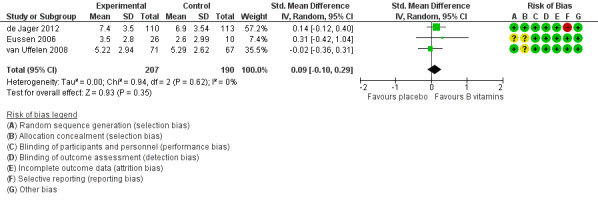
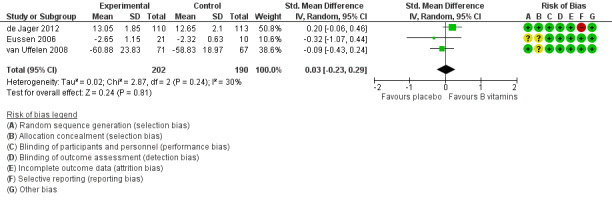
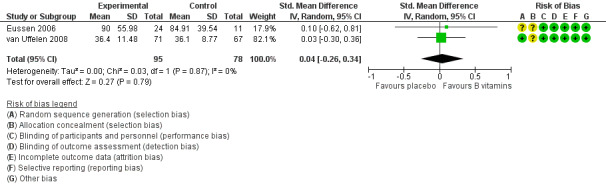
Main results: We included five trials with 879 participants which investigated B vitamin supplements. In four trials, the intervention was a combination of vitamins B6, B12, and folic acid; in one, it was folic acid only. Doses varied. We considered there to be some risks of performance and attrition bias and of selective outcome reporting among these trials. Our primary efficacy outcomes were the incidence of dementia and scores on measures of overall cognitive function. None of the trials reported the incidence of dementia and the evidence on overall cognitive function was of very low-quality. There was probably little or no effect of B vitamins taken for six to 24 months on episodic memory, executive function, speed of processing, or quality of life. The evidence on our other secondary clinical outcomes, including harms, was very sparse or very low-quality. There was evidence from one study that there may be a slower rate of brain atrophy over two years in participants taking B vitamins. The same study reported subgroup analyses based on the level of serum homocysteine (tHcy) at baseline and found evidence that B vitamins may improve episodic memory in those with tHcy above the median at baseline.We included one trial (n = 516) of vitamin E supplementation. Vitamin E was given as 1000 IU of alpha-tocopherol twice daily. We considered this trial to be at risk of attrition and selective reporting bias. There was probably no effect of vitamin E on the probability of progression from MCI to Alzheimer's dementia over three years (HR 1.02; 95% CI 0.74 to 1.41; n = 516; 1 study, moderate-quality evidence). There was also no evidence of an effect at intermediate time points. The available data did not allow us to conduct analyses, but the authors reported no significant effect of three years of supplementation with vitamin E on overall cognitive function, episodic memory, speed of processing, clinical global impression, functional performance, adverse events, or mortality (five deaths in each group). We considered this to be low-quality evidence.We included one trial (n = 256) of combined vitamin E and vitamin C supplementation and one trial (n = 26) of supplementation with chromium picolinate. In both cases, there was a single eligible cognitive outcome, but we considered the evidence to be very low-quality and so could not be sure of any effects.
Authors' conclusions: The evidence on vitamin and mineral supplements as treatments for MCI is very limited. Three years of treatment with high-dose vitamin E probably does not reduce the risk of progression to dementia, but we have no data on this outcome for other supplements. Only B vitamins have been assessed in more than one RCT. There is no evidence for beneficial effects on cognition of supplementation with B vitamins for six to 24 months. Evidence from a single study of a reduced rate of brain atrophy in participants taking vitamin B and a beneficial effect of vitamin B on episodic memory in those with higher tHcy at baseline warrants attempted replication.
Conflict of interest statement
Jenny McCleery ‐ none known Rajesh P Abraham ‐ none known David A Denton ‐ none known Anne WS Rutjes ‐ none known Lee‐Yee Chong ‐ none known Aalya S Al‐Assaf ‐ none known Daniel J Griffith ‐ none known Shireen Rafeeq ‐ none known Hakan Yaman ‐ none known Muzaffar A Malik ‐ none known Marcello Di Nisio ‐ Di Nisio reports participation to Advisory Boards for Daiichi‐Sankyo, Aspen and Pfizer, and consultancy fees for Daiichi‐Sankyo and Bayer Health Care outside the submitted work. Gabriel Martínez ‐ none known Robin WM Vernooij ‐ none known Naji Tabet ‐ none known
Figures
Update of
References
References to studies included in this review
de Jager 2012 {published data only}
-
- Smith AD. Disease‐modification in mild cognitive impairment by lowering homocysteine. Neurobiology of Aging 2012;33(Suppl 1):S32.
-
- Jager CA, Oulhaj A, Jacoby R, Refsum H, Smith AD. Cognitive and clinical outcomes of homocysteine‐lowering B‐vitamin treatment in mild cognitive impairment: a randomized controlled trial. International Journal of Geriatric Psychiatry 2012;27(6):592‐600. - PubMed
Eussen 2006 {published data only}
-
- Eussen S, Ueland P, Clarke R, Blom H, Hoefnagels W, Staveren W, et al. The association of betaine, homocysteine and related metabolites with cognitive function in Dutch elderly people. British Journal of Nutrition 2007;98(5):960‐8. - PubMed
-
- Eussen SJ, Groot LC, Joosten LW, Bloo RJ, Clarke R, Ueland PM, et al. Effect of oral vitamin B‐12 with or without folic acid on cognitive function in older people with mild vitamin B‐12 deficiency: a randomized, placebo‐controlled trial. American Journal of Clinical Nutrition 2006;84(2):361‐70. [PUBMED: 16895884] - PubMed
-
- NCT00111267. Oral vitamin B12 supplementation and cognitive performance in elderly people. clinicaltrials.gov/ct2/show/NCT00111267 (first received 18 May 2005).
Fan 2017 {published data only}
-
- Fan J, He B, Sun F. Influence of folic acid intervention on cognitive function of community patients with mild cognitive impairment. Chinese Nursing Research 2017;31(32):4161‐3.
Krikorian 2010 {published data only}
-
- Krikorian R, Eliassen JC, Boespflug EL, Nash TA, Shidler MD. Improved cognitive‐cerebral function in older adults with chromium supplementation. Nutritional Neuroscience 2010;13(3):116‐22. - PubMed
Naeini 2014 {published data only}
-
- Naeini AM, Elmadfa I, Djazayeri A, Barekatain M, Aghayeghazvini MR, Jalali M, et al. Effect of vitamin E and C supplementation on elderly with mild cognitive impairment (MCI) in Isfahan, Iran. Annals of Nutrition & Metabolism 2013;63(Suppl 1):1145.
-
- Naeini AM, Elmadfa I, Djazayery A, Barekatain M, Ghazvini MR, Djalali M, et al. The effect of antioxidant vitamins E and C on cognitive performance of the elderly with mild cognitive impairment in Isfahan, Iran: a double‐blind, randomized, placebo‐controlled trial. European Journal of Nutrition 2014;53(5):1255‐62. - PubMed
Petersen 2005 {published data only}
-
- Blacker D. Neither vitamin E nor donepezil delays progression from amnestic mild cognitive impairment to Alzheimer's disease in the long term. Evidence‐Based Mental Health 2006;9(1):20. - PubMed
-
- Fleisher AS, Sowell BB, Taylor C, Gamst AC, Petersen RC, Thal LJ, et al. Clinical predictors of progression to Alzheimer disease in amnestic mild cognitive impairment. Neurology 2007;68(19):1588‐95. - PubMed
-
- Grundman M. Vitamin E and Alzheimer disease: the basis for additional clinical trials. The American Journal of Clinical Nutrition February 1, 2000;71(2):630S‐636S. - PubMed
-
- Petersen R, Grundman M, Thomas R, Thal L. Donepezil and vitamin E as treatments for mild cognitive impairment. Neurobiology of Aging 2004;25(Supplement 2):S20.
-
- Petersen RC, Thomas RG, Grundman M, Bennett D, Doody R, Ferris S, et al. Vitamin E and donepezil for the treatment of mild cognitive impairment. The New England journal of medicine 2005;352(23):2379‐88. - PubMed
Ting 2017 {published data only}
-
- NCT00097669. VITATOPS: a study of vitamins to prevent stroke. clinicaltrials.gov/ct2/show/NCT00097669 (first received 24 November 2004).
-
- Ting S, Earnest A, Li H, Shahul H, Chen C, Tan E‐K. B vitamins and cognition in subjects with small vessel disease: a substudy of VITATOPS, a randomized, placebo‐controlled trial. Journal of the Neurological Sciences 2017;379:124‐6. - PubMed
-
- VITATOPS Trial Study Group. The VITATOPS (vitamins to prevent stroke) trial: rationale and design of an international, large, simple, randomized trial of homocysteine‐lowering multivitamin therapy in patients with recent transient ischaemic attack or stroke. Cerebrovascular Diseases 2002;13(2):120‐6. - PubMed
van Uffelen 2008 {published data only}
-
- Uffelen JG, Chinapaw MJ, Mechelen W, Hopman‐Rock M. Walking or vitamin B for cognition in older adults with mild cognitive impairment? A randomised controlled trial. British Journal of Sports Medicine 2008;42(5):344‐51. - PubMed
-
- Uffelen JG, Hopman‐Rock M, Chinapaw MJ, Mechelen W. Protocol for project FACT: a randomised controlled trial on the effect of a walking program and vitamin B supplementation on the rate of cognitive decline and psychosocial wellbeing in older adults with mild cognitive impairment [ISRCTN19227688]. BMC Geriatrics 2005;5:18. - PMC - PubMed
References to studies excluded from this review
Abbasi 2013 {published data only}
-
- Abbasi B, Kimiagar M, Shahidi S, Shirazi MM, Sadeghniiat K, Payab M, et al. Effect of magnesium supplementation on mental health in elderly subjects with insomnia: a double‐blind randomized clinical trial. Iranian Journal of Psychiatry and Clinical Psychology 2013;19(1):9‐19.
Anand 2011 {published data only}
-
- Anand VP, Bhatt JK, Varghese JM, Das SK. Supplementation of vitamin E improves cognitive status and oxidative stress in type 2 diabetes mellitus. International Research Journal of Pharmacy 2011;2(11):169‐72.
Andreeva 2011 {published data only}
-
- Andreeva VA, Kesse‐Guyot E, Barberger‐Gateau P, Fezeu L, Hercberg S, Galan P. Cognitive function after supplementation with B vitamins and long‐chain omega‐3 fatty acids: ancillary findings from the SU.FOL.OM3 randomized trial. American Journal of Clinical Nutrition 2011;94(1):278‐86. - PubMed
Anonymous 2008 {published data only}
-
- Anonymous. High‐dose vitamin B does not slow cognitive decline in AD. Geriatric Psychopharmacology Update 2008;12:3.
Arwert 2003 {published data only}
-
- Arwert LI, Deijen JB, Drent ML. Effects of an oral mixture containing glycine, glutamine and niacin on memory, GH and IGF‐I secretion in middle‐aged and elderly subjects. Nutritional Neuroscience 2003;6(5):269‐75. - PubMed
Benton 1995 {published data only}
-
- Benton D, Fordy J, Haller J. The impact of long‐term vitamin supplementation on cognitive functioning. Psychopharmacology 1995;117(3):298‐305. - PubMed
Bryan 2002 {published data only}
-
- Bryan J, Calvaresi E, Hughes D. Short‐term folate, vitamin B‐12 or vitamin B‐6 supplementation slightly affects memory performance but not mood in women of various ages. Journal of Nutrition 2002;132(6):1345‐56. - PubMed
Chan 2010 {published data only}
-
- Chan A, Remington R, Kotyla E, Lepore A, Zemianek J, Shea TB. A vitamin/nutriceutical formulation improves memory and cognitive performance in community‐dwelling adults without dementia. The journal of nutrition, health & aging. 2010;14(3):224‐30. - PubMed
Chandra 2001 {published data only}
-
- Chandra RK. Effect of vitamin and trace‐element supplementation on cognitive function in elderly subjects. Nutrition 2001;17(9):709‐12 [Retraction in: Nutrition 2005; 21(2):286]. - PubMed
Clarke 2003 {published data only}
-
- Clarke R, Harrison G, Richards S, Vital Trial Collaborative Group. Effect of vitamins and aspirin on markers of platelet activation, oxidative stress and homocysteine in people at high risk of dementia. Journal of Internal Medicine 2003;254(1):67‐75. - PubMed
Cockle 2000 {published data only}
-
- Cockle S, Dawe R, Robinson L, Haller J, Hindmarch I. The effects of repeated doses of vitamins on cognitive function in healthy elderly volunteers. International Journal of Neuropsychopharmacology 1998;1(Suppl 1):245.
-
- Cockle SM, Haller J, Kimber S, Dawe RA, Hindmarch I. The influence of multivitamins on cognitive function and mood in the elderly. Aging & mental health 2000;4(4):339‐53.
Corless 1987 {published data only}
-
- Corless D, Ellis M, Dawson E, Fraser F, Evans S, Perry JD, et al. Using activities of daily living assessments to measure the effectiveness of vitamin D supplements in elderly long‐stay patients. British Journal of Occupational Therapy 1987;50(2):60‐2.
Dangour 2011 {published data only}
-
- Dangour AD, Allen E, Clarke R, Elbourne D, Fasey N, Fletcher AE, et al. A randomised controlled trial investigating the effect of vitamin B12 supplementation on neurological function in healthy older people: the older people and enhanced neurological function (OPEN) study protocol [ISRCTN54195799]. Nutrition Journal 2011;10(22). - PMC - PubMed
Durga 2007 {published data only}
-
- Durga J, Boxtel MP, Shouten EG. Folic acid supplementation improved cognitive function in older adults. Journal of Clinical Outcomes Management 2007;14(3):134‐5.
-
- Durga J, Boxtel MP, Schouten EG, Kok FJ, Jolles J, Katan MB, et al. Effect of 3‐year folic acid supplementation on cognitive function in older adults in the FACIT trial: a randomised, double blind, controlled trial. Lancet 2007;369(9557):208‐16. - PubMed
-
- Schiepers OJ, Boxtel MP, Groot RH, Jolles J, Kort WL, Swinkels DW, et al. Serum iron parameters, HFE C282Y genotype, and cognitive performance in older adults: results from the FACIT study. The journals of gerontology. Series A, Biological sciences and medical sciences 2010;65(12):1312‐21. - PubMed
Ford 2008 {published data only}
-
- Ford AH, Flicker L, Thomas J, Norman P, Jamrozik K, Almeida OP. Vitamins B12, B6, and folic acid for onset of depressive symptoms in older men: results from a 2‐year placebo‐controlled randomized trial. Journal of Clinical Psychiatry 2008;69(8):1203‐9. - PubMed
Ford 2010 {published data only}
-
- Ford AH, Flicker L, Alfonso H, Thomas J, Clarnette R, Martins R, et al. Vitamins B(12), B(6), and folic acid for cognition in older men. Neurology 2010;75(17):1540‐7. - PubMed
Grodstein 2007 {published data only}
-
- Grodstein F, Kang JH, Glynn RJ, Cook NR, Gaziano M. A randomized trial of beta‐carotene supplementation and cognitive function in men: the Physicians' Health study II. Archives of Internal Medicine 2007;167(20):2184‐90. - PubMed
Grodstein 2013 {published data only}
-
- Christen WG, Gaziano JM, Hennekens CH. Design of Physicians’ Health Study II — a randomized trial of beta‐carotene, vitamins E and C, and multivitamins, in prevention of cancer, cardiovascular disease, and eye disease, and review of results of completed trials. Annals of Epidemiology 2000;10(2):125‐34. - PubMed
Hankey 2013 {published data only}
-
- Almeida OP, Marsh K, Alfonso H, Flicker L, Davis TM, Hankey GJ. B vitamins reduce the long‐term risk of depression after stroke: the VITATOPS‐DEP trial. Annals of Neurology 2010;68(4):503‐10. - PubMed
-
- Hankey GF, Ford AH, Qilong Yi, Eikelboom JW, Lees KR, Chen C, et al. Effect of B vitamins and lowering homocysteine on cognitive impairment in patients with previous stroke or transient ischemic attack. Stroke 2013;44(8):2232‐39. - PubMed
-
- NCT00097669. VITATOPS: a study of vitamins to prevent stroke. clinicaltrials.gov/ct2/show/NCT00097669 (first received 24 November 2004).
Harris 2012 {published data only}
-
- Harris E, Macpherson H, Vitetta L, Kirk J, Sali A, Pipingas A. Effects of a multivitamin, mineral and herbal supplement on cognition and blood biomarkers in older men: a randomised, placebo‐controlled trial. Human Psychopharmacology 2012; Vol. 27, issue 4:370‐7. - PubMed
Heart Protection Study Collaborative Group 1999 {published data only}
-
- Heart Protection Study Collaborative Group. MRC/BHF heart protection study of cholesterol‐lowering therapy and of antioxidant vitamin supplementation in a wide range of patients at increased risk of coronary heart disease death: early safety and efficacy experience. European Heart Journal 1999;20(10):725‐41. - PubMed
Hvas 2004 {published data only}
-
- Hvas AM, Juul S, Lauritzen L, Nexo E, Ellegaard J. No effect of vitamin B‐12 treatment on cognitive function and depression: a randomized placebo controlled study. Journal of Affective Disorders 2004;81(3):269‐73. - PubMed
Kang 2006 {published data only}
-
- Kang JH, Cook N, Manson JA, Buring JE, Grodstein F. A randomized trial of vitamin E supplementation and cognitive function in women. Archives of Internal Medicine 2006;166(22):2462‐8. - PubMed
-
- Ridker PM, Cook NR, Lee IM, Gordon D, Gaziano JM, Manson JE, et al. A randomized trial of low‐dose aspirin in the primary prevention of cardiovascular disease in women. New England Journal of Medicine 2005;352(13):1293‐304. - PubMed
Kang 2008 {published data only}
-
- Bassuk SS, Albert CM, Cook NR, Zaharris E, MacFadyen JG, Danielson E, et al. The women’s antioxidant cardiovascular study: design and baseline characteristics of participants. Journal of Womens Health 2004;13(1):99–117. - PubMed
Kang 2009 {published data only}
Kesse‐Guyot 2011 (SUVIMAX trial) {published data only}
-
- Hercberg S, Galan P, Preziosi P, Bertrais S, Mennen L, Malvy D, et al. The SU.VI.MAX study: a randomized, placebo‐controlled trial of the health effects of antioxidant vitamins and minerals. Archives of Internal Medicine 2004;164(21):2335‐42. - PubMed
-
- Hercberg S, Preziosi P, Briançon S, Galan P, Triol I, Malvy D, et al. A primary prevention trial using nutritional doses of antioxidant vitamins and minerals in cardiovascular diseases and cancers in a general population: the SU.VI.MAX study ‐ design, methods, and participant characteristics. Controlled Clinical Trials 1998;19(4):336‐51. - PubMed
-
- Kesse‐Guyot E, Fezeu L, Jeandel C, Ferry M, Andreeva V, Amieva H, et al. French adults' cognitive performance after daily supplementation with antioxidant vitamins and minerals at nutritional doses: a post hoc analysis of the SUpplementation in VItamins and Mineral AntioXidants (SU.VI.MAX) trial. American Journal of Clinical Nutrition 2011;94(3):892‐9. - PubMed
Kryscio 2017 {published data only}
Kwok 2011 {published data only}
-
- Kwok T, Lee J, Law CB, Pan PC, Yung CY, Choi KC, et al. A randomized placebo controlled trial of homocysteine lowering to reduce cognitive decline in older demented people. Clinical Nutrition 2011;30(3):297‐302. - PubMed
Kwok 2017 {published data only}
-
- Kwok T, Lee J, Ma RC, Wong SY, Kung K, Lam A, et al. A randomized, placebo‐controlled trial of vitamin B12 supplementation to prevent cognitive decline in older diabetic patients with borderline low serum vitamin B12. Clinical Nutrition 2017;36(6):1509‐15. - PubMed
-
- NCT02457507. Vitamin B12 supplement to prevent cognitive decline. clinicaltrials.gov/ct2/show/NCT02457507 (first received 22 may 2015).
Lewerin 2005 {published data only}
-
- Lewerin C, Matousek M, Steen G, Johansson B, Steen B, Nilsson‐Ehle H. Significant correlations of plasma homocysteine and serum methylmalonic acid with movement and cognitive performance in elderly subjects but no improvement from short‐term vitamin therapy: a placebo‐controlled randomized study. American Journal of Clinical Nutrition 2005;81(5):1155‐62. - PubMed
-
- Lewerin C, Nilsson‐Ehle H, Matousek M, Lindstedt G, Steen B. Reduction of plasma homocysteine and serum methylmalonate concentrations in apparently healthy elderly subjects after treatment with folic acid, vitamin B12 and vitamin B6: a randomised trial. European Journal of Clinical Nutrition 2003;57(11):1426‐36. - PubMed
Loriaux 1985 {published data only}
-
- Loriaux SM, Deijen JB, Orlebeke JF, Swart JH. The effects of nicotinic acid and xanthinol nicotinate on human memory. Psychopharmacology 1985;87(4):390‐5. - PubMed
Macpherson 2012 {published data only}
-
- Macpherson H, Ellis KA, Sali A, Pipingas A. Memory improvements in elderly women following 16 weeks treatment with a combined multivitamin, mineral and herbal supplement: a randomized controlled trial. Psychopharmacology 2012;220(2):351‐65. - PubMed
Maniam 2004 {published data only}
-
- Maniam J, Krishnaswamy S, Mohamed J. Randomized double blind placebo controlled human clinical trial investigating effect of 1200 IU alpha‐tocopherol on lipid peroxidation, antioxidant status and cognitive function of elderly. Free Radical Biology & Medicine 2004;36(Suppl):S146.
Maylor 2006 (ZENITH study) {published and unpublished data}
-
- Andriollo‐Sanchez M, Hininger‐Favier I, Meunier N, Toti E, Zaccaria M, Brandolini‐Bunlon M, et al. Zinc intake and status in middle‐aged and older European subjects: the ZENITH study. European Journal of Clinical Nutrition 2005;59(Suppl 2):S37‐41. [PUBMED: 16254579] - PubMed
-
- Coudray C, O'Connor JM, Maiani G, Cashman KD, Simpson EE, Secker DL, et al. Introduction to the ZENITH study and summary of baseline results. European Journal of Clinical Nutrition 2005;59(Suppl 2):S5‐7. [PUBMED: 16254582] - PubMed
-
- Maylor EA, Simpson EEA, Secker DL, Meunier N, Andriollo‐Sanchez M, Polito A, et al. Effects of zinc supplementation on cognitive function in healthy middle‐aged and older adults: the ZENITH study. British Journal of Nutrition 2006;96(4):752‐60. - PubMed
-
- Meunier N, O'Connor JM, Maiani G, Cashman KD, Secker DL, Ferry M, et al. Importance of zinc in the elderly: the ZENITH study. European Journal of Clinical Nutrition 2005;59(Suppl 2):S1‐4. [PUBMED: 16254574] - PubMed
McMahon 2006 {published data only}
-
- Anonymous. Homocysteine and cognitive function in healthy elderly people. Geriatric Psychopharmacology Update 2006;10(11):4‐5.
-
- Cacabelos R. Homocysteine and cognition: from Galenic dogmatism to genetic relativism. Aging Health 2006;2(5):783–6.
-
- Clarke R. Homocysteine‐lowering vitamin B supplements do not improve cognitive performance in healthy older adults after two years. Evidence‐based Mental Health 2007;10(1):27. - PubMed
-
- Clarke R. Vitamin B12, folic acid, and the prevention of dementia. New England Journal of Medicine 2006;354(26):2817‐9. - PubMed
-
- McMahon JA, Green TJ, Skeaff CM, Knight RG, Mann JI, Williams SM. A controlled trial of homocysteine lowering and cognitive performance. New England Journal of Medicine 2006;354(26):2764‐72. - PubMed
McNeill 2007 {published data only}
Murray‐Kolb 2011 {published data only}
-
- Murray‐Kolb LE, Wenger MJ, Venkatramanan S, Marquis GS, Wesley AS, Haas JD. Effects of double‐fortified salt on perceptual and cognitive performance in women. FASEB Journal : official publication of the Federation of American Societies for Experimental Biology 2011;25(Suppl 1).
NCT00903695 {published data only}
-
- NCT00903695. Nutriceutical effects on cognitive status in mild cognitive impairment patients. clinicaltrials.gov/show/NCT00903695 (first received 18 May 2009).
NCT01095211 {published data only}
-
- NCT01095211. B‐vitamins treatment for improvement of cognitive function. clinicaltrials.gov/show/NCT01095211 (first received 30 March 2010).
NCT01317849 {published data only}
-
- Liu X, Shi M, Xia F, Han J, Liu Z, Wang B, et al. The China Stroke Secondary Prevention Trial (CSSPT) protocol: a double‐blinded randomized controlled trial of combined folic acid and B vitamins for secondary prevention of stroke. International Journal of Stroke 2015; Vol. 10, issue 2:264‐8. - PubMed
-
- NCT01317849. China stroke secondary prevention trial. clinicaltrials.gov/ct2/show/study/NCT01317849 (first received 17 March 2011).
NCT01708005 {published data only}
-
- NCT01708005. Dietary supplements, executive functions and vitamin D (DIET‐D): a double‐blind randomized controlled trial. clinicaltrials.gov/show/NCT01708005 (first received 16 October 2012).
NCT02467153 {published data only}
-
- NCT02467153. Influence of combined vitamin D supplementation and resistance exercise training on musculoskeletal health in frail older men and women (EXVITD). clinicaltrials.gov/show/NCT02467153 (first received 9 June 2015).
Pase 2015 {published data only}
-
- Pase MP, Grima N, Cockerell R, Stough C, Scholey A, Sali A, et al. The effects of long‐chain omega‐3 fish oils and multivitamins on cognitive and cardiovascular function: a randomized, controlled clinical trial. Journal of the American College of Nutrition 2015;34(1):21‐31. - PubMed
Pathansali 2006 {published data only}
-
- Pathansali R, Mangoni AA, Creagh‐Brown B, Lan Z, Ngow G, Yuan X, et al. Effects of folic acid supplementation on psychomotor performance and hemorheology in healthy elderly subjects. Archives of Gerontology and Geriatrics 2006;43(1):127‐37. - PubMed
Rietsema 2014 {published data only}
-
- Rietsema WJ. Unexpected recovery of moderate cognitive impairment on treatment with oral methylcobalamin. Journal of the American Geriatrics Society 2014;62(8):1611‐2. - PubMed
Rossom 2012 {published data only}
Sanchez 2011 {published data only}
-
- Brito A, Verdugo R, Hertrampf E, Miller JW, Green R, Fedosov SN, et al. Vitamin B‐12 treatment of asymptomatic, deficient, elderly Chileans improves conductivity in myelinated peripheral nerves, but high serum folate impairs vitamin B‐12 status response assessed by the combined indicator of vitamin B‐12 status. American Journal of Clinical Nutrition 2016;103(1):250‐7. [PUBMED: 26607937] - PubMed
-
- Sanchez H, Albala C, Lera L, Castillo JL, Verdugo R, Lavados M, et al. Comparison of two modes of vitamin B12 supplementation on neuroconduction and cognitive function among older people living in Santiago, Chile: a cluster randomized controlled trial. a study protocol. Nutrition Journal 2011;10:100. - PMC - PubMed
Satalich 2014 {published data only}
-
- Satalich TA, Shankle WR, Alexander GE, Batchelder WH. Markov models detect vitamin E and donepezil treatment effects in ADCS MCI trial. Alzheimer's & Dementia 2014;10(4 suppl):P776.
Smith 1999 {published data only}
-
- Smith A, Clark R, Nutt D, Haller J, Hayward S, Perry K. Anti‐oxidant vitamins and mental performance of the elderly. Human Psychopharmacology 1999;14(7):459‐71.
Summers 2010 {published data only}
-
- Summers WK, Martin RL, Cunningham M, Deboynton VL, Marsh GM. Complex antioxidant blend improves memory in community‐dwelling seniors. Journal of Alzheimer's Disease 2010;19(2):429‐39. - PubMed
van der Zwaluw 2014 {published data only}
-
- Zwaluw N, Wijngaarden J, Dhonukshe‐Rutten R, Brouwer‐Brolsma E, In't Veld P, Kessels R, et al. The impact of 2y B‐vitamin supplementation on cognitive performance: the B‐PROOF study. Alzheimer's & Dementia 2013;9(4):P880‐1.
-
- Zwaluw NL, Dhonukshe‐Rutten RAM, Wijngaarden JP, Brouwer‐Brolsma EM, Rest O, In't Veld PH, et al. Results of 2‐year vitamin B treatment on cognitive performance: secondary data from an RCT. Neurology 2014;83(23):2158‐66. - PubMed
Walker 2012 {published data only}
-
- Walker JG, Batterham PJ, Mackinnon AJ, Jorm AF, Hickie I, Fenech M, et al. Oral folic acid and vitamin B‐12 supplementation to prevent cognitive decline in community‐dwelling older adults with depressive symptoms ‐ the Beyond Ageing Project: a randomized controlled trial. American Journal of Clinical Nutrition 2012;95(1):194‐203. - PubMed
-
- Walker JG, Mackinnon AJ, Batterham P, Jorm AF, Hickie I, McCarthy A, et al. Mental health literacy, folic acid and vitamin B12, and physical activity for the prevention of depression in older adults: randomised controlled trial. British Journal of Psychiatry 2010;197(1):45‐54. - PubMed
Wolters 2005 {published data only}
-
- Wolters M, Hickstein M, Flintermann A, Tewes U, Hahn A. Cognitive performance in relation to vitamin status in healthy elderly German women ‐ the effect of 6‐month multivitamin supplementation. Preventive Medicine 2005;41(1):253‐9. - PubMed
Wouters‐Wesseling 2005 {published data only}
-
- Wouters‐Wesseling W, Wagenaar LW, Rozendaal M, Deijen JB, Groot LC, Bindels JG, et al. Effect of an enriched drink on cognitive function in frail elderly persons. Journals of Gerontology. Series A: Biological Sciences and Medical Sciences 2005;60(2):265‐70. - PubMed
Yaffe 2004 {published data only}
References to studies awaiting assessment
ACTRN12607000321448 {published data only}
-
- ACTRN12607000321448. Vitamin D and cognition trial/a randomised, placebo controlled trial of Vitamin D in older adults with mild cognitive impairment and low vitamin D concentration to prevent cognitive decline and delay progression of cognitive decline. www.anzctr.org.au/TrialSearch.aspx?searchTxt=12607000321448 (first received 13 Jun 2007).
-
- Flicker L, Greenop K, Almeida O, Alfonso H, Beer C, Hill K, et al. Effect of vitamin D supplementation on cognitive function in older adults with mild cognitive impairment ‐ a randomized trial. Australasian Journal on Ageing 2011;30(1):11.
Jiang 2014 {published data only}
-
- Jiang B, Ding C, Yao G, Yao C, Zhang Y, Ge J, et al. Intervention effect of folic acid and vitamin B12 on vascular cognitive impairment complicated with hyperhomocysteinemia. Journal of Medical Biochemistry 2014;33(2):169‐174.
-
- Jiang Y, Cheng D, Kong H, Pang W, Yang H, Sun S, et al. Supplementation with B vitamins improves cognitive function in the middle‐aged and elderly with hyperhomocysteinemia. Annals of Nutrition & Metabolism 2013;63(Suppl 1):713.
Ma 2017 {published data only (unpublished sought but not used)}
-
- Ma F, Li Q, Zhou X, Zhao J, Song A, Li W, et al. Effects of folic acid supplementation on cognitive function and Abeta‐related biomarkers in mild cognitive impairment: a randomized controlled trial. European Journal of Nutrition 2017 Dec 18 [Epub ahead of print]. [DOI: ] - PubMed
-
- Ma F, Wu T, Zhao J, Han F, Marseglia A, Liu H, et al. Effects of 6‐month folic acid supplementation on cognitive function and blood biomarkers in mild cognitive impairment: a randomized controlled trial in China. Journals of Gerontology. Series A: Biological Sciences and Medical Sciences 2016;71(10):1376‐83. - PubMed
References to ongoing studies
NCT02185222 {published data only}
-
- NCT02185222. Effect of vitamin D on cognitive decline of patients with memory complaint. clinicaltrials.gov/show/NCT02185222 2014; Vol. (first received 9 July 2014).
Additional references
Albert 2011
-
- Albert MS, DeKosky ST, Dickson D, Dubois B, Feldman HH, Fox NC, et al. The diagnosis of mild cognitive impairment due to Alzheimer's disease: recommendations from the National Institute on Aging‐Alzheimer's Association workgroups on diagnostic guidelines for Alzheimer's disease. Alzheimer's & Dementia 2011;7(3):270‐9. - PMC - PubMed
Amanullah 2010
-
- Amanullah S, Seeber C. Niacin deficiency resulting in neuropsychiatric symptoms: a case study and review of literature. Clinical Neuropsychiatry 2010;7(1):10‐4.
Anderson 1997
-
- Anderson RA, Cheng N, Bryden NA, Polansky MM, Cheng N, Chi J, et al. Elevated intakes of supplemental chromium improve glucose and insulin variables in individuals with type 2 diabetes. Diabetes 1997; Vol. 46, issue 11:1786‐91. - PubMed
Annweiler 2012
-
- Annweiler C, Rolland Y, Schott AM, Blain H, Vellas B, Herrmann FR, et al. Higher vitamin D dietary intake is associated with lower risk of alzheimer's disease: a 7‐year follow‐up. Journals of Gerontology: Series A Biological Sciences and Medical Sciences 2012;67(11):1205‐11. - PubMed
Bath 2013a
-
- Bath SC, Rayman MP. Iodine deficiency in the U.K.: an overlooked cause of impaired neurodevelopment?. Proceedings of the Nutrition Society 2013;72(2):226‐35. - PubMed
Bath 2013b
-
- Bath SC, Steer CD, Golding J, Emmett P, Rayman MP. Effect of inadequate iodine status in UK pregnant women on cognitive outcomes in their children: results from the Avon longitudinal study of parents and children (ALSPAC). Lancet 2013;382(9889):331‐7. - PubMed
Behl 1992
-
- Behl C, Davis J, Cole G, Schubert D. Vitamin E protects nerve cells from amyloid β protein toxicity. Biochemical and Biophysical Research Communications 1992;182(2):944‐50. - PubMed
Berr 2012
-
- Berr C, Arnaud J, Akbaraly TN. Selenium and cognitive impairment: a brief‐review based on results from the EVA study. BioFactors 2012; Vol. 38, issue 2:139‐44. - PubMed
Bjelakovic 2012
Borchardt 1999
Brigelius‐Flohe 2007
Bruner 1996
-
- Bruner AB, Joffe A, Duggan AK, Casella JF, Brandt J. Randomised study of cognitive effects of iron supplementation in non‐anaemic iron‐deficient adolescent girls. Lancet 1996;348(9033):992‐6. - PubMed
Centers for Disease Control and Prevention 2014
-
- Centers for Disease Control and Prevention. Vitamins and minerals. https://www.cdc.gov/nutrition/index.html (accessed prior to 28 September 2018).
Christensen 2013
Clarke 2007
-
- Clarke R, Birks J, Nexo E, Ueland PM, Schneede J, Scott J, et al. Low vitamin B‐12 status and risk of cognitive decline in older adults. American Journal of Clinical Nutrition 2007;86(5):1384‐91. - PubMed
Clarke 2014
Da Costa 2012
Da Costa 2014
De Luca 1975
-
- Luca HF. Function of the fat‐soluble vitamins. American Journal of Clinical Nutrition 1975;28(4):339‐45. - PubMed
DerSimonian 1986
-
- DerSimonian R, Laird N. Meta‐analysis in clinical trials. Controlled Clinical Trials 1986;7(3):177‐88. - PubMed
Dolphin 2012
-
- Dolphin AC. Calcium channel auxiliary α2δ and β subunits: trafficking and one step beyond. Nature Reviews Neuroscience 2012; Vol. 13, issue 8:542‐5. - PubMed
Duara 2011
Dubois 2014
-
- Dubois B, Feldman HH, Jacova C, Hampel H, Molinuevo JL, Blennow K, et al. Advancing research diagnostic criteria for Alzheimer'sdisease: the IWG‐2 criteria. Lancet Neurology 2014;13(6):614‐29. - PubMed
Dysken 2014
Farina 2012
Ferland 2012
-
- Ferland G. Vitamin K, an emerging nutrient in brain function. BioFactors 2012;38(2):151‐7. - PubMed
Ferland 2013
-
- Ferland G, Presse N, Belleville S, Gaudreau P, Greenwood CE, Kergoat MJ, et al. Vitamin K and cognitive function in healthy older adults. The nuage study. FASEB journal : official publication of the Federation of American Societies for Experimental Biology 2013;27:840.13.
Food Standards Agency 2003
-
- Expert group on vitamins and minerals. Safe Upper Levels for Vitamins and Minerals. cot.food.gov.uk/sites/default/files/vitmin2003.pdf. Food Standards Agency, 2003. [ISBN 1‐904026‐11‐7]
Gregory 1990
-
- Gregory J, Foster K, Tyler H, Wiseman M. The dietary and nutritional survey of British adults. The Dietary and Nutritional Survey of British Adults. London: HMSO Publications Centre, 1990.
Guyatt 2008
Halliwell 1992
-
- Halliwell B. Reactive oxygen species and the central nervous system. Journal of Neurochemistry 1992;59(5):1609‐23. - PubMed
Halliwell 1999
-
- Halliwell B. Antioxidant defence mechanisms: from the beginning to the end (of the beginning). Free Radical Research 1999;31(4):261‐72. - PubMed
Higgins 2003
Higgins 2011
-
- Higgins JP, Green S, editor(s). Cochrane Handbook for Systematic Reviews of Interventions Version 5.1.0 (updated March 2011). The Cochrane Collaboration, 2011. Available from handbook.cochrane.org.
IOM 2011
-
- Institute of Medicine (US) Committee on Nutrition, Trauma, the Brain. Nutrition and Traumatic Brain Injury: Improving Acute and Subacute Health Outcomes in Military Personnel. Washington (DC): National Academies Press, 2011. - PubMed
Jack 2018
Jeandel 1989
-
- Jeandel C, Nicolas MB, Dubois F, Nabet‐Belleville F, Penin F, Cuny G. Lipid peroxidation and free radical scavengers in Alzheimer's disease. Gerontology 1989;35(5‐6):275‐82. - PubMed
Jellinger 2006
-
- Jellinger KA. Clinicopathological analysis of dementia disorders in the elderly ‐ an update. Journal of Alzheimer's Disease 2006;9(Suppl 3):61‐70. - PubMed
Kaden 2011
Kelly 2011
-
- Kelly GS. Pantothenic acid. Monograph. Alternative Medicine Review 2011;16(3):263‐74. - PubMed
Kennedy 2011
-
- Kennedy DO, Haskell CF. Vitamins and cognition: what is the evidence?. Drugs 2011;71(15):1957‐71. - PubMed
Kühnast 2013
Langlais 1995
-
- Langlais PJ, Savage LM. Thiamine deficiency in rats produces cognitive and memory deficits on spatial tasks that correlate with tissue loss in diencephalon, cortex and white matter. Behavioural Brain Research 1995;68(1):75‐89. - PubMed
Launer 1999
-
- Launer LJ, Andersen K, Dewey ME, Letenneur L, Ott A, Amaducci LA, et al. Rates and risk factors for dementia and Alzheimer's disease: results from EURODEM pooled analyses. EURODEM Incidence Research Group and Work Groups. European studies of dementia. Neurology 1999;52(1):78‐84. - PubMed
Lindsay 2002
-
- Lindsay J, Laurin D, Verreault R, Hebert R, Helliwell B, Hill GB, et al. Risk factors for Alzheimer's disease: a prospective analysis from the Canadian Study of Health and Aging. American Journal of Epidemiology 2002;156(5):445‐53. - PubMed
Linus Pauling Institute
-
- Linus Pauling Institute, Oregon State University. Minerals. lpi.oregonstate.edu/mic/minerals (accessed 8 September 2015).
Llewellyn 2010
Lourida 2013
-
- Lourida I, Soni M, Thompson‐Coon J, Purandare N, Lang IA, Ukoumunne OC, et al. Mediterranean diet, cognitive function, and dementia: a systematic review. Epidemiology 2013;24(4):479‐89. - PubMed
MAFF 1999
-
- Ministry of Agriculture, Fisheries, Food. 1997 Total Diet Study: Aluminium, arsenic, cadmium, chromium, copper, lead, mercury, nickel, selenium, tin, zinc. London (UK): Joint Food Safety and Standards Group; 1999. Food Surveillance Information Sheet No. 191.
Matthews 2007
Matthews 2008
-
- Matthews FE, Stephan BC, McKeith IG, Bond J, Brayne C. Two‐year progression from mild cognitive impairment to dementia: to what extent do different definitions agree?. Journal of the American Geriatrics Society 2008;56(8):1424‐33. - PubMed
Matthews 2013
-
- Matthews FE, Arthur A, Barnes LE, Bond J, Jagger C, Robinson L, et al. A two‐decade comparison of prevalence of dementia in individuals aged 65 years and older from three geographical areas of England: results of the Cognitive Function and Ageing Study I and II. Lancet 2013;382(9902):1405‐12. - PMC - PubMed
Mattson 2003
-
- Mattson MP, Shea TB. Folate and homocysteine metabolism in neural plasticity and neurodegenerative disorders. Trends in Neurosciences 2003;26(3):137‐46. - PubMed
McCann 2008
-
- McCann JC, Ames BN. Is there convincing biological or behavioral evidence linking vitamin D deficiency to brain dysfunction?. FASEB journal : official publication of the Federation of American Societies for Experimental Biology 2008;22(4):982‐1001. - PubMed
McCullagh 2001
-
- McCullagh CD, Craig D, McIlroy SP, Passmore AP. Risk factors for dementia. Advances in Psychiatric Treatment 2001;7(1):24‐31.
Mehdi 2013
Miller 2005
-
- Miller ER 3rd, Pastor‐Barriuso R, Dalal D, Riemersma RA, Appel LJ, Guallar E. Meta‐analysis: high‐dosage vitamin E supplementation may increase all‐cause mortality. Annals of Internal Medicine 2005;142(1):37‐46. - PubMed
Mitchell 2009
-
- Mitchell AJ, Shiri‐Feshki M. Rate of progression of mild cognitive impairment to dementia‐‐meta‐analysis of 41 robust inception cohort studies. Acta Psychiatrica Scandinavica 2009;119(4):252‐65. - PubMed
Norton 2014
-
- Norton S, Matthews FE, Barnes DE, Yaffe K, Brayne C. Potential for primary prevention of Alzheimer's disease: an analysis of population‐based data. Lancet Neurology 2014;13(8):788‐94. - PubMed
O'Leary 2012
-
- O'Leary F, Allman‐Farinelli M, Samman S. Vitamin B₁₂ status, cognitive decline and dementia: a systematic review of prospective cohort studies. British Journal of Nutrition 2012;108(11):1948‐61. - PubMed
ODS 2014
-
- National Institute of Health: Office of Dietary Supplements. Vitamin B6; Dietary Supplement Fact Sheet. http://ods.od.nih.gov/factsheets/VitaminB6‐HealthProfessional/ 25April 2016.
Ogawa 1994
-
- Ogawa N. Free radicals and neural cell damage. Rinsho Shinkeigaku 1994;34(12):1266‐8 . - PubMed
Ono 2012
-
- Ono K, Yamada M. Vitamin A and Alzheimer's disease. Geriatrics & Gerontology International 2012;12(2):180‐8. - PubMed
Osiezagha 2013
Ozawa 2012
-
- Ozawa M, Ninomiya T, Ohara T, Hirakawa Y, Doi Y, Hata J, et al. Self‐reported dietary intake of potassium, calcium, and magnesium and risk of dementia in the Japanese: the Hisayama study. Journal of the American Geriatrics Society 2012;60(8):1515‐20. - PubMed
Packer 1997
-
- Packer L, Tritschler H J, Wessel K. Neuroprotection by the metabolic antioxidant a‐lipoic acid. Free Radical Biology and Medicine 1997;22(1‐2):359‐78 . - PubMed
Pawlak 2014
-
- Pawlak R, Lester SE, Babatunde T. The prevalence of cobalamin deficiency among vegetarians assessed by serum vitamin B12: a review of literature. European Journal of Clinical Nutrition 2014;68(5):541‐8. - PubMed
Perrig 1997
-
- Perrig WJ, Perrig P, Stahelin HB. The relation between antioxidants and memory performance in the old and very old. Journal of the American Geriatrics Society 1997;45(6):718‐24. - PubMed
Petersen 1999
-
- Petersen RC, Smith GE, Waring SC, Ivnik RJ, Tangalos EG, Kokmen E. Mild cognitive impairment: clinical characterization and outcome. Archives of Neurology 1999;56(3):303‐8. - PubMed
Petersen 2004
-
- Petersen RC. Mild cognitive impairment as a diagnostic entity. Journal of Internal Medicine 2004;256(3):183‐94. - PubMed
Powell 2000
-
- Powell SR. The antioxidant properties of zinc. Journal of Nutrition 2000;130(Suppl 55):1447S‐54S. - PubMed
Powers 2003
-
- Powers HJ. Riboflavin (vitamin B‐2) and health. American Journal of Clinical Nutrition 2003;77(6):1352‐60. - PubMed
Preuss 1997
-
- Preuss HG, Grojec PL, Lieberman S, Anderson R A. Effects of different chromium compounds on blood pressure and lipid peroxidation in spontaneously hypertensive rats. Clinical Nephrology 1997 May;47(5):325‐30. - PubMed
Przybelski 2007
-
- Przybelski RJ, Binkley NC. Is vitamin D important for preserving cognition? A positive correlation of serum 25‐hydroxyvitamin D concentration with cognitive function. Archives of Biochemistry and Biophysics 2007;460(2):202‐5. - PubMed
Rahman 2007
Reichenbach 2010
Reiter 1995
-
- Reiter RJ. Oxidative processes and antioxidative defence mechanisms in the ageing brain. FASEB journal : official publication of the Federation of American Societies for Experimental Biology 1995;9(7):526‐33. - PubMed
RevMan 2014 [Computer program]
-
- The Nordic Cochrane Centre, The Cochrane Collaboration. Review Manager 5 (RevMan 5). Version 5.3. Copenhagen: The Nordic Cochrane Centre, The Cochrane Collaboration, 2014.
Rutjes 2009a
Rutjes 2009b
Rutjes 2010
Rücker 2008
Savva 2009
-
- Savva GM, Wharton SB, Ince PG, Forster G, Matthews FE, Brayne C. Age, neuropathology, and dementia. New England Journal of Medicine 2009;360(22):2302‐9. - PubMed
Scott 2013
-
- Scott TM, Tucker KL. Low plasma vitamin B6 predicts cognitive decline and depression in at‐risk individuals. FASEB journal : official publication of the Federation of American Societies for Experimental Biology 2013;27(Meeting abstract supplement):346.6.
Smorgon 2004
-
- Smorgon C, Mari E, Atti AR, Dalla Nora E, Zamboni PF, Calzoni F, et al. Trace elements and cognitive impairment: an elderly cohort study. Archives of Gerontology and Geriatrics 2004;38(Suppl 9):393‐402. - PubMed
Sodhi 2013
-
- Sodhi RK, Singh N. All‐trans retinoic acid rescues memory deficits and neuropathological changes in mouse model of streptozotocin‐induced dementia of Alzheimer's type. Progress in Neuro‐Psychopharmacology & Biological Psychiatry 2013;40:38‐46. - PubMed
Spiegelhalter 2004
-
- Spiegelhalter DJ, Abrams KJ, Myles JP. Bayesian Approaches to Clinical Trials and Health‐Care Evaluation. Chichester, UK: J Wiley, 2004.
Stephan 2007
-
- Stephan BC, Matthews FE, McKeith IG, Bond J, Brayne C. Early cognitive change in the general population: how do different definitions work?. Journal of the American Geriatrics Society 2007;55(10):1534‐40. [PUBMED: 17908056] - PubMed
Stephan 2013
Tabet 2001
-
- Tabet N, Mantle D, Walker Z, Orrel M. Vitamins, trace elements, and antioxidant status in dementia disorders. International Psychogeriatrics 2001;13(3):265‐75. - PubMed
Tabet 2002
-
- Tabet N, Mantle D, Walker Z, Orrell M. Endogenous antioxidant activities in relation to concurrent vitamins A, C, and E intake in dementia. International Psychogeriatrics 2002;14(1):7‐15. - PubMed
Takatsu 2009
-
- Takatsu H, Owada K, Abe K, Nakano M, Urano S. Effect of vitamin E on learning and memory deficit in aged rats. Journal of Nutritional Science and Vitaminology 2009;55(5):389‐93. - PubMed
The World Alzheimer Report 2014
-
- The World Alzheimer Report. Dementia and Risk Reduction: An analysis of protective and modifiable factors. London: Alzheimer’s Disease International (ADI), 2014.
van den Berg 2012
-
- Berg S, Splaine M. Policy brief risk factors for dementia. Alzheimer's Disease International 2012 Apr [accessed 2014 Sep 19].
van der Flier 2005
van der Schaft 2013
-
- Schaft J, Koek HL, Dijkstra E, Verhaar HJ, Schouw YT, Emmelot‐Vonk MH. The association between vitamin D and cognition: A systematic review. Ageing Research Reviews 2013;12(4):1013‐23. - PubMed
Wang 2000
-
- Wang X, Quinn PJ. The location and function of vitamin E in membranes. Molecular Membrane Biology 2000;17(3):143‐56. - PubMed
WHO 2012
-
- World Health Organization. Dementia: a public health priority. apps.who.int/iris/bitstream/handle/10665/75263/9789241564458_eng.pdf 2012.
Wilson 2002
-
- Wilson RS, Bennett DA, Bienias JL, Aggarwal NT, Mendes De Leon CF, Morris MC, et al. Cognitive activity and incident AD in a population‐based sample of older persons. Neurology 2002;59(12):1910‐4. - PubMed
Winblad 2004
-
- Winblad B, Palmer K, Kivipelto M, Jelic V, Fratiglioni L, Wahlund LO, et al. Mild cognitive impairment‐‐beyond controversies, towards a consensus: report of the International Working Group on Mild Cognitive Impairment. Journal of Internal Medicine 2004;256(3):240‐6. - PubMed
Publication types
MeSH terms
Substances
Grants and funding
LinkOut - more resources
Full Text Sources
Medical
