


Environmental DNA analysis of river herring in Chesapeake Bay: A powerful tool for monitoring threatened keystone species
- PMID: 30383750
- PMCID: PMC6211659
- DOI: 10.1371/journal.pone.0205578
Environmental DNA analysis of river herring in Chesapeake Bay: A powerful tool for monitoring threatened keystone species
Abstract
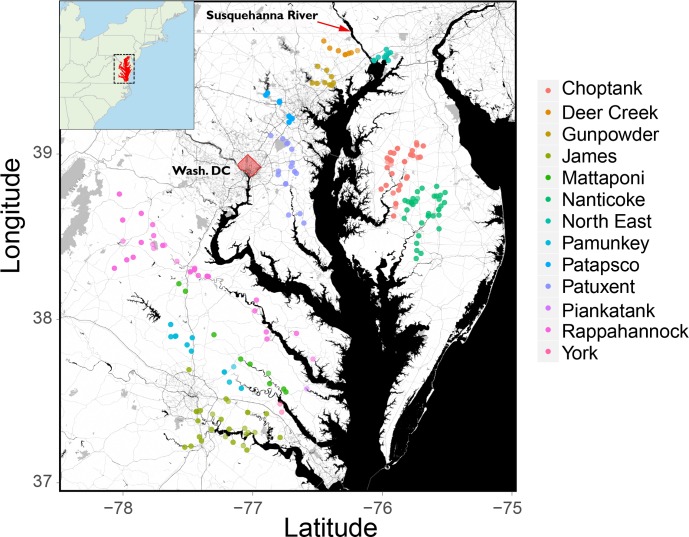
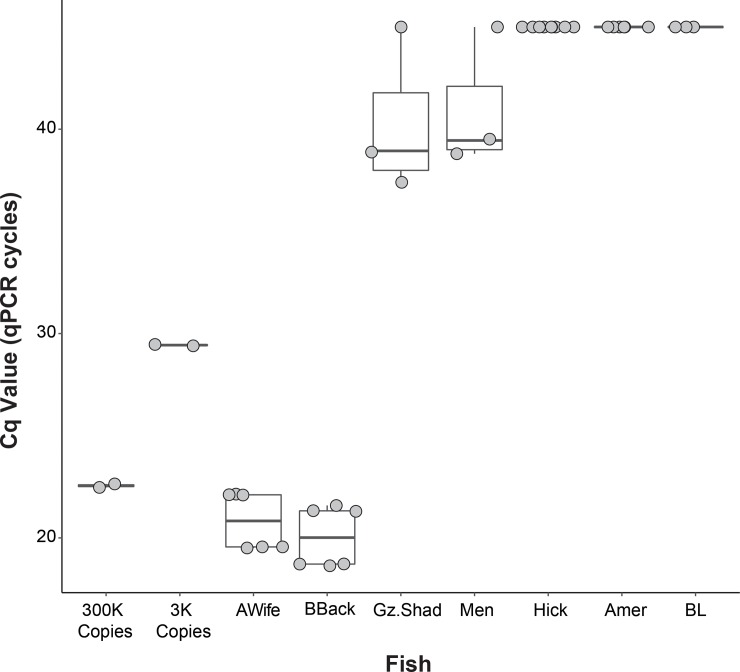
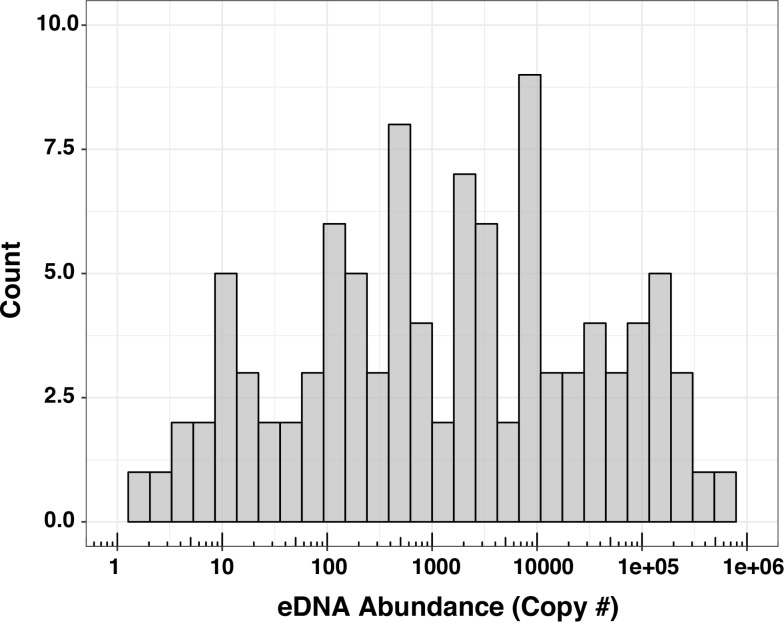
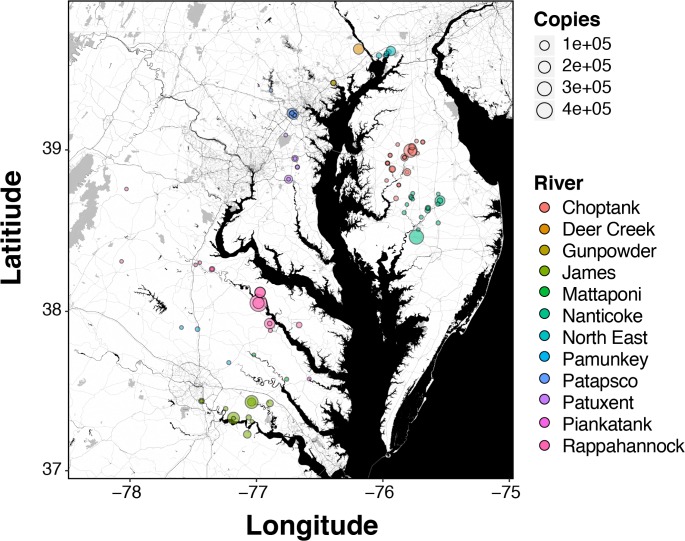
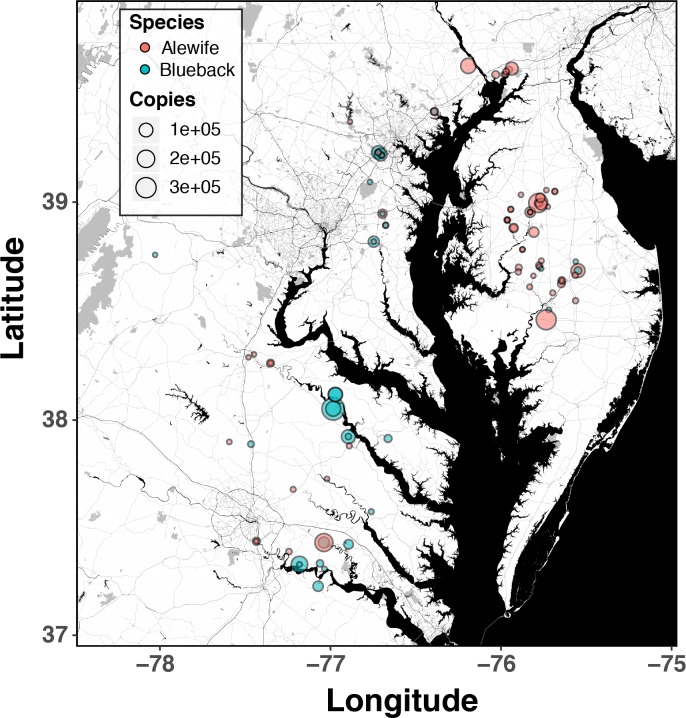
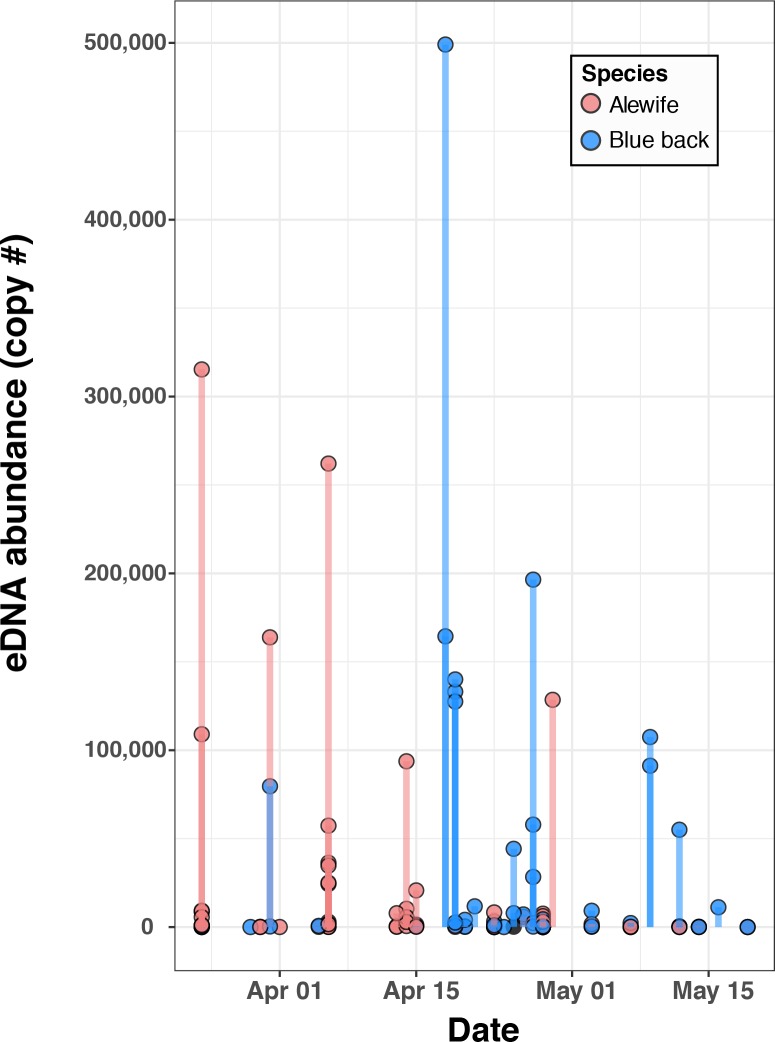
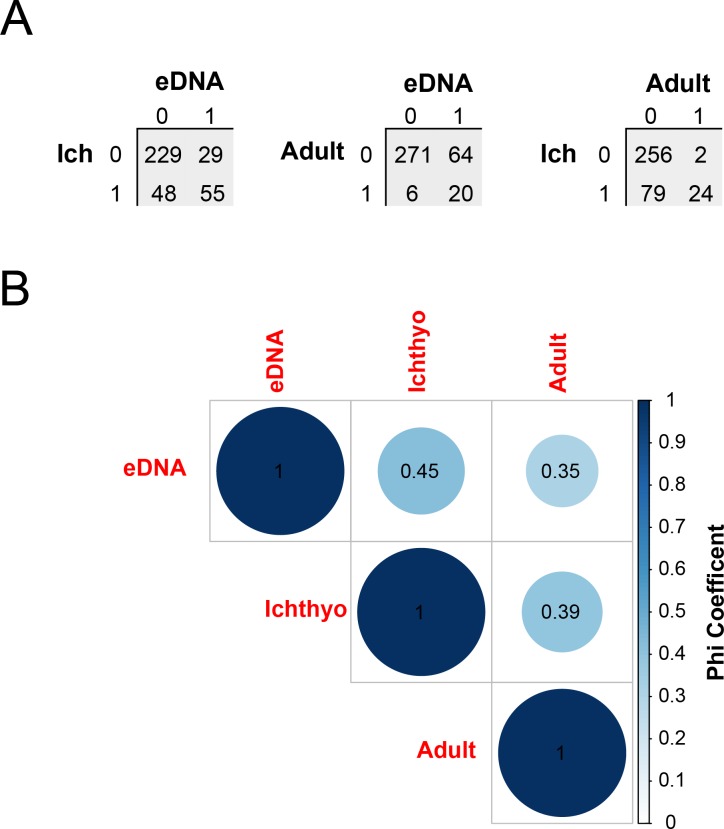
Environmental DNA (eDNA) sampling has emerged as a powerful tool to detect and quantify species abundance in aquatic environments. However, relatively few studies have compared the performance of eDNA-based abundance estimates to traditional catch or survey approaches in the field. Here, we have developed and field-tested a qPCR assay to detect eDNA from alewife and blueback herring (collectively known as 'river herring'), comparing eDNA-based presence and abundance data to traditional methods of quantification (ichthyoplankton sampling and adult observations). Overall, the qPCR assay showed very high target specificity in lab trials, and was successful in detecting river herring for 11/12 Chesapeake Bay tributaries in spring 2015 and 2016, with 106 out of 445 samples exhibiting positive eDNA hits. We found a strong correlation between eDNA abundance and ichthyoplankton count data (Spearman's Rho = 0.52), and Phi-tests (correlation of presence/absence data) showed higher correlation between eDNA and ichthyoplankton data (Phi = 0.45) than adult data (Phi = 0.35). Detection probability was significantly lower on western vs. eastern shore tributaries of Chesapeake Bay, and blueback herring and alewife were more likely detected on the western and eastern shores, respectively. Temporal patterns of eDNA abundance over the spring spawning season revealed that alewife were present in high abundances weeks ahead of blueback herring, which aligns with known differences in spawning behavior of the species. In summary, the eDNA abundance data corresponded well to other field methods and has great potential to assist future monitoring efforts of river herring abundance and habitat use.
Conflict of interest statement
The authors have declared that no competing interests exist.
Figures
References
-
- Kubečka J, Godø OR, Hickley P, Prchalová M, Říha M, Rudstam L, et al. Fish sampling with active methods. Fish Res. 2012;123: 1–3.
-
- Kubečka J, Hohausova E, Matena J, Peterka J, Amarasinghe US, Bonar SA, et al. The true picture of a lake or reservoir fish stock: A review of needs and progress. Fish Res. 2009;96: 1–5.
-
- Bailey LL, Hines JE, Nichols JD, MacKenzie DI. Sampling design trade-offs in occupancy studies with imperfect detection: examples and software. Ecological Applications. 2007; 17:281–290. - PubMed
-
- Mordecai RS, Mattsson BJ, Tzilkowski CJ, Cooper RJ. Addressing challenges when studying mobile or episodic species: hierarchical Bayes estimation of occupancy and use. J Appl Ecol. 2011;48:56–66.
-
- Pope KL, Lochmann SE,Young MK. Methods for assessing fish populations In: Hubert WA, Quist MC, editors. Inland Fisheries Management in North America, 3rd edition Bethesda Maryland: American Fisheries Society; 2010. pp. 325–352.
Publication types
MeSH terms
Substances
Associated data
LinkOut - more resources
Full Text Sources
Other Literature Sources
Miscellaneous
