


Adolescent methylmercury exposure: Behavioral mechanisms and effects of sodium butyrate in mice
- PMID: 30385387
- PMCID: PMC6342644
- DOI: 10.1016/j.neuro.2018.10.011
Adolescent methylmercury exposure: Behavioral mechanisms and effects of sodium butyrate in mice
Abstract
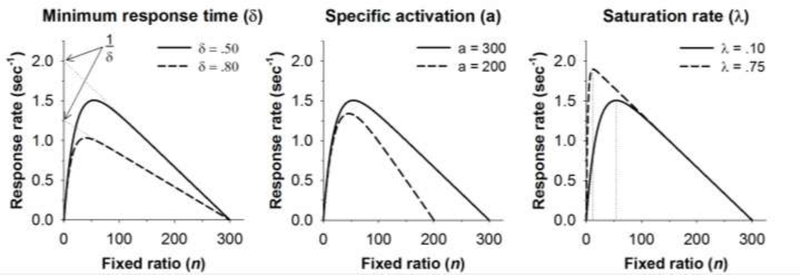
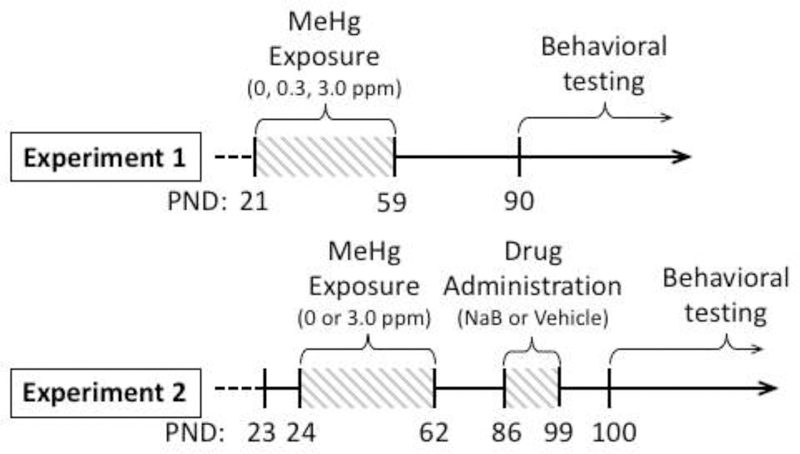
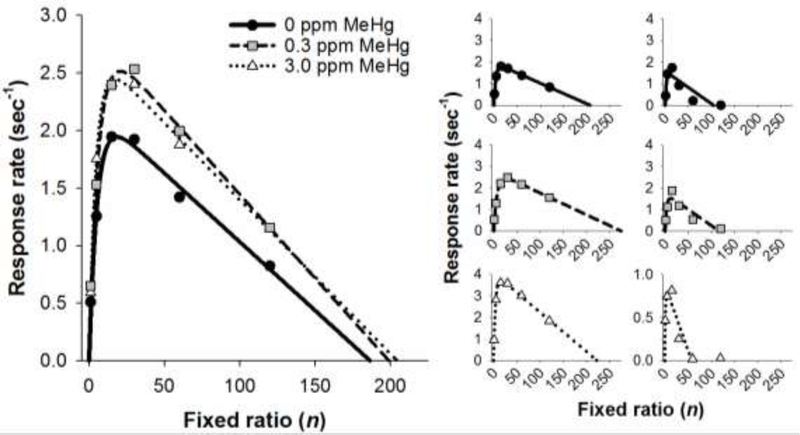
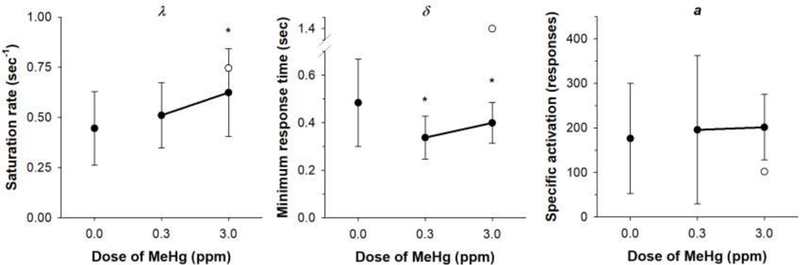
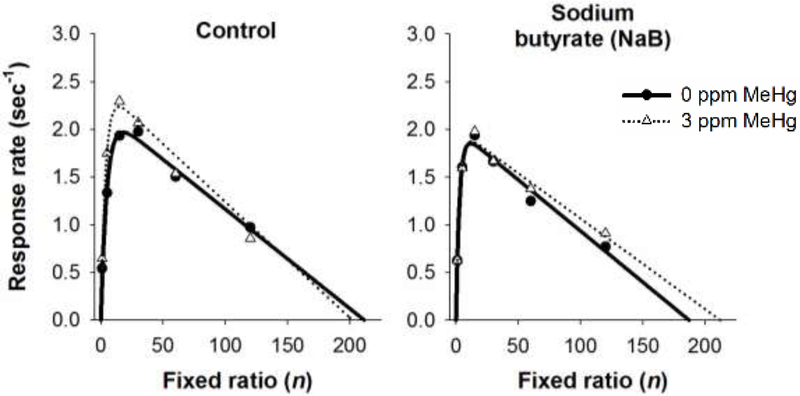
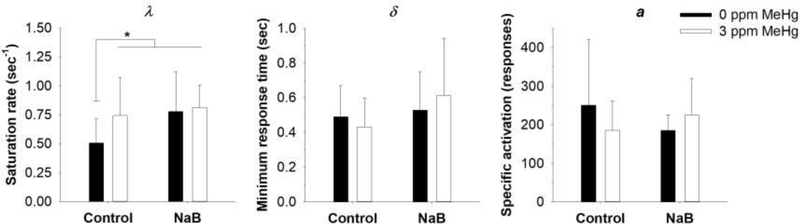
Methylmercury (MeHg), an environmental neurotoxicant primarily found in fish, produces neurobehavioral impairment when exposure occurs during gestation. Whether other developmental periods, such as adolescence, display enhanced vulnerability to the behavioral effects of MeHg exposure is only beginning to be explored. Further, little is known about the effects of repeated administration of lysine deacetylase inhibitors, such as sodium butyrate (NaB), on operant behavior. In Experiment 1, male C57BL6/n mice were exposed to 0, 0.3, and 3.0 ppm MeHg (n = 12 each) via drinking water from postnatal days 21 to 60 (murine adolescence). As adults, mice were trained to lever press under an ascending series of fixed-ratio schedules of milk reinforcement selected to enable the analysis of three important parameters of operant behavior using the framework provided by Mathematical Principles of Reinforcement. Adolescent MeHg exposure dose-dependently increased saturation rate, a measure of the retroactive reach of a reinforcer, and decreased minimum response time relative to controls. In Experiment 2, the behavioral effects of repeated NaB administration both alone and following adolescent MeHg exposure were examined. Male C57BL6/n mice were given either 0 or 3.0 ppm MeHg during adolescence and, before behavioral testing, two weeks of once daily i.p. injections of saline or 0.6 g/kg NaB (n = 12 in each cell). Adolescent MeHg exposure again increased saturation rate but did not significantly alter minimum response time. NaB also increased saturation rate in both MeHg exposure groups. These data suggest that the behavioral mechanisms of adolescent MeHg exposure and NaB may be related to the impact of reinforcement on prior responses. Specifically, MeHg and NaB concentrated the effects of reinforcers onto the most recent responses.
Keywords: Adolescence; Fixed ratio; Lysine deacetylase inhibitor; Mathematical principles of reinforcement; Methylmercury; Sodium butyrate.
Copyright © 2018 Elsevier B.V. All rights reserved.
Conflict of interest statement
Disclosures
The authors declare no conflicts of interest.
Figures
References
-
- Bezzina G, Body S, Cheung THC, Hampson CL, Deakin JFW, Anderson IM, Szabadi E, Bradshaw CM, 2008. Effect of quinolinic acid-induced lesions of the nucleus accumbens core on performance on a progressive ratio schedule of reinforcement: Implications for inter-temporal choice. Psychopharmacology (Berl) 197, 339–350. 10.1007/s00213-007-1036-0 - DOI - PMC - PubMed
-
- Chambers RA, Potenza MN, 2003. Neurodevelopment, impulsivity, and adolescent gambling. J. Gambl. Stud 19, 53–84. - PubMed
Publication types
MeSH terms
Substances
Grants and funding
LinkOut - more resources
Full Text Sources
Research Materials
