


Medical hypothesis: speculating on the pathogenesis of acute diverticulitis
- PMID: 30386127
- PMCID: PMC6191870
- DOI: 10.20524/aog.2018.0315
Medical hypothesis: speculating on the pathogenesis of acute diverticulitis
Abstract
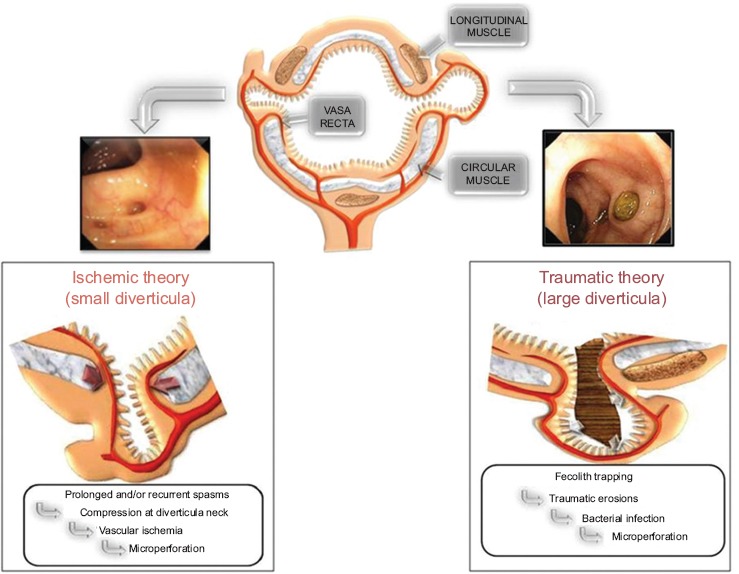
The pathogenetic process of acute diverticulitis remains speculative. According to the most widely accepted theory, the mechanism involved is "traumatic" damage to the mucosa due to fecolith impaction, as occurs in large diverticula. However, not uncommonly, diverticulitis develops in young patients with only few and small diverticula, where fecolith trapping is very unlikely. Therefore, another theory is necessary to clarify this process. A possible explanation could be "ischemic" damage. According to this theory, an ischemic lesion is caused by the compression of vascular structures in the neck of the diverticular task, as a result of prolonged and/or recurrent contractile spikes related to neuromuscular alterations in the diverticular tract. Clearly, the "traumatic" and "ischemic" mechanisms of acute diverticulitis are not mutually exclusive, and may act in different patients. The existing data corroborating these theories are presented and different potential therapeutic approaches are briefly discussed.
Keywords: Diverticulitis; pathogenesis; therapy.
Figures
References
-
- Stollman N, Smalley W, Hirano I AGA Institute Clinical Guidelines Committee. American Gastroenterological Association Institute Guideline on the Management of Acute Diverticulitis. Gastroenterology. 2015;149:1944–1949. - PubMed
-
- Stollman N, Raskin JB. Diverticular disease of the colon. Lancet. 2004;363:631–639. - PubMed
-
- Jacobs DO. Clinical practice: Diverticulitis. N Engl J Med. 2007;357:2057–2066. - PubMed
-
- West AB NDSG. The pathology of diverticulitis. J Clin Gastroenterol. 2008;42:1137–1138. - PubMed
LinkOut - more resources
Full Text Sources