


Conservation of the "Outside-in" Germination Pathway in Paraclostridium bifermentans
- PMID: 30386321
- PMCID: PMC6199464
- DOI: 10.3389/fmicb.2018.02487
Conservation of the "Outside-in" Germination Pathway in Paraclostridium bifermentans
Abstract
Clostridium difficile spore germination is initiated in response to certain bile acids and amino acids (e.g., glycine). Though the amino acid-recognizing germinant receptor is unknown, the bile acid germinant receptor is the germination-specific, subtilisin-like pseudoprotease, CspC. In C. difficile the CspB, CspA, and CspC proteins are involved in spore germination. Of these, only CspB is predicted to have catalytic activity because the residues important for catalysis are mutated in the cspA and cspC sequence. The CspB, CspA, and CspC proteins are likely localized to the outer layers of the spore (e.g., the cortex or the coat layers) and not the inner membrane where the Ger-type germinant receptors are located. In C. difficile, germination proceeds in an "outside-in" direction, instead of the "'inside-out" direction observed during the germination of Bacillus subtilis spores. During C. difficile spore germination, cortex fragments are released prior to the release of 2,4-dipicolinic acid (DPA) from the spore core. This is opposite to what occurs during B. subtilis spore germination. To understand if the mechanism C. difficile spore germination is unique or if spores from other organisms germinate in a similar fashion, we analyzed the germination of Paraclostridium bifermentans spores. We find that P. bifermentans spores release cortex fragments prior to DPA during germination and the DPA release from the P. bifermentans spore core can be blocked by high concentrations of osmolytes. Moreover, we find that P. bifermentans spores do not respond to steroid-like compounds (unlike the related C. difficile and P. sordellii organisms), indicating that the mere presence of the Csp proteins does permit germination in response to steroid compounds. Our findings indicate that the "outside in" mechanism of spore germination observed in C. difficile can be found in other bacteria suggesting that this mechanism is a novel pathway for endospore germination.
Keywords: Clostridium; DPA; cortex; germination; spore.
Figures
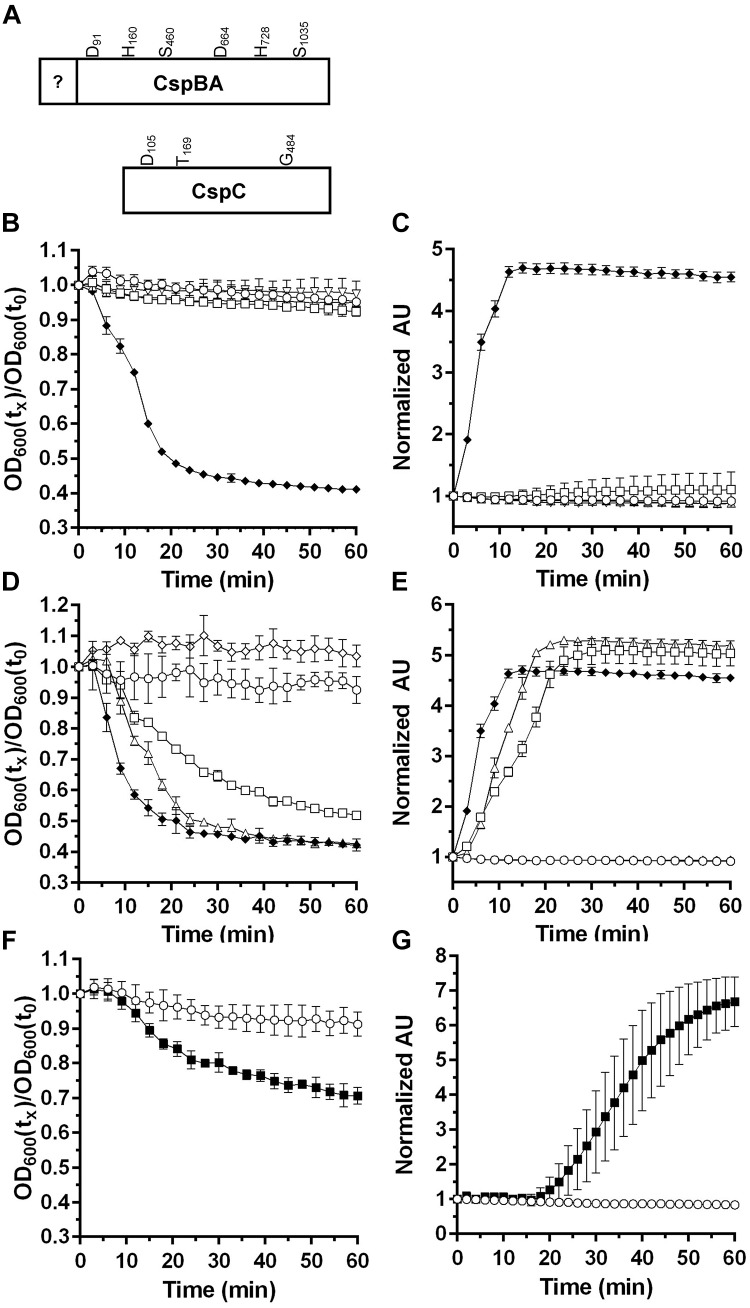
 50 mM
50 mM  50 mM
50 mM  (D,E). Spores alone, 50 mM 50 mM
  50 mM
(F,G) Spores alone, 50 mM
50 mM
(F,G) Spores alone, 50 mM  Data points represent the average from three independent experiments and error bars represent the standard deviation from the mean.
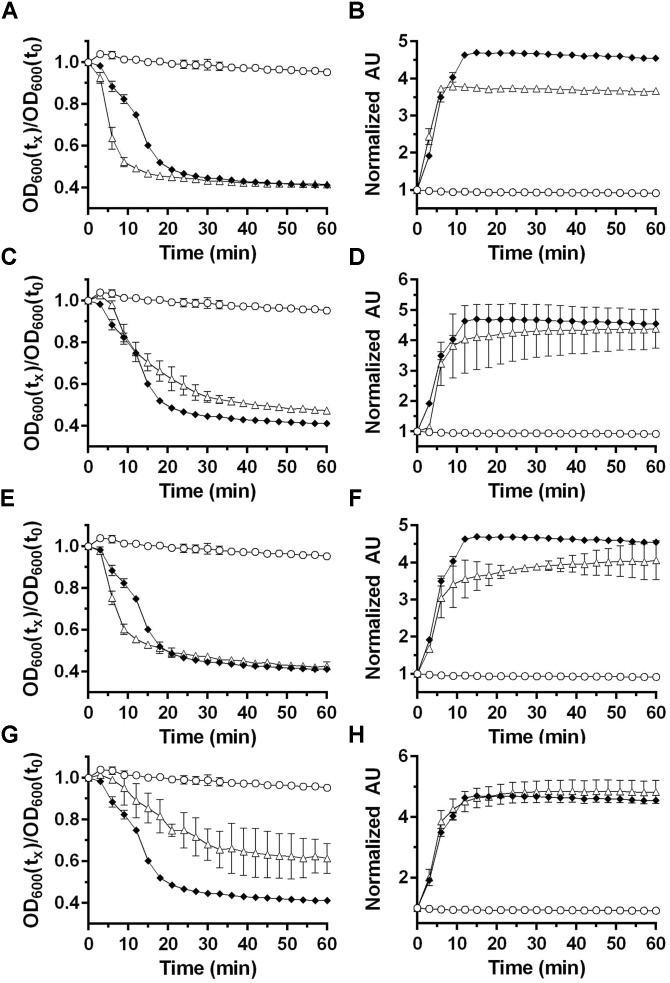 50 mM 50 mM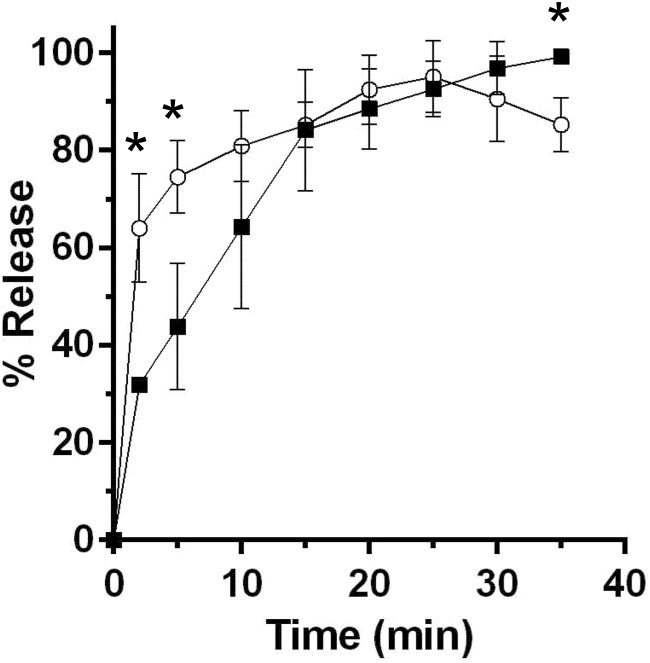
 and for DPA release
  . Data points represent the average from three independent experiments and error bars represent the standard deviation from the mean. Statistical significant was determined using a two-way ANOVA with Sidak’s multiple comparisons test. The asterisk marked points indicate statistical significance (p-value < 0.05).
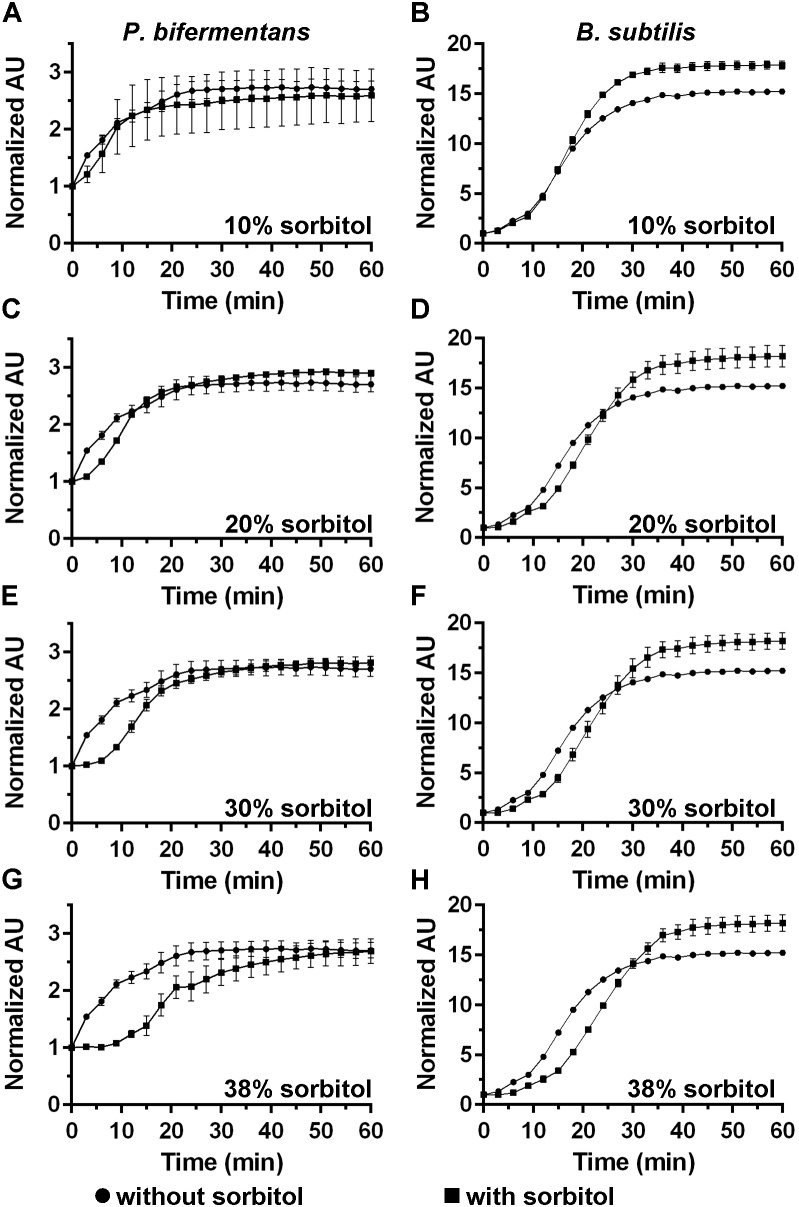 and in absence of
  sorbitol. (A,B) 10% sorbitol; (C,D) 20% sorbitol; (E,F) 30% sorbitol; (G,H) 38% sorbitol. Data points represent the average from three independent experiments and error bars represent the standard deviation from the mean.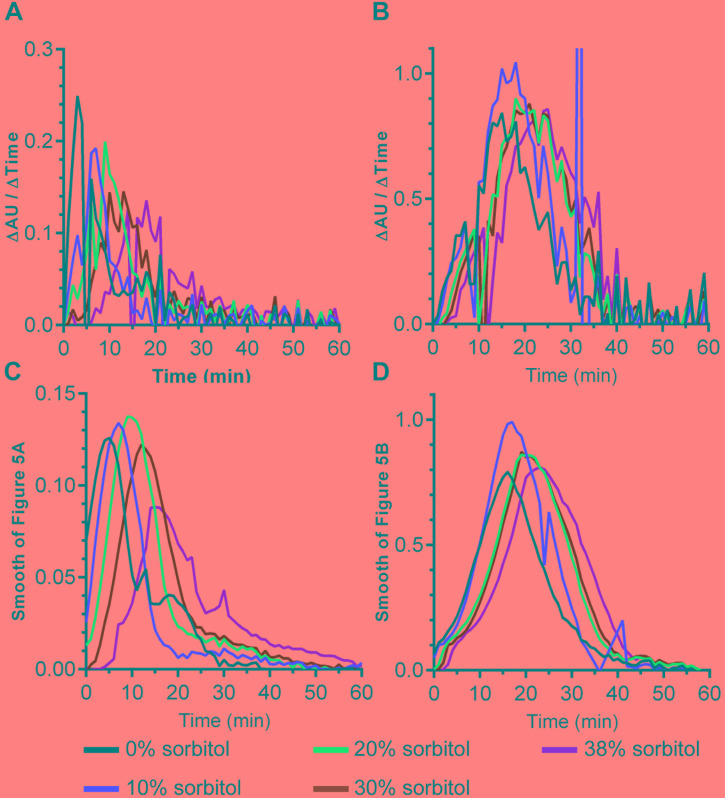
References
Grants and funding
LinkOut - more resources
Full Text Sources
Molecular Biology Databases
