


Understanding symptom burden and attitudes to irritable bowel syndrome with diarrhoea: Results from patient and healthcare professional surveys
- PMID: 30386615
- PMCID: PMC6206540
- DOI: 10.1177/2050640618787648
Understanding symptom burden and attitudes to irritable bowel syndrome with diarrhoea: Results from patient and healthcare professional surveys
Abstract
Background: Irritable bowel syndrome with diarrhoea (IBS-D) comprises multiple troublesome symptoms and negatively impacts patients' quality of life.
Objective: The objective of this article is to assess IBS-D patient burden and patient and healthcare professional (HCP) attitudes towards IBS.
Methods: Patients and HCPs from Australia, Canada, France, Germany, Italy, Spain and the United Kingdom completed internet-based surveys via market research panels. Attitudes to IBS-D-related statements were scored using seven-point Likert scales.
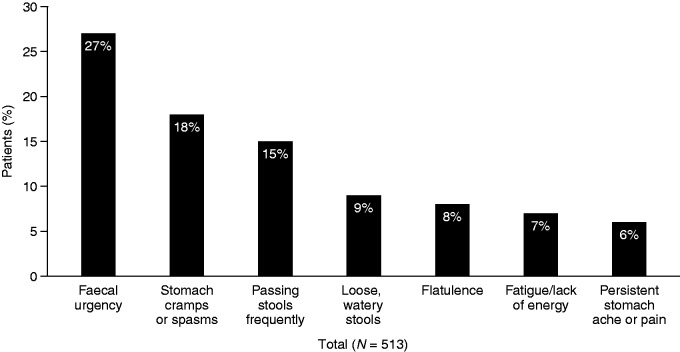
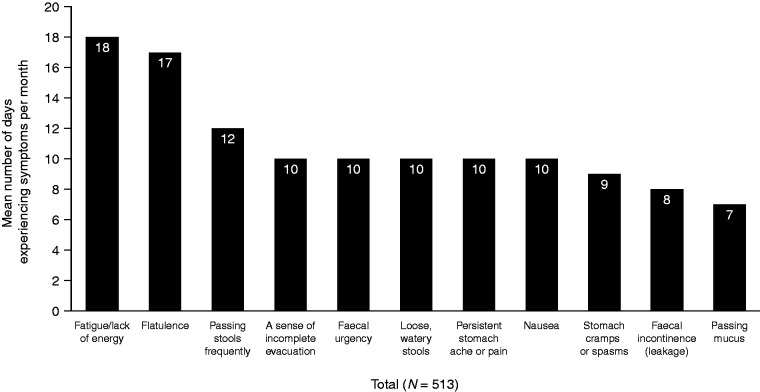
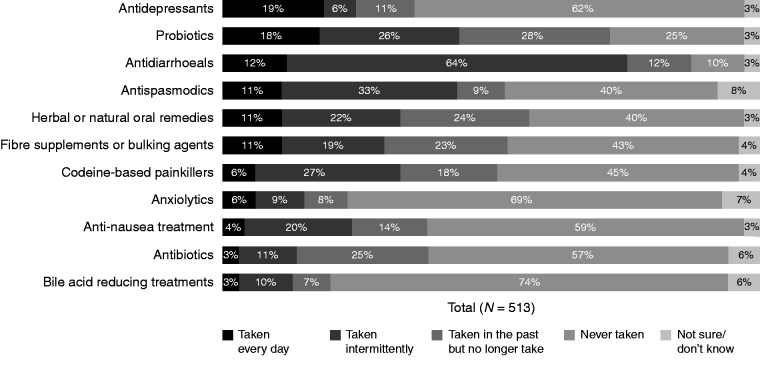
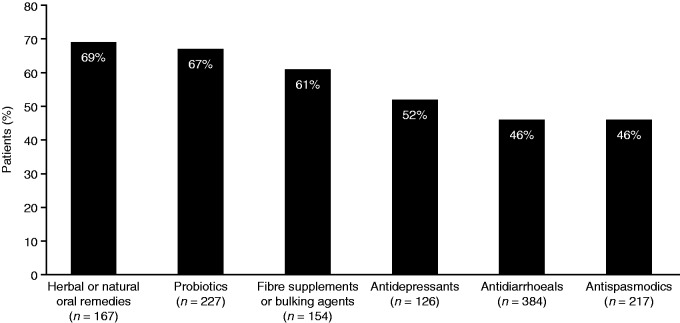
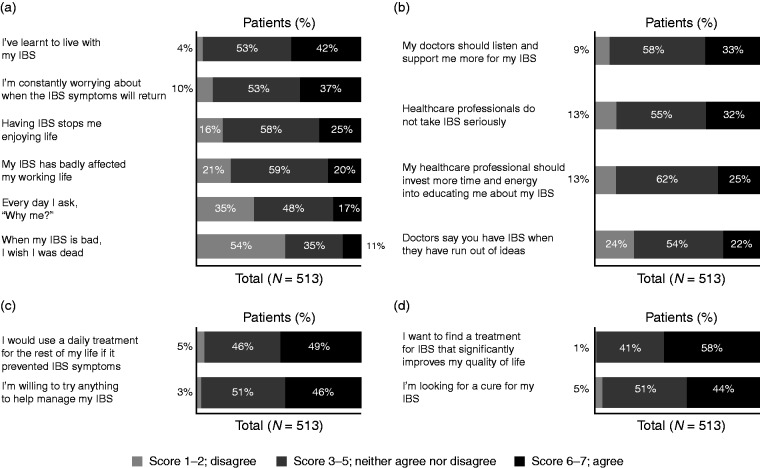
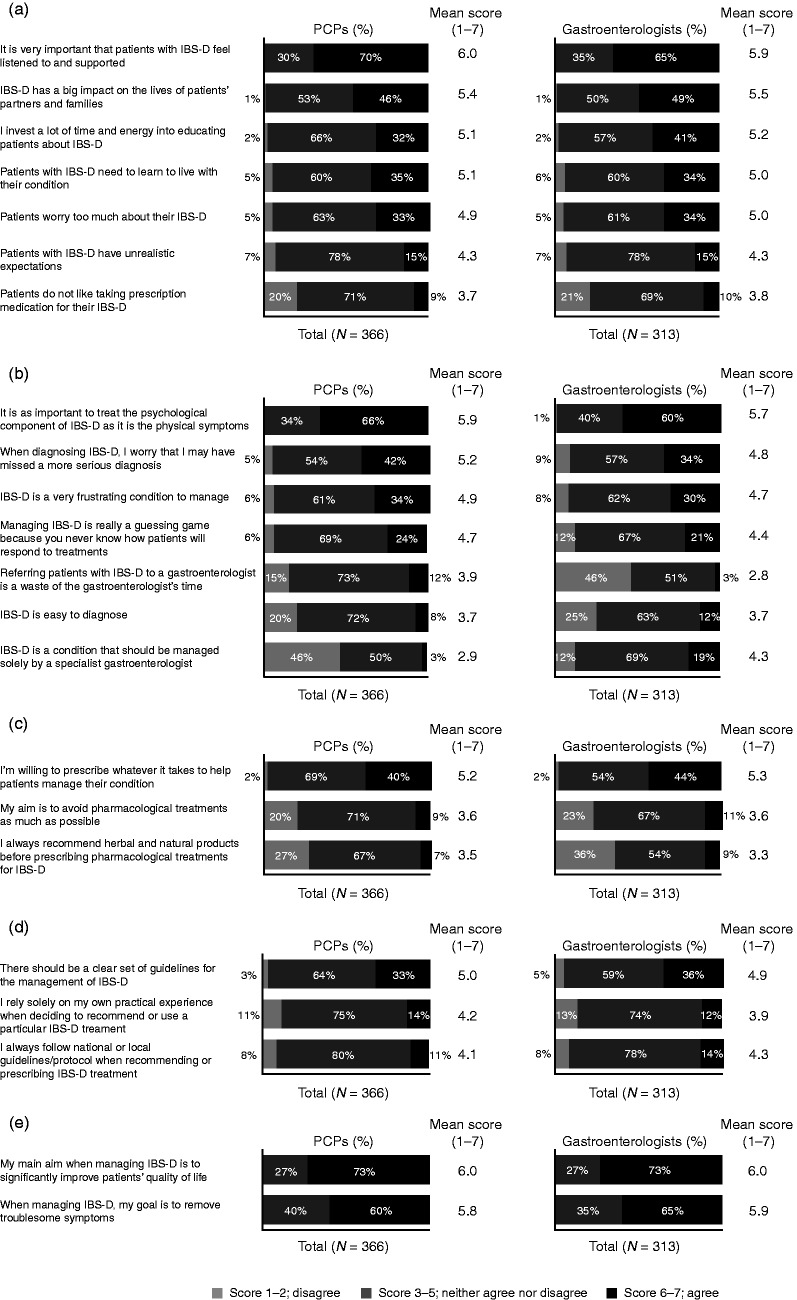
Results: The patient survey included 513 patients (70% female, mean age 40.9 years). Faecal urgency was reported as the most troublesome symptom (27%) and fatigue occurred on the most days per month (mean: 18); 61% of patients used ≥3 types of treatment daily or intermittently; 19% used antidepressants daily. Thirty-three per cent thought HCPs should listen and provide more support and 46% reported willingness to 'try anything' to help manage their IBS-D. The HCP survey included 366 primary care physicians and 313 gastroenterologists: A total of 70% and 65%, respectively, agreed it was important that IBS-D patients feel listened to and supported; 73% agreed their main aim was to improve quality of life; ∼30% expressed frustration at managing IBS-D.
Conclusion: IBS-D imposes a substantial burden on patients and HCPs. These findings point towards a need for improved patient-HCP communication.
Keywords: Irritable bowel syndrome; diarrhoea; faecal urgency; psychosocial morbidity; survey.
Figures
References
-
- Lacy BE, Mearin F, Chang L, et al. Bowel disorders. Gastroenterology 2016; 150: 1393–1407. - PubMed
-
- Lovell RM, Ford AC. Global prevalence of and risk factors for irritable bowel syndrome: A meta-analysis. Clin Gastroenterol Hepatol 2012; 10: 712–721. - PubMed
-
- Drossman DA, Chang L, Bellamy N, et al. Severity in irritable bowel syndrome: A Rome Foundation Working Team report. Am J Gastroenterol 2011; 106: 1749–1759. - PubMed
-
- Lacy BE. The science, evidence, and practice of dietary interventions in irritable bowel syndrome. Clin Gastroenterol Hepatol 2015; 13: 1899–1906. - PubMed
LinkOut - more resources
Full Text Sources
Miscellaneous
