


Human Milk: An Ideal Food for Nutrition of Preterm Newborn
- PMID: 30386758
- PMCID: PMC6198081
- DOI: 10.3389/fped.2018.00295
Human Milk: An Ideal Food for Nutrition of Preterm Newborn
Abstract
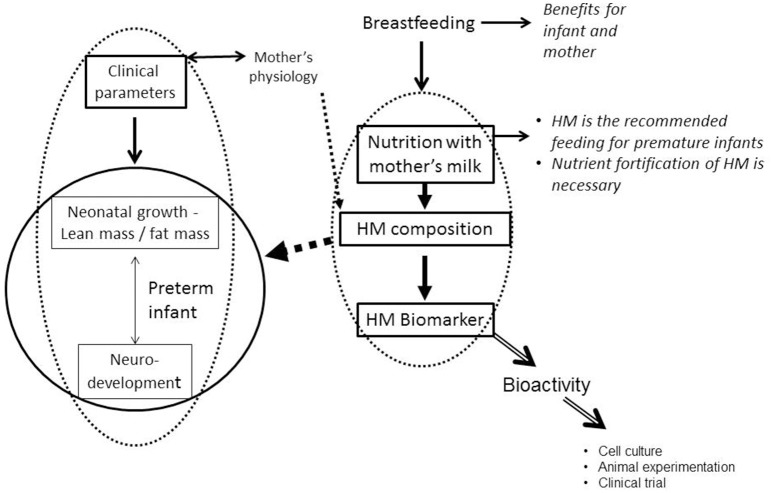
Human milk is the best food for newborn nutrition. There is no ideal composition of human milk and also no easy way to control the complexity of its nutritional quality and the quantity received by breastfed infants. Pediatricians and nutritionists use charts of infant growth (weight, size, head circumference) and neurodevelopment criteria that reflect the food that these infants receive. These charts reflect first the infant physiology and likely reflect the composition of human milk when infants are breastfed. In a situation of preterm birth, mother physiology impacts partly breast milk composition and this explains how this is more difficult to correlate infant growth or neurodevelopment with milk composition. Some biomarkers (lipids, oligosaccharides) have been identified in breast milk but their function is not always yet known. A better knowledge on how human milk could act on infant development to the mid- and long-term participating thus to nutritional programming is a challenging question for a better management of infants' nutrition, especially for preterm infants who are most fragile.
Keywords: breast milk; breastfeeding; infant neurodevelopment; mother milk; neonatal growth; nutritional programming; preterm.
Figures
References
Publication types
LinkOut - more resources
Full Text Sources
Other Literature Sources
Medical
