


Isolated Posterior Cruciate Reconstruction Results in Improved Functional Outcome but Low Rates of Return to Preinjury Level of Sport: A Systematic Review and Meta-analysis
- PMID: 30386804
- PMCID: PMC6204629
- DOI: 10.1177/2325967118804478
Isolated Posterior Cruciate Reconstruction Results in Improved Functional Outcome but Low Rates of Return to Preinjury Level of Sport: A Systematic Review and Meta-analysis
Abstract
Background: Although isolated posterior cruciate ligament reconstruction (PCLR) has become a more frequently performed procedure, reports of functional outcomes and return-to-sport (RTS) rates to support its use are still limited.
Purpose: To systematically review the literature to determine the rates of RTS and the functional outcomes of patients after isolated PCLR.
Study design: Systematic review: Level of evidence, 4.
Methods: Two reviewers independently searched 5 databases for patient-based clinical studies with a minimum 2-year follow-up that analyzed functional outcome and RTS following isolated PCLR. Studies with multiligament knee reconstruction were excluded. Risk of bias was performed with a modified Downs and Black checklist. The primary outcomes were Tegner and Lysholm scores, rates of RTS, and International Knee Documentation Committee (IKDC) subjective scores. Secondary outcomes were IKDC objective scores, instrumented knee laxity assessment, and Telos radiographic analysis. Where feasible, these data were pooled via a random effects meta-analysis model.
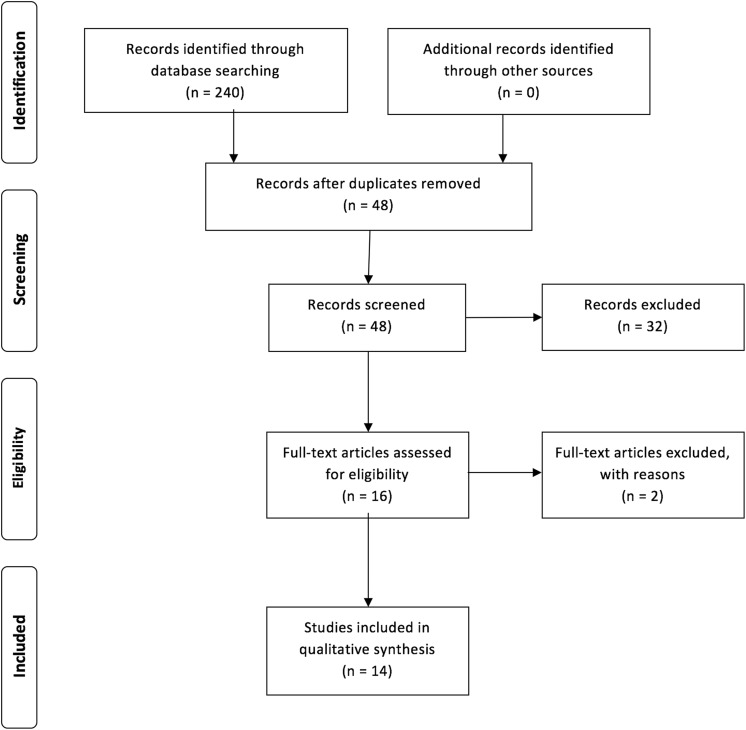
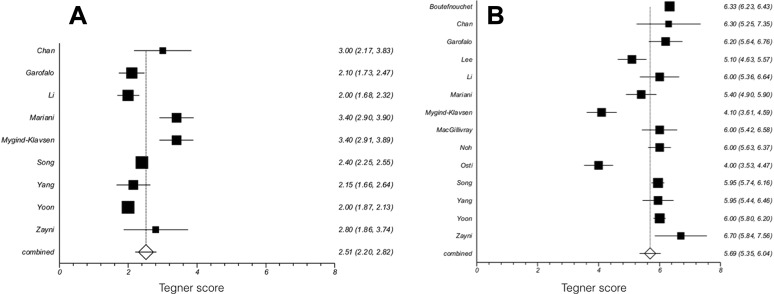
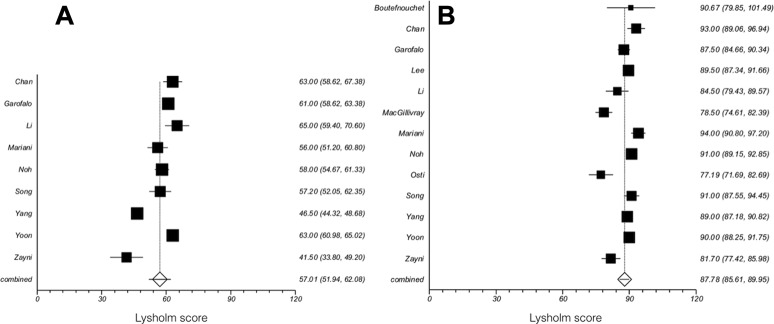
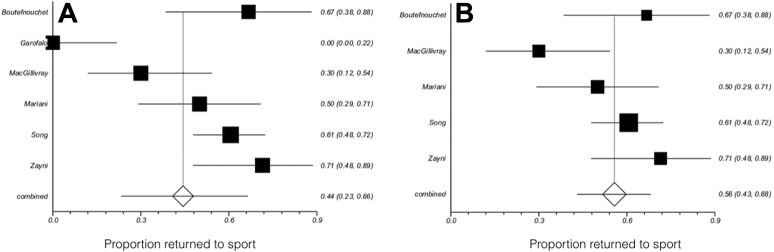
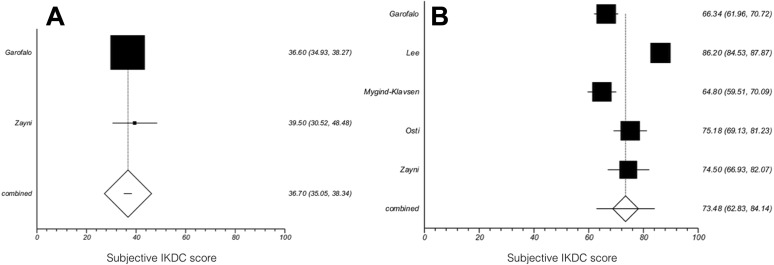
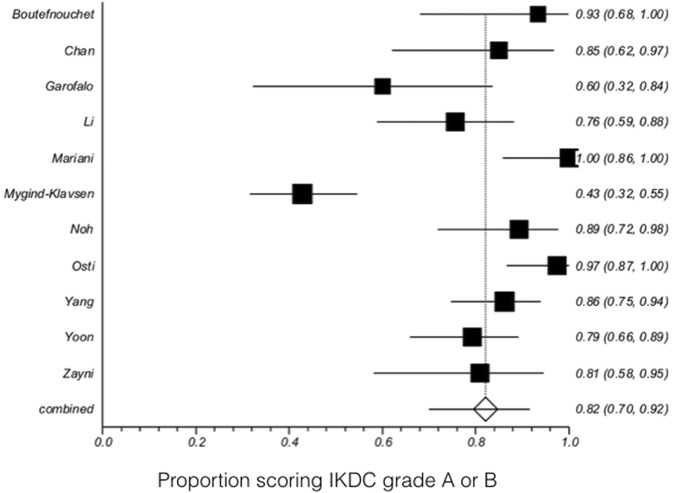
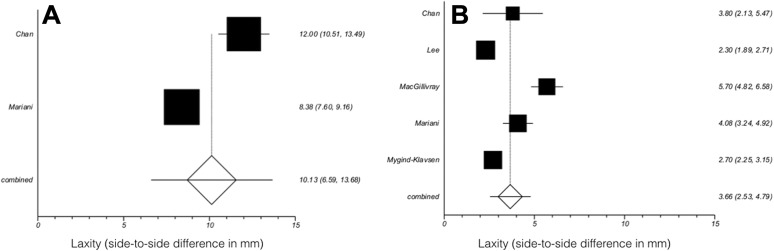
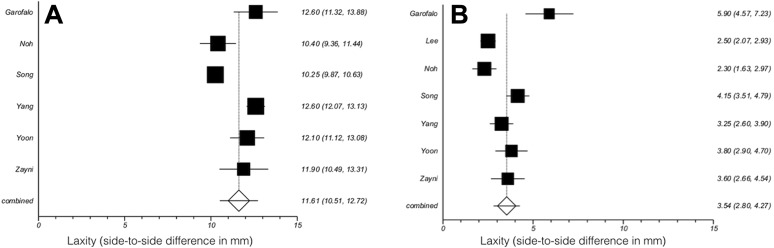
Results: Of the 240 titles identified, 14 studies were included. The median time from injury to surgery was 10.6 months (range, 6 weeks-21 years). The pooled mean postoperative Tegner and Lysholm scores were 5.7 (95% CI, 5.4-6.0) and 87.8 (95% CI, 85.6-90.0), respectively, following isolated PCLR; the pooled effect size between pre- and postoperative values was 2.8 (95% CI, 1.6-4.0) and 3.7 (95% CI, 2.6-4.9), respectively. An RTS rate of 44% (95% CI, 23%-66%) was identified. IKDC subjective scores improved to a pooled mean of 73.5 (95% CI, 62.8-84.1), with an effect size of 3.0 (95% CI, 0.4-5.6). The proportion of patients with postoperative IKDC objective scores of grade A/B was 82%. The pooled postoperative KT-1000/KT-2000 side-to-side difference was 3.4 mm (95% CI, 2.5-4.3 mm), with an effect size of 2.8 (95% CI, 1.1-4.5). The pooled postoperative Telos side-to-side difference measurement was 3.5 mm (95% CI, 2.8-4.3 mm), with an effect size of 3.9 (95% CI, 3.3-4.5).
Conclusion: The results of this review demonstrate that while isolated PCLR results in a significant improvement in functional outcome scores and improved knee laxity, there is a low rate of return to preinjury level of sport. The prolonged period from injury to surgery might reduce functional improvement and RTS following reconstruction. Therefore, comparison of the outcomes of isolated PCLR and nonoperative treatment is impracticable owing to the potential for selection bias.
Keywords: functional outcomes; isolated posterior cruciate ligament reconstruction; ligament laxity; return to sport; systematic review.
Conflict of interest statement
The authors declared that they have no conflicts of interest in the authorship and publication of this contribution. AOSSM checks author disclosures against the Open Payments Database (OPD). AOSSM has not conducted an independent investigation on the OPD and disclaims any liability or responsibility relating thereto.
Figures
References
-
- Agolley D, Gabr A, Benjamin-Laing H, Haddad FS. Successful return to sports in athletes following non-operative management of acute isolated posterior cruciate ligament injuries: medium-term follow-up. Bone Joint J. 2017;99-B(6):774–778. - PubMed
-
- Aroen A, Sivertsen EA, Owesen C, Engebretsen L, Granan LP. An isolated rupture of the posterior cruciate ligament results in reduced preoperative knee function in comparison with an anterior cruciate ligament injury. Knee Surg Sports Traumatol Arthrosc. 2013;21(5):1017–1022. - PubMed
-
- Bedi A, Musahl V, Cowan JB. Management of posterior cruciate ligament injuries: an evidence-based review. J Am Acad Orthop Surg. 2016;24(5):277–289. - PubMed
-
- Boynton MD, Tietjens BR. Long-term followup of the untreated isolated posterior cruciate ligament-deficient knee. Am J Sports Med. 1996;24(3):306–310. - PubMed
Publication types
LinkOut - more resources
Full Text Sources
