


Evolution of thyroid eye disease decompression-dysthyroid optic neuropathy
- PMID: 30390053
- PMCID: PMC6367365
- DOI: 10.1038/s41433-018-0259-0
Evolution of thyroid eye disease decompression-dysthyroid optic neuropathy
Abstract
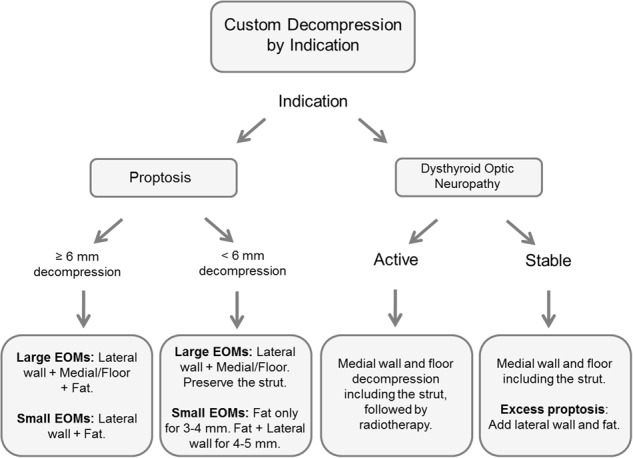
Orbital decompression surgery and medical therapy for thyroid eye disease (TED) have evolved over the past 150 years and afforded the opportunity to restore pre-disease appearance and visual function. This manuscript explores the past 150 years of surgical innovation for the treatment of TED. The "Age of Surgical Heroism" spans the time from 1888 to 1979 during which the pioneers of orbital decompression developed lateral orbitotomy, transcranial decompression, paranasal sinus decompression, and transantral decompression despite an incomplete understanding of the pathophysiology of both TED and a limited ability to non-invasively assess their patients. The "Age of Surgical Refinement" dawned with the development of computed tomography and represents the years 1979-2000. During this time, the "swinging eyelid" approach for two- and three-wall decompressions was introduced, a combined orbital-extradural four wall decompression procedure was developed, fat decompression was explored, and endoscopic decompression techniques were advanced. At the beginning of the 21st century, our understanding of the orbital pathophysiology of TED evolved significantly. Clinicians recognized the age-related phenotype of TED based largely on the relative contribution of extraocular muscle enlargement vs. orbital fat expansion. The "Modern Age" of Customized Orbital Decompression features both "medical decompression" during the active phase of TED and, in the stable phase, customized surgical plans incorporating individual patients' anatomy, orbital pathology, and surgical goals that collectively maximize therapeutic benefit while minimizing therapeutic morbidity.
Conflict of interest statement
The authors report no disclosures related to the content of this manuscript.
Figures
References
-
- Kronlein R. Zur pathologie and operative Behandlung der dermoidcysten der orbita. Klin Chir. 1889;4:149–63.
Publication types
MeSH terms
LinkOut - more resources
Full Text Sources
Medical
Miscellaneous
