


Burnout and Mental Health Stigma Among Juvenile Probation Officers: The Moderating Effect of Participatory Atmosphere
- PMID: 30392147
- PMCID: PMC6374158
- DOI: 10.1007/s10488-018-0902-x
Burnout and Mental Health Stigma Among Juvenile Probation Officers: The Moderating Effect of Participatory Atmosphere
Abstract
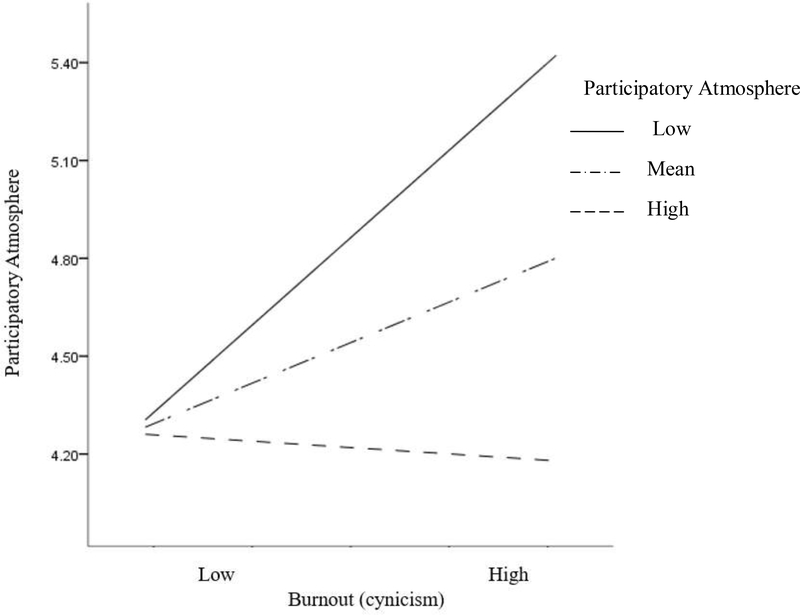
Despite high rates of mental health problems among juvenile justice-involved youth, mental health stigma among juvenile probation officers (JPOs) is under-studied. This cross-sectional study examined effects of job burnout and workplace participatory atmosphere on mental health stigma among JPOs across Indiana (n = 226). Participatory atmosphere moderated the relationship between JPO burnout-related cynicism and mental health stigma (interaction β = - 0.14, p = .04); burnout was related to greater mental health stigma at low levels of participatory atmosphere. Findings suggest participatory atmosphere mitigates effects of burnout on mental health stigma among JPOs. Organizational-level interventions might help to reduce mental health stigma and combat negative effects from burnout among JPOs.
Keywords: Burnout; Juvenile probation officers; Mental health stigma; Organizational climate.
Figures
References
-
- Aiken LS, & West SG (1991). Multiple regression: Testing and interpreting interactions. Newbury Park, CA: Sage.
-
- Eno Louden JE, Skeem JL, Camp J, & Christensen E (2008). Supervising probationers with mental disorder: How do agencies respond to violations? Criminal Justice and Behavior, 35, 832–847. doi: 10.1177/0093854808319042 - DOI
-
- Fazel S, Doll H, & Långström N (2008). Mental disorders among adolescents in juvenile detention and correctional facilities: A systematic review and meta regression analysis of 25 surveys. Journal of the American Academy of Child & Adolescent Psychiatry, 47, 1010–1019. doi: 10.1097/CHI.ObO13e31817eecf3 - DOI - PubMed
Publication types
MeSH terms
Grants and funding
LinkOut - more resources
Full Text Sources
