


Targeting epigenetic mechanisms in diabetic wound healing
- PMID: 30392877
- PMCID: PMC6331222
- DOI: 10.1016/j.trsl.2018.10.001
Targeting epigenetic mechanisms in diabetic wound healing
Abstract
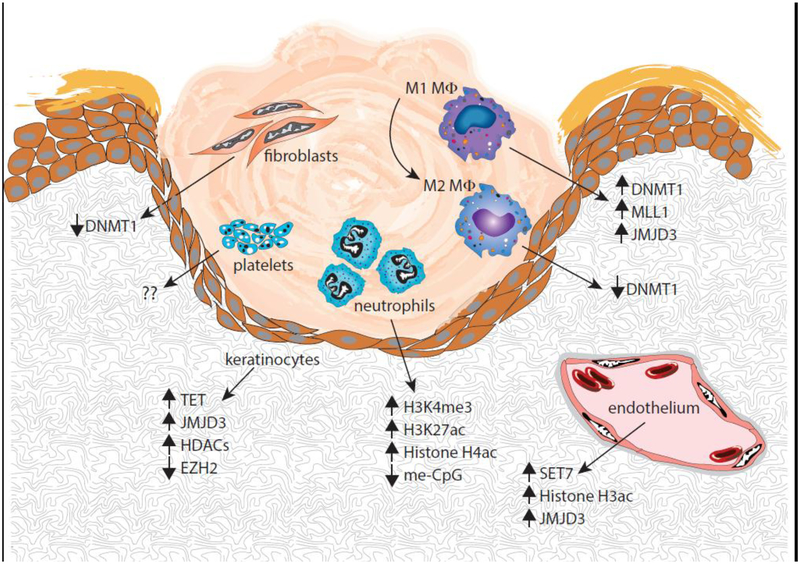
Impaired wound healing is a major secondary complication of type 2 diabetes that often results in limb loss and disability. Normal tissue repair progresses through discrete phases including hemostasis, inflammation, proliferation, and remodeling. In diabetes, normal progression through these phases is impaired resulting in a sustained inflammatory state and dysfunctional epithelialization in the wound. Due to their plasticity, macrophages play a critical role in the transition from the inflammation phase to the proliferation phase. Diabetes disrupts macrophage function by impairing monocyte recruitment to the wound, reducing phagocytosis, and prohibiting the transition of inflammatory macrophages to an anti-inflammatory state. Diabetes also impedes keratinocyte and fibroblast function during the later phases resulting in impaired epithelialization of the wound. Several recent studies suggest that altered epigenetic regulation of both immune and structural cells in wounds may influence cell phenotypes and healing, particularly in pathologic states, such as diabetes. Specifically, it has been shown that macrophage plasticity during wound repair is partly regulated epigenetically and that diabetes alters this epigenetic regulation and contributes to a sustained inflammatory state. Epigenetic regulation is also known to regulate keratinocyte and fibroblast function during wound repair. In this review, we provide an introduction to the epigenetic mechanisms that regulate tissue repair and highlight recent findings that demonstrate, how epigenetic events are altered during the course of diabetic wound healing.
Copyright © 2018. Published by Elsevier Inc.
Figures
References
-
- Centers for Disease Control and Prevention. National Diabetes Statistics Report, 2017. Atlanta, GA: Centers for Disease Control and Prevention, US Department of Health and Human Services; 2017.
-
- Guariguata L, Whiting D, Weil C, Unwin N. The International Diabetes Federation diabetes atlas methodology for estimating global and national prevalence of diabetes in adults. Diabetes Res Clin Pract. 2011;94(3):322–32. - PubMed
-
- Menke A, Casagrande S, Geiss L, Cowie CC. Prevalence of and Trends in Diabetes Among Adults in the United States, 1988–2012. JAMA. 2015;314(10):1021–9. - PubMed
-
- Lamont P, Franklyn K, Rayman G, Boulton AJ. Update on the diabetic foot 2012: the 14th biennial Malvern Diabetic Foot Conference, May 9–11, 2012. Int J Low Extrem Wounds. 2013;12(1):71–5. - PubMed
-
- Theilgaard-Monch K, Knudsen S, Follin P, Borregaard N. The transcriptional activation program of human neutrophils in skin lesions supports their important role in wound healing. J Immunol. 2004;172(12):7684–93. - PubMed
Publication types
MeSH terms
Substances
Grants and funding
LinkOut - more resources
Full Text Sources
Medical
