


Parental criticism and behavior problems in children with autism spectrum disorder
- PMID: 30394790
- PMCID: PMC6499715
- DOI: 10.1177/1362361318804190
Parental criticism and behavior problems in children with autism spectrum disorder
Abstract
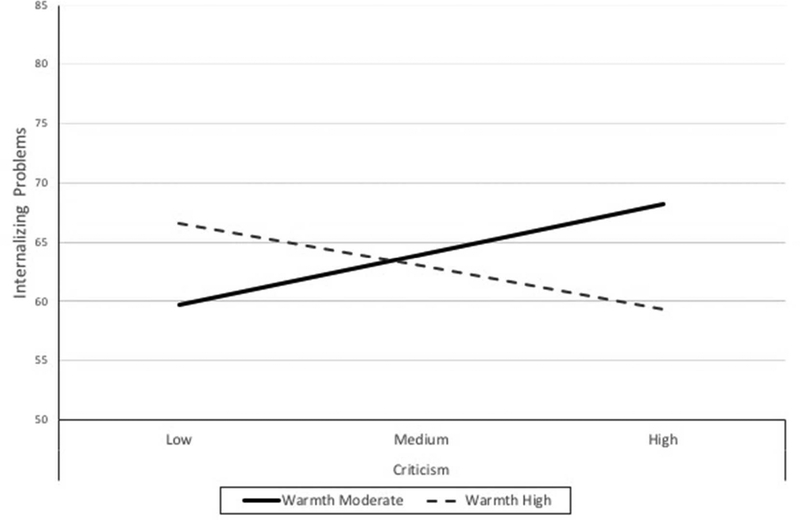
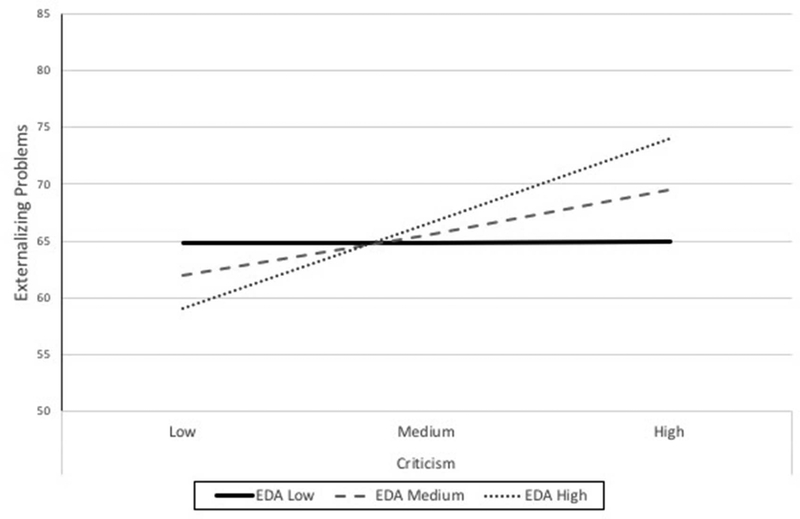
Associations between parent critical attitudes (a component of the Expressed Emotion construct) and behavior problems have been relatively well established in adolescents and young adults with autism spectrum disorder, but use of systems adapted for children with autism spectrum disorder and additional investigations with younger samples are needed. This study examined parental criticism, derived from a population-specific coding system, as related to behavior problems in children with autism spectrum disorder between the ages of 4 and 11 years, and considered parental warmth and children's psychophysiological reactivity as statistical moderators of these associations. In all, 40 children with autism spectrum disorder and their primary caregivers attended a visit involving collection of child electrodermal activity, parent-child interaction, a parent interview from which critical attitudes and warmth were coded, and parent report of child behavior problems. Criticism was directly related to higher child externalizing but not internalizing problems. Parental criticism interacted with warmth in the prediction of internalizing problems such that criticism was only associated with more problems in the context of moderate but not high warmth. Criticism was positively associated with externalizing problems under conditions of moderate and high, but not low, child electrodermal activity reactivity. Implications for conceptualizations of parental criticism in autism spectrum disorder, for understanding comorbid behavior problems in this population, and for intervention are discussed.
Keywords: autism spectrum disorder; behavior problems; criticism; electrodermal activity; expressed emotion.
Figures
References
-
- Achenbach TM (2009). The Achenbach System of Empirically Based Assessment (ASEBA): Development, Findings, Theory, and Applications. Burlington, VT: University of Vermont Research Center for Children, Youth, & Families.
-
- Aiken L, & West S (1991). Multiple regression: Testing and interpreting interactions. Thousand Oaks, CA: Sage Publishing.
-
- American Psychiatric Association. (2013). Diagnostic and statistical manual of mental disorders (5th ed.). Arlington, VA: American Psychiatric Publishing.
-
- Bader SH, & Barry TD (2014). A longitudinal examination of the relation between parental expressed emotion and externalizing behaviors in children and adolescents with autism spectrum disorder. Journal of Autism and Developmental Disorders 44(11): 2820–2831. doi: 10.1007/s10803-014-2142-6. - DOI - PubMed
Publication types
MeSH terms
Grants and funding
LinkOut - more resources
Full Text Sources
Medical
