


Histone modifications and the DNA double-strand break response
- PMID: 30394812
- PMCID: PMC6342081
- DOI: 10.1080/15384101.2018.1542899
Histone modifications and the DNA double-strand break response
Abstract
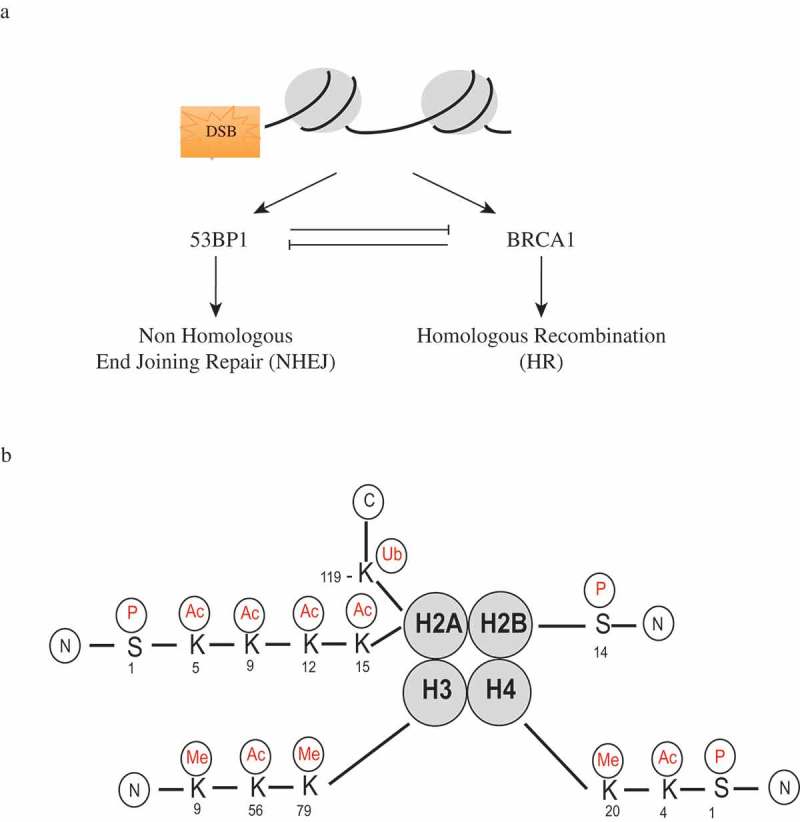
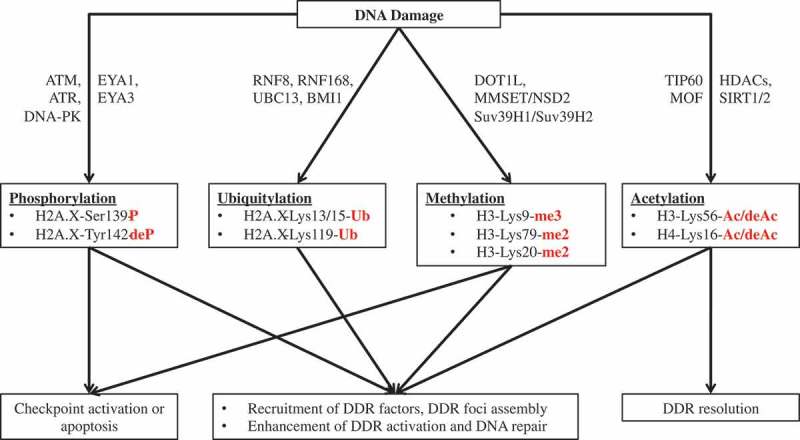
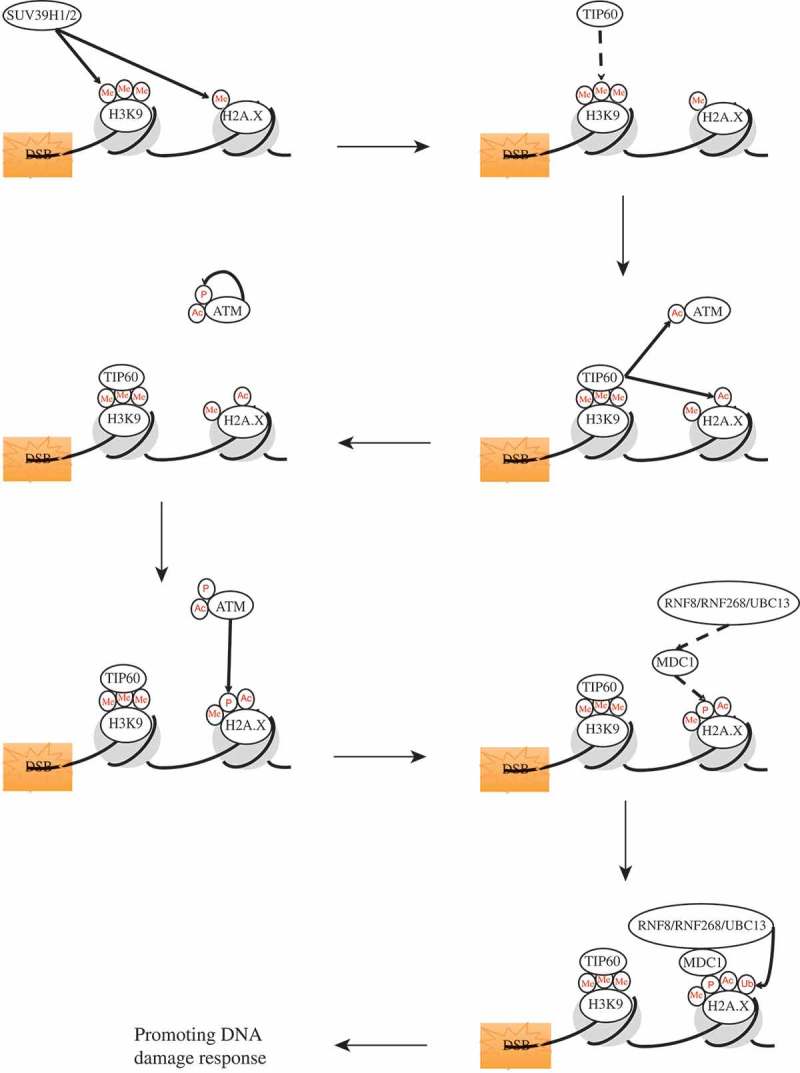
The timely and precise repair of DNA damage, or more specifically DNA double-strand breaks (DSBs) - the most deleterious DNA lesions, is crucial for maintaining genome integrity and cellular homeostasis. An appropriate cellular response to DNA DSBs requires the integration of various factors, including the post-translational modifications (PTMs) of chromatin and chromatin-associated proteins. Notably, the PTMs of histones have been shown to play a fundamental role in initiating and regulating cellular responses to DNA DSBs. Here we review the role of the major histone PTMs, including phosphorylation, ubiquitination, methylation and acetylation, and their interactions during DNA DSB-induced responses.
Keywords: DNA damage; Histones; chromatin MODIFICATIONS.
Figures
References
-
- van Attikum H, Gasser SM. Crosstalk between histone modifications during the DNA damage response. Trends Cell Biol. 2009. May;19(5):207–217. PubMed PMID: 19342239. - PubMed
-
- Cao LL, Shen C, Zhu WG. Histone modifications in DNA damage response. Sci China Life Sci. 2016. March;59(3):257–270. 10.1007/s11427-016-5011-z. PubMed PMID: 26825946. - PubMed
-
- Dasika GK, Lin SC, Zhao S, et al. DNA damage-induced cell cycle checkpoints and DNA strand break repair in development and tumorigenesis. Oncogene. 1999. December 20;18(55):7883–7899. PubMed PMID: 10630641. - PubMed
Publication types
MeSH terms
Substances
LinkOut - more resources
Full Text Sources
Miscellaneous
