


PLK1: a promising and previously unexplored target in double-hit lymphoma
- PMID: 30395539
- PMCID: PMC6264726
- DOI: 10.1172/JCI124919
PLK1: a promising and previously unexplored target in double-hit lymphoma
Abstract
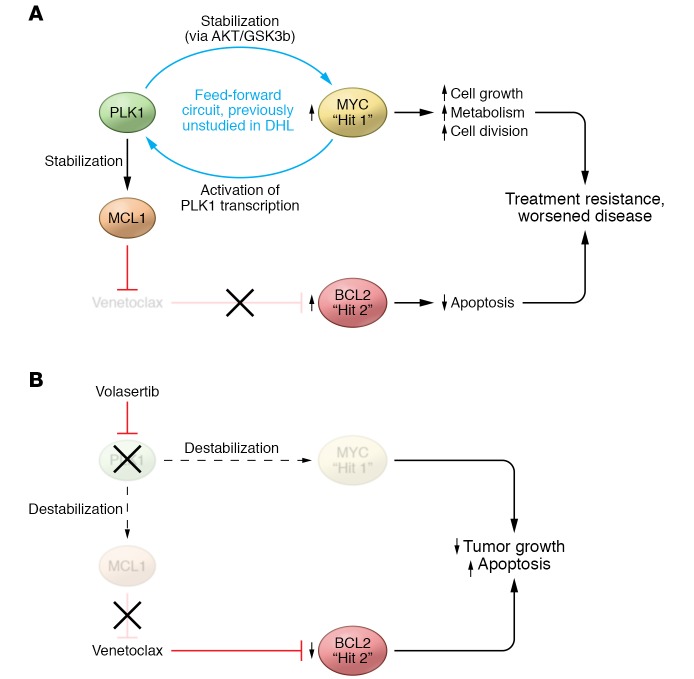
Inhibitors that target specific kinases or oncoproteins have become popular additions to or replacements for cytotoxic chemotherapies to treat many different types of cancer. However, many tumors lack a discernable target kinase and an amplified oncoprotein and/or rely on several cooperating mechanisms for progression. Thus, combinations of targeted therapies are essential for treating many cancers to avoid the rapid emergence of resistance. In this issue of the JCI, Ren et al. use an elegant kinase activity-profiling method and identify activity of the oncogene polo-like kinase-1 (PLK1) as an important driver of double-hit lymphoma (DHL), an aggressive subgroup of B cell lymphoma characterized by chromosomal translocations involving c-MYC and BCL2 or BCL6. Moreover, PLK1 activity was associated with MYC expression and poor prognosis in DHL patients. PLK1 inhibition with volasertib, alone and in combination with the BCL-2 inhibitor venetoclax, was efficacious in multiple DHL models, including mice harboring DHL patient-derived xenografts. Together, these data support PLK1 as a promising prognostic marker and therapeutic target for DHL.
Conflict of interest statement
Figures
Comment on
-
PLK1 stabilizes a MYC-dependent kinase network in aggressive B cell lymphomas.J Clin Invest. 2018 Dec 3;128(12):5517-5530. doi: 10.1172/JCI122533. Epub 2018 Nov 5. J Clin Invest. 2018. PMID: 30260324 Free PMC article.
References
Publication types
MeSH terms
Substances
LinkOut - more resources
Full Text Sources
Miscellaneous
