. 2018 Nov 6;17(Suppl 2):157.
doi: 10.1186/s12938-018-0584-3.

Sleeping posture recognition using fuzzy c-means algorithm

Affiliations

Sleeping posture recognition using fuzzy c-means algorithm

Rong-Shue Hsiao et al. Biomed Eng Online. .

Abstract

Background: Pressure sensors have been used for sleeping posture detection, which meet privacy requirements. Most of the existing techniques for sleeping posture recognition used force-sensitive resistor (FSR) sensors. However, lower limbs cannot be recognized accurately unless thousands of sensors are deployed on the bedsheet.

Method: We designed a sleeping posture recognition scheme in which FSR sensors were deployed on the upper part of the bedsheet to record the pressure distribution of the upper body. In addition, an infrared array sensor was deployed to collect data for the lower body. Posture recognition was performed using a fuzzy c-means clustering algorithm. Six types of sleeping body posture were recognized from the combination of the upper and lower body postures.

Results: The experimental results showed that the proposed method achieved an accuracy of above 88%. Moreover, the proposed scheme is cost-efficient and easy to deploy.

Conclusions: The proposed sleeping posture recognition system can be used for pressure ulcer prevention and sleep quality assessment. Compared to wearable sensors and cameras, FSR sensors and infrared array sensors are unobstructed and meet privacy requirements. Moreover, the proposed method provides a cost-effective solution for the recognition of sleeping posture.

Keywords: Force-sensing resistor; Fuzzy logic; Infrared array sensor; Sleeping posture recognition.


Figures

Fig. 1
Fig. 1
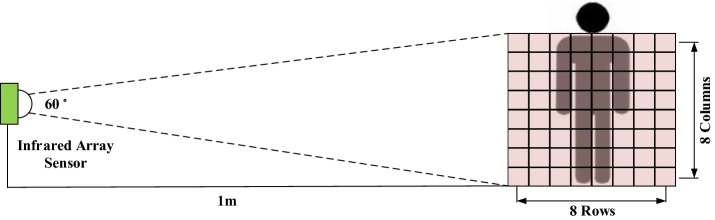
Sensor systems employed in this study: a FSR sensors; b infrared array sensor
Fig. 2
Fig. 2
Grid-EYE detection system
Fig. 3
Fig. 3
Different levels of data-processing for sleeping posture recognition
Fig. 4
Fig. 4
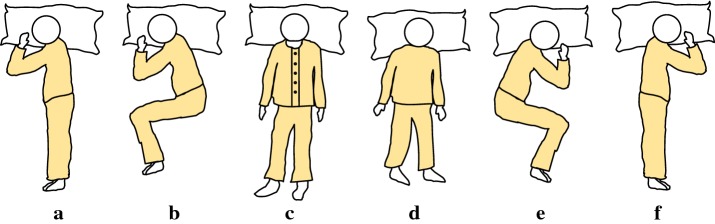
Sleeping posture classification: a right log; b right fetus; c supine; d prone; e left fetus; f left log
Fig. 5
Fig. 5
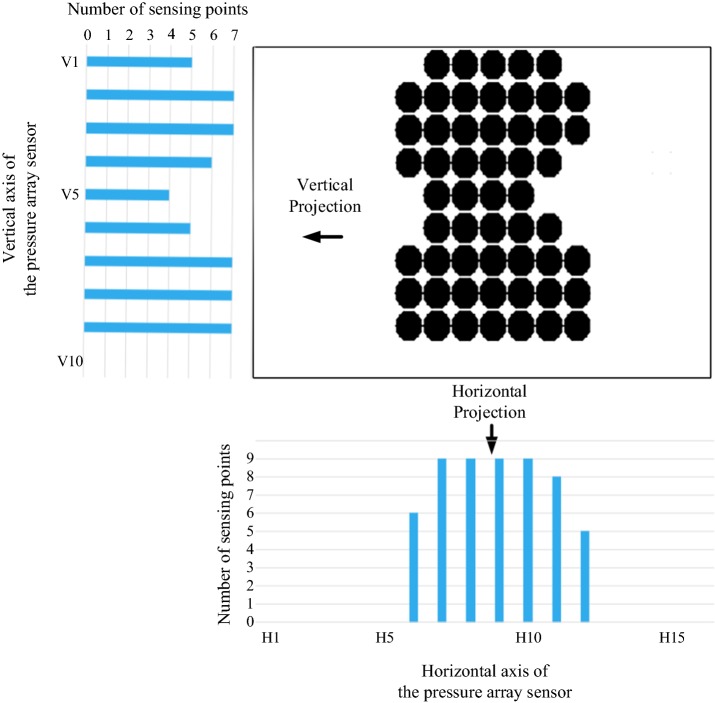
Histogram projections of vertical and horizontal axes
Fig. 6
Fig. 6
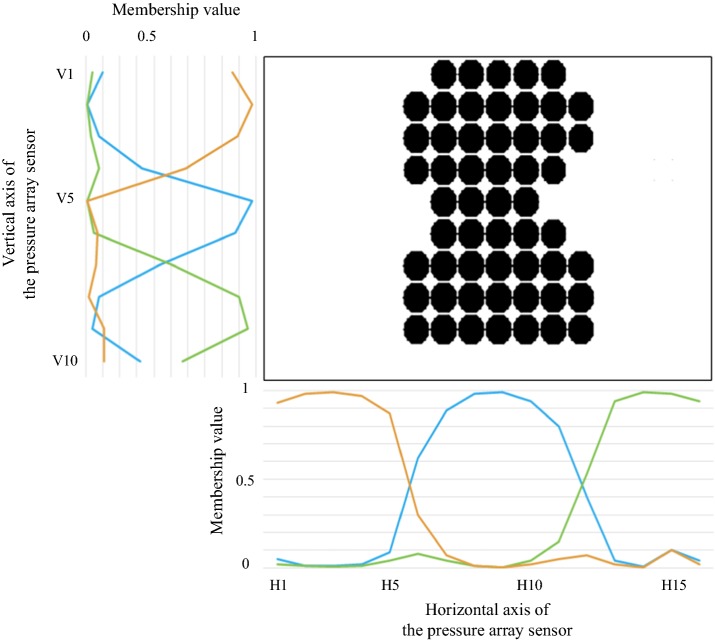
Middle point determination of the trunk using FCM
Fig. 7
Fig. 7
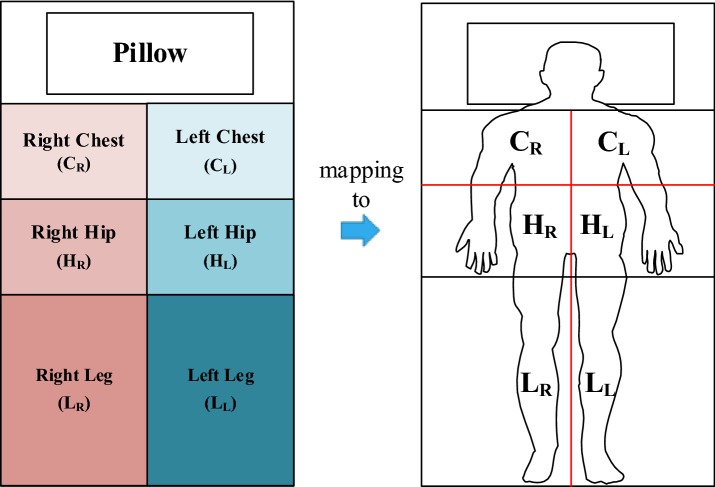
Body-part mapping
Fig. 8
Fig. 8
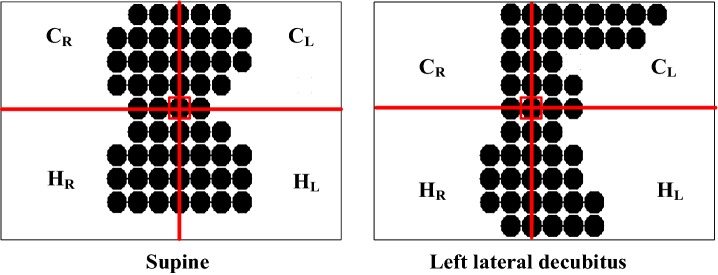
Pressure distributions of the supine and left lateral decubitus positions
Fig. 9
Fig. 9
Temperature distributions of the left log and left fetus positions
Fig. 10
Fig. 10
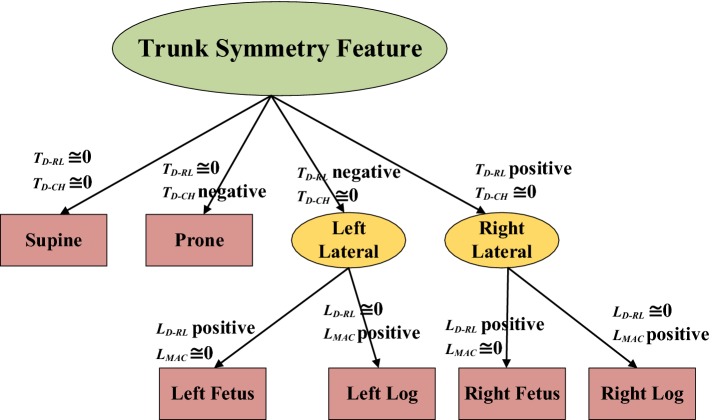
Sleeping posture classification using a decision tree
Fig. 11
Fig. 11
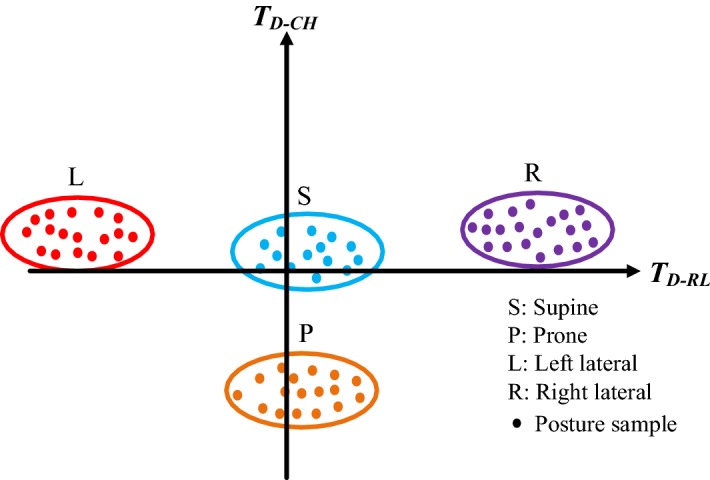
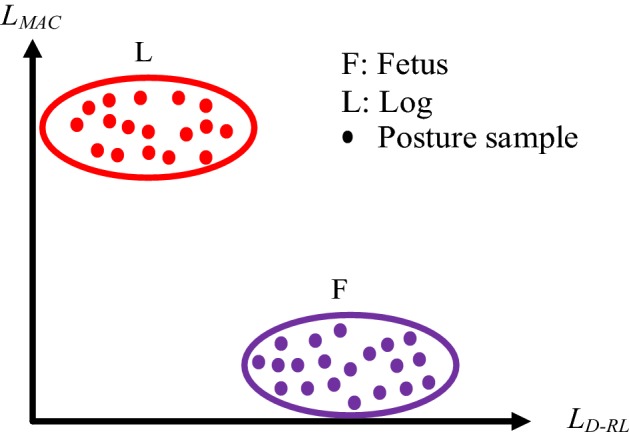
Feature space of trunk symmetry
Fig. 12
Fig. 12
Feature space of leg symmetry
Fig. 13
Fig. 13
Experimental setup
Fig. 14
Fig. 14
Sensing gap in pressure sensor arrays
Fig. 15
Fig. 15
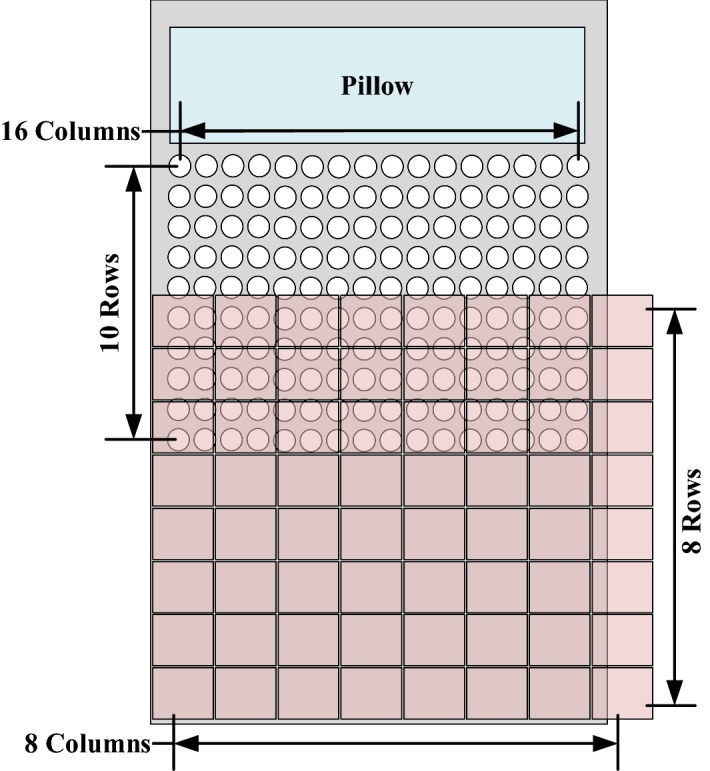
Deployment comparison: a pressure sensors; b infrared array sensor
Fig. 16
Fig. 16
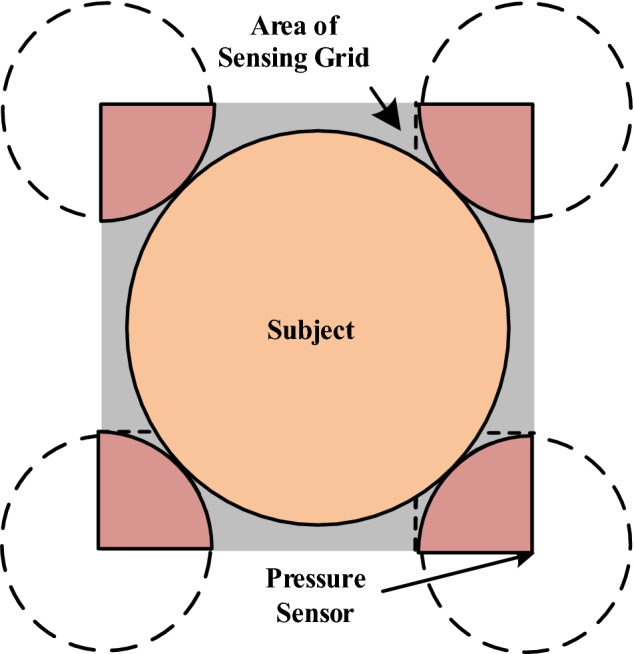
Sensing grid of pressure sensor array deployment for signal detection threshold calculation

References

    1. Hsiao RS, Mi Z, Yang BR, Kau LJ, Bitew MA, Li TY. Body posture recognition and turning recording system for the care of bed bound patients. Technol Health Care. 2015;24(s1):S307–S312. doi: 10.3233/THC-151088. - DOI - PubMed
    1. Tangtrakulwanich B, Kapkird A. Analyses of possible risk factors for subacromial impingement syndrome. World J Orthop. 2012;3(1):5–9. doi: 10.5312/wjo.v3.i1.5. - DOI - PMC - PubMed
    1. Lee JB, Park YH, Hong JH, Lee SH, Jung KH, Kim JH, Yi H, Shin C. Determining optimal sleep position in patients with positional sleep-disordered breathing using response surface analysis. J Sleep Res. 2009;18(1):26–35. doi: 10.1111/j.1365-2869.2008.00703.x. - DOI - PubMed
    1. Cheyne JA. Situational factors affecting sleep paralysis and associated hallucinations: position and timing effects. J Sleep Res. 2002;11(2):169–177. doi: 10.1046/j.1365-2869.2002.00297.x. - DOI - PubMed
    1. Johnson DA, Orr WC, Crawley JA, Traxler B, McCullough J, Brown KA, Roth T. Effect of esomeprazole on nighttime heartburn and sleep quality in patients with GERD: a randomized, placebo-controlled trial. Am J Gastroenterol. 2005;100(9):1914–1922. doi: 10.1111/j.1572-0241.2005.00285.x. - DOI - PubMed