Parent, patient and clinician perceptions of outcomes during and following neonatal care: a systematic review of qualitative research
- PMID: 30397672
- PMCID: PMC6203019
- DOI: 10.1136/bmjpo-2018-000343
Parent, patient and clinician perceptions of outcomes during and following neonatal care: a systematic review of qualitative research
Abstract
Objective: Multiple outcomes can be measured in infants that receive neonatal care. It is unknown whether outcomes of importance to parents and patients differ from those of health professionals. Our objective was to systematically map neonatal care outcomes discussed in qualitative research by patients, parents and healthcare professionals and test whether the frequency with which outcomes are discussed differs between groups.
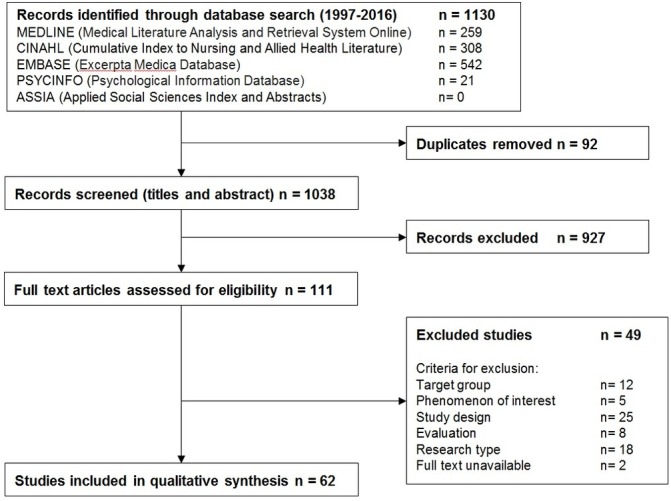
Design: Systematic review of qualitative literature. The following databases were searched: Medline, CINAHL, EMBASE, PsycINFO and ASSIA from 1997 to 2017. Publications describing qualitative data relating to neonatal care outcomes, reported by former patients, parents or healthcare professionals, were included. Narrative text was analysed and outcomes grouped thematically by organ system. Permutation testing was applied to assess an association between the outcomes identified and stakeholder group.
Results: Sixty-two papers containing the views of over 4100 stakeholders were identified; 146 discrete outcomes were discussed; 58 outcomes related to organ systems and 88 to other more global domains. Permutation testing provides evidence that parents, former patients and health professionals reported outcomes with different frequencies (p=0.037).
Conclusions: Parents, patients and health professionals focus on different outcomes when discussing their experience of neonatal care. A wide range of neonatal care outcomes are reported in qualitative research; many are global outcomes relating to the overall status of the infant. The views of former patients and parents should be taken into consideration when designing research; the development of a core outcomes set for neonatal research will facilitate this.
Keywords: neonatology; outcomes research; patient perspective.
Conflict of interest statement
Competing interests: None declared.
Figures