Review
. 2018 Nov 2;10(11):453.
doi: 10.3390/toxins10110453.

Accumulation of Dinophysis Toxins in Bivalve Molluscs

Affiliations
Review

Accumulation of Dinophysis Toxins in Bivalve Molluscs

Juan Blanco. Toxins (Basel). .

Abstract

Several species of the dinoflagellate genus Dinophysis produce toxins that accumulate in bivalves when they feed on populations of these organisms. The accumulated toxins can lead to intoxication in consumers of the affected bivalves. The risk of intoxication depends on the amount and toxic power of accumulated toxins. In this review, current knowledge on the main processes involved in toxin accumulation were compiled, including the mechanisms and regulation of toxin acquisition, digestion, biotransformation, compartmentalization, and toxin depuration. Finally, accumulation kinetics, some models to describe it, and some implications were also considered.

Keywords: Dinophysis toxins; accumulation; biotransformation; compartmentalization; depuration; digestion; kinetics; okadaic acid; pectenotoxins.


Conflict of interest statement

The authors declare no conflict of interest.

Figures
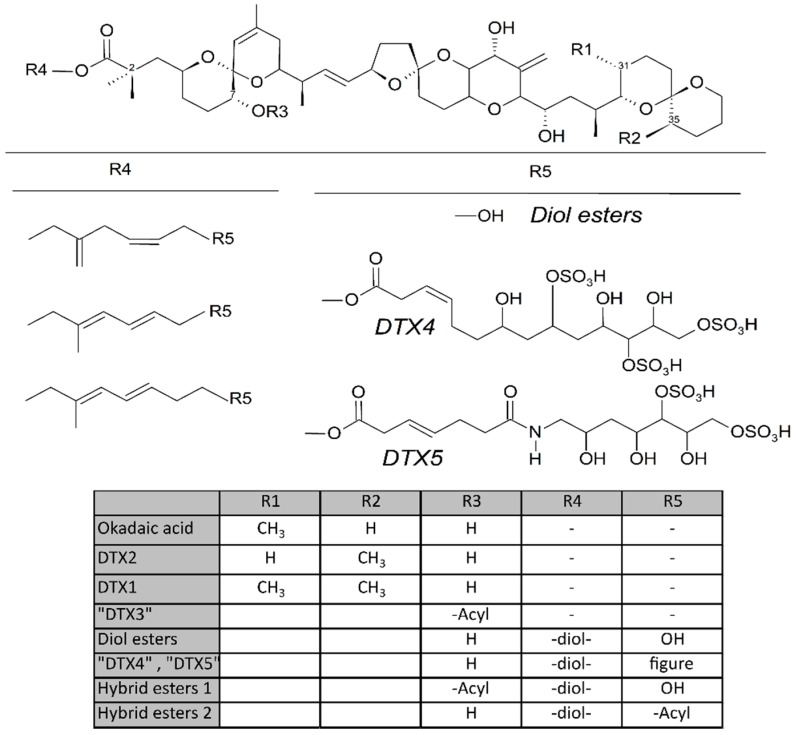
Figure 1
Figure 1
Structure of the toxins of the okadaic acid group. R4 and R5 are some examples of structures which may be more complex.
Figure 2
Figure 2
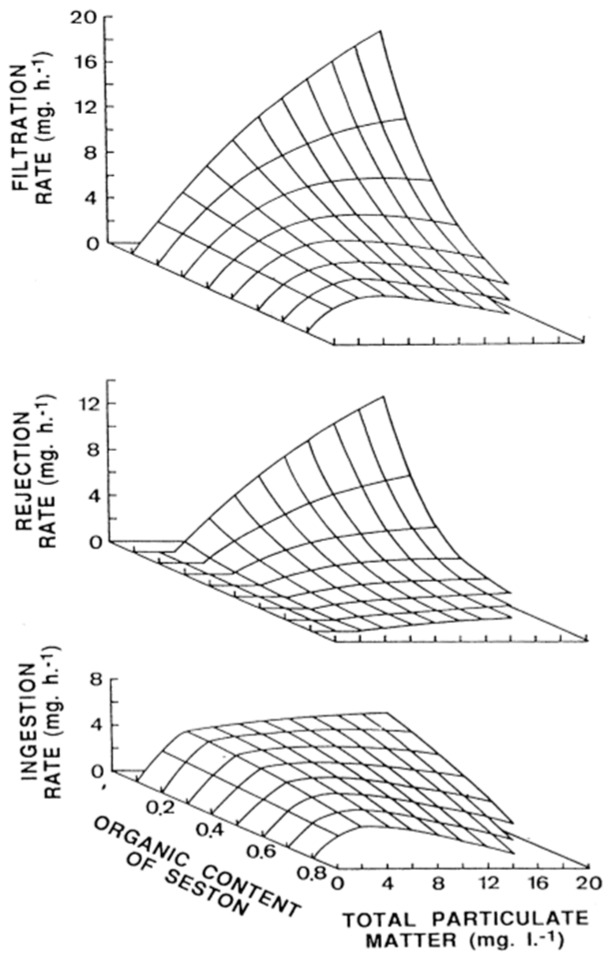
Filtration, ingestion, and rejection of seston by the cockle Cerastoderma edule as a function of organic content and seston concentration. Reproduced with permission from Iglesias et al. [75], published by Elsevier 1996.
Figure 3
Figure 3
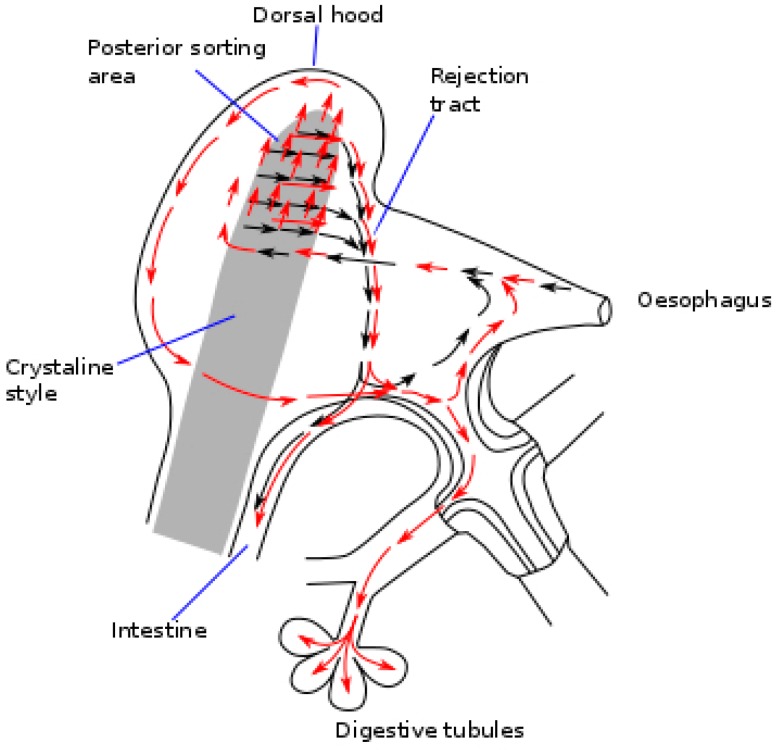
Schematic representation of the particle flow through the digestive system of a bivalve (redrawn and simplified from Owen [98]). Black arrows represent large particles and red arrows small particles.
Figure 4
Figure 4
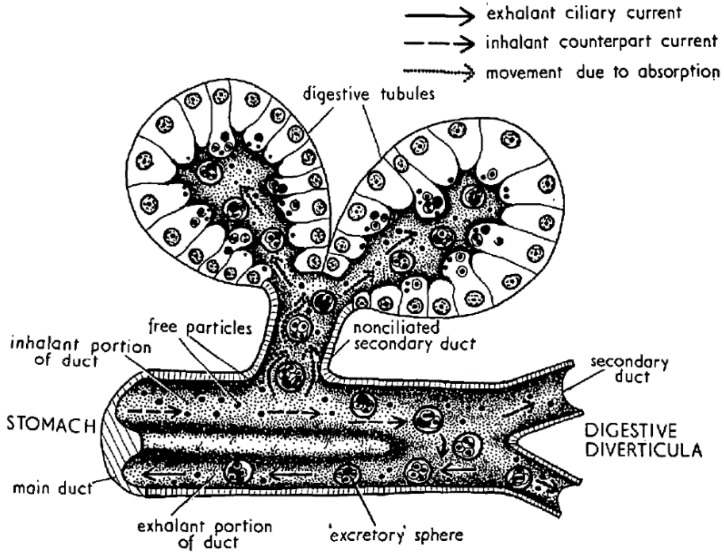
Structure of the digestive tubules and diverticula, showing incoming particles and outgoing excretory spheres (rejection bodies). Reproduced with permission from Owen [98], published by Company of Biologists 1955.
Figure 5
Figure 5
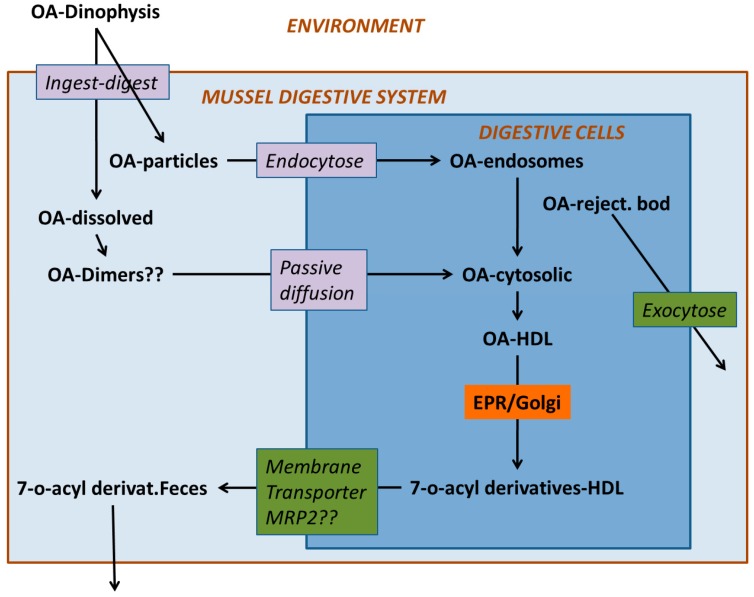
Hypothetical steps involved in the accumulation of toxins in the okadaic acid (OA) group.
Figure 6
Figure 6
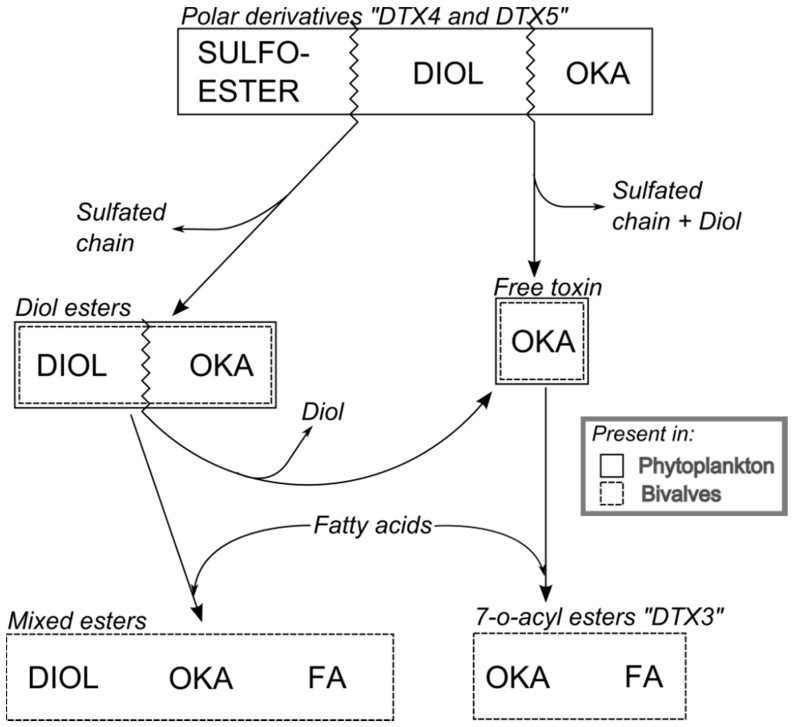
Main transformations of the toxins of the okadaic acid group. Labels inside the boxes indicate the moieties that constitute the molecule. Zigzag lines indicate the bonds that are broken to generate other compounds. The line(s) of each box indicate whether the compounds are found in phytoplankton or in bivalves. From Reguera et al. [74].
Figure 7
Figure 7
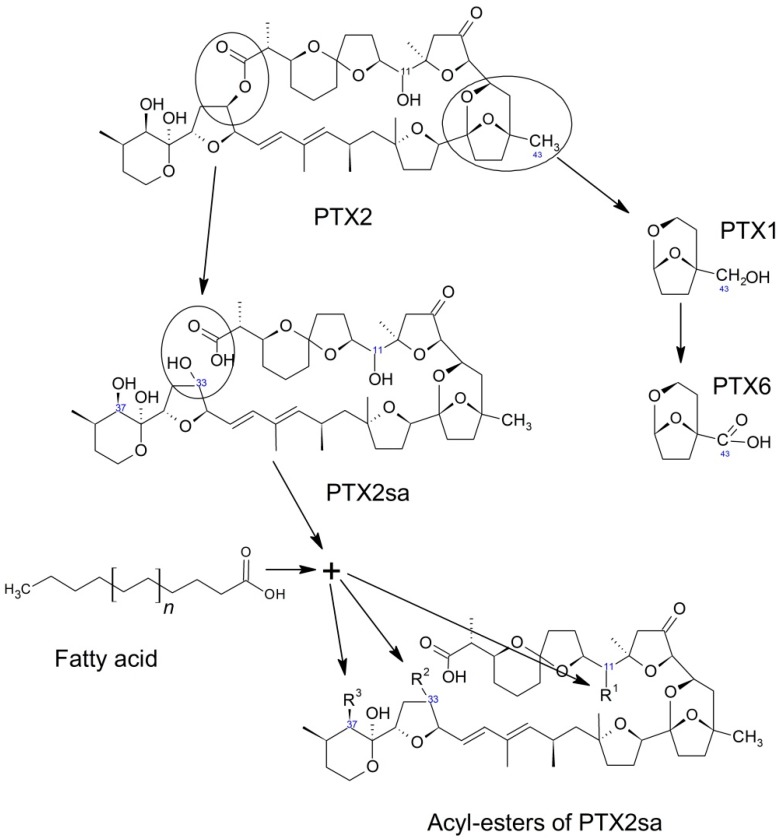
Transformations of PTX2 in bivalves.
Figure 8
Figure 8
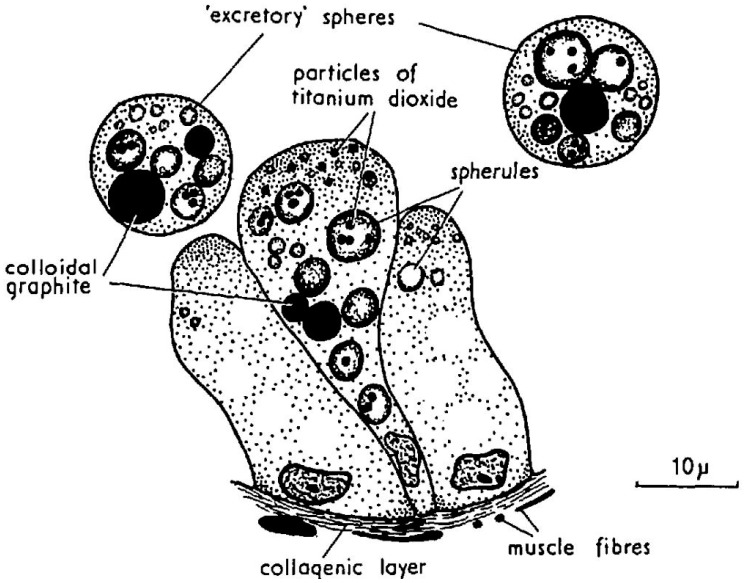
Cells of a digestive tubule after being fed with particles of titanium oxide and colloidal graphite showing the formation and expulsion of excretory spheres containing these materials. Reproduced with permission from Owen [98], published by Company of Biologists 1955.
Figure 9
Figure 9
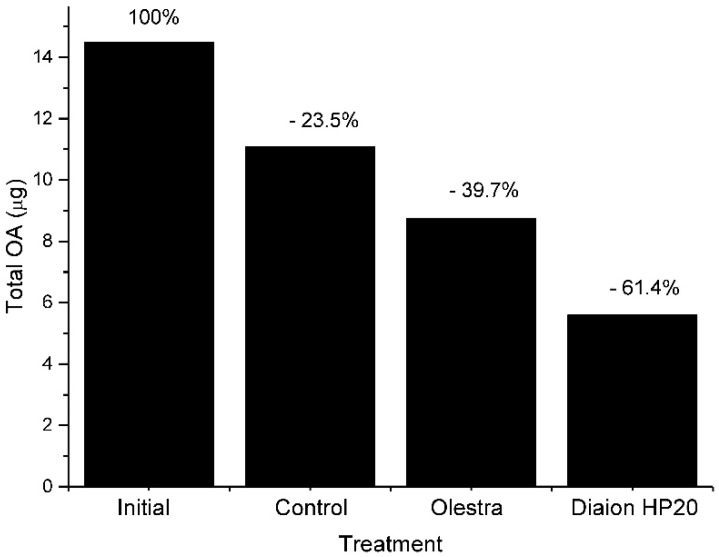
Content in okadaic acid of mussels at the start of the depuration period and after one week. Initial = start of the experiment. Control, Olestra, and Diaion HP20 = after one week being fed with Tetraselmis suecica (control), supplemented with Olestra and Diaion HP20.
Figure 10
Figure 10
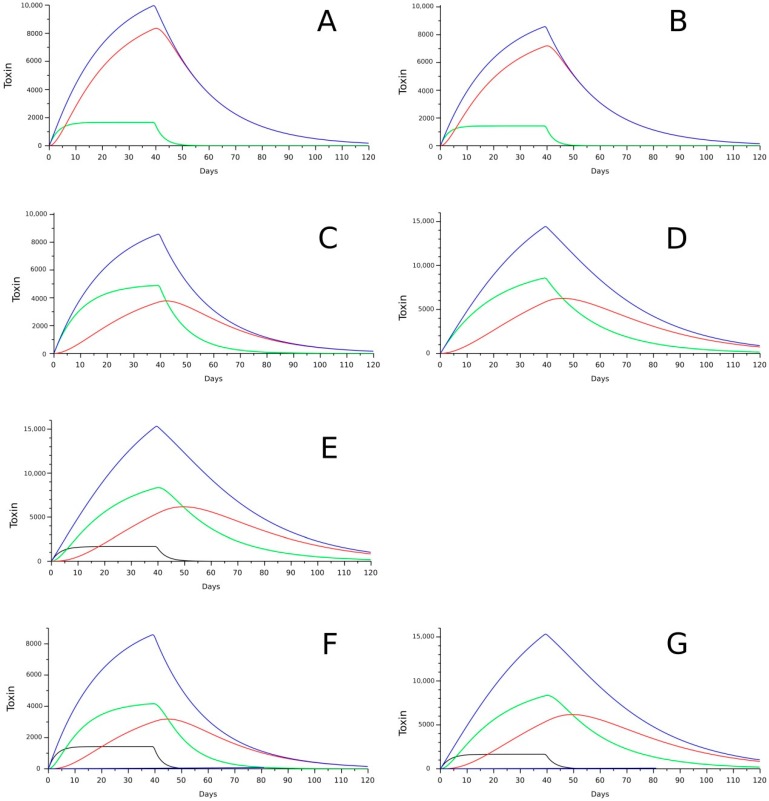
Models of the kinetics of OA and “DTX3” (AD), the previous ones plus “DTX5” (E), and PTX2, PTX2sa and its esters (F,G), after 40 days of intoxication (with constant cell abundance in the environment) and 80 days of depuration. The blue line represents total toxin, black is “DTX5” or PTX2, green shows OA or PTX2sa and red, DTX3 or PTX2sa esters. Kinetics with high acylation rate (=0.3 day−1) with only DTX3 depuration (A), and with OA and DTX3 depuration at the same rate (B). Kinetics with low acylation rate (0.05 day-1) with only DTX3 depuration (C), and with OA and DTX3 depuration at the same rate as in A and B (D). Same as C with input of OA and “DTX5” (50%) (E). With depuration of the three forms of PTX2 (F) and with depuration of only PTX2sa esters (G).

References

    1. Yasumoto T., Oshima Y., Yamaguchi M. Occurrence of a new type of shellfish poisoning in the Tohoku district. Bull. Jpn. Soc. Sci. Fish. 1978;44:1249–1255. doi: 10.2331/suisan.44.1249. - DOI
    1. Yasumoto T., Oshima Y., Yamaguchi M. Occurrence of a new type of toxic shellfish in Japan and chemical properties of the toxin. In: Taylor D.L., Seliger H.W., editors. Toxic Dinoflagellate Blooms. Elsevier; New York, NY, USA: 1979. pp. 395–398.
    1. Murata M., Shimatani M., Sugitani H., Oshima Y., Yasumoto T. Isolation and structural elucidation of the causative toxin of diarrhetic shellfish poisoning. Bull. Jpn. Soc. Sci. Fish. 1982;48:549–552. doi: 10.2331/suisan.48.549. - DOI
    1. Tachibana K., Scheuer P., Tsukitani Y., Kikuchi H., Enden V., Clardy J., Gopichand Y., Schmitz F. Okadaic acid, a cytotoxic polyether from two marine sponges of the genus Halichondria. J. Am. Chem. Soc. 1981;103:2469–2471. doi: 10.1021/ja00399a082. - DOI
    1. Tangen K. Shellfish poisoning and the ocurrence of potentially toxic dinoflagellates in Norwegian waters. Sarsia. 1983;68:1–7. doi: 10.1080/00364827.1983.10420550. - DOI

LinkOut - more resources