


Influence of Benzyladenine on Metabolic Changes in Different Rose Tissues
- PMID: 30400246
- PMCID: PMC6313934
- DOI: 10.3390/plants7040095
Influence of Benzyladenine on Metabolic Changes in Different Rose Tissues
Abstract
Two modern rose varieties, Floribunda and Hybrid Tea, were used to analyze and identify metabolic changes after foliar application with benzyladenine (BA). Volatile organic compounds (VOCs) as metabolites were detected. Two pairs of doses of BA, at 11.16 and 17.87 mg/cm², and 7.17 and 12.26 mg/cm² were applied to the foliage of Hybrid Tea and Floribunda, respectively. Sampling time was optimized and treatment duration was 4 weeks. After treatment, the volatiles from the treated and untreated control roses were extracted using headspace solid-phase microextraction (HS-SPME) technology by three-phase fiber 50/30 µm divinylbenzene/carboxen/polydimethylsiloxane (DVB/CAR/PDMS) and analyzed by gas chromatography (GC) coupled with a flame ionization detector (FID), and with mass spectrometry (GC-MS).The results showed that BA and its dose rate led to metabolic changes of treated roses in comparison with untreated controls. The number of VOCs extracted and detected from leaves, stem, rhizosphere and whole plants from the two rose varieties at doses rate of 17.87 and 12.26 mg/cm² were 43, 65, 40 and 68 compounds for each plant material, respectively, for both rose varieties. Whilst the VOCs extracted and detected from both rose varieties for leaves, stem, rhizosphere and whole plants were 38, 61, 34 and 66 compounds for each plant material, respectively. The results demonstrate that some volatiles, such as 4-Heptyn-2-ol, Phenyl methyl ether and 3-Methyl-apopinene, increased with increasing doses of BA; these compounds are aroma chemicals with a very powerful smell. This study shows that BA treatments can have a significant effect on metabolite changes in different rose tissues. This method could be applied to other floriculture plants.
Keywords: VOCs; benzyladenine; headspace solid-phase microextraction (HS-SPME); rose.
Conflict of interest statement
The authors declare no conflicts of interest.
Figures
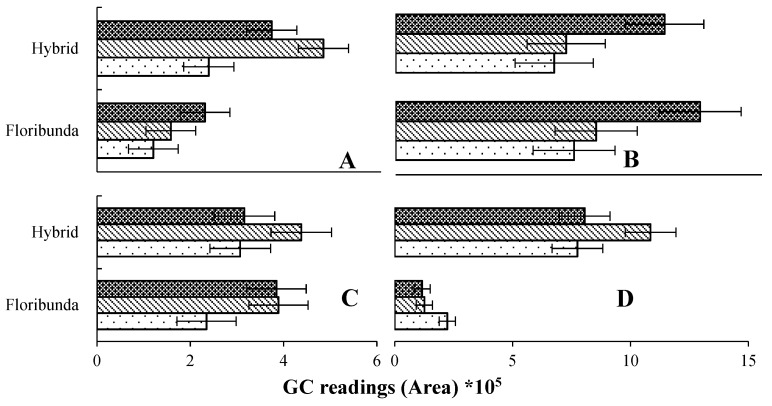
 8 weeks,
  4 weeks and
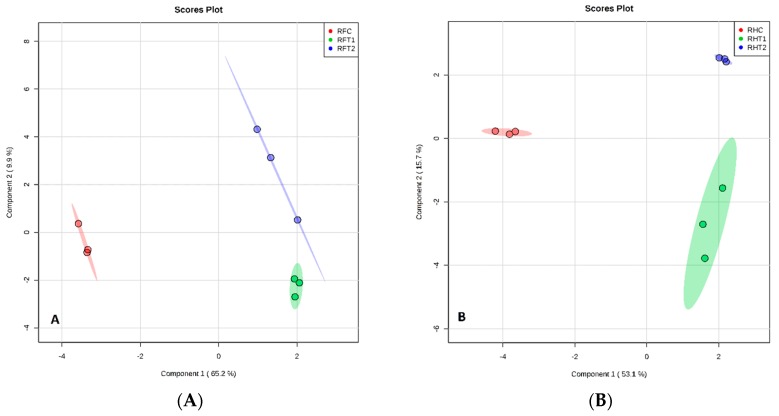
  2 weeks, bars represent LSD at (p < 0.05) (n = 3).
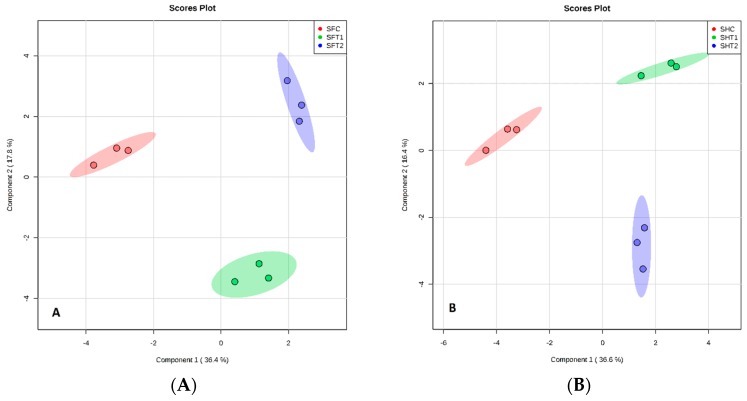
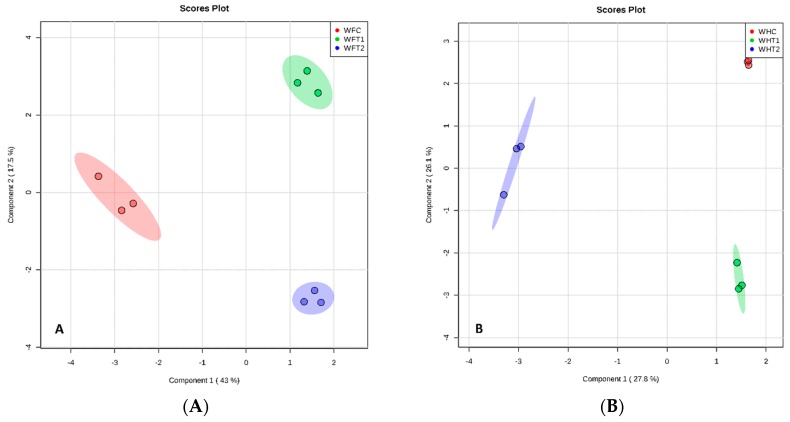
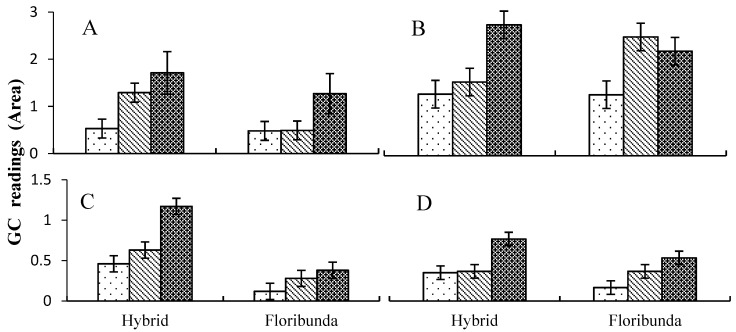 Control, 100 mg/L and 200 mg/L of BA; bars represent LSD at (p < 0.05) (n = 3).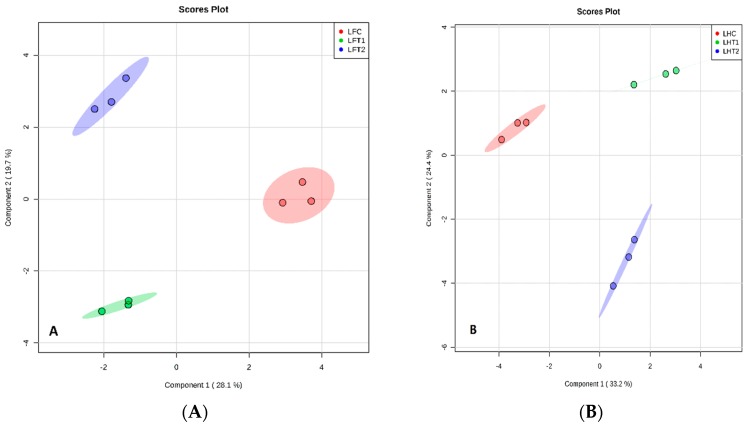
References
-
- Guterman I., Dafny-Yelin M., Shalit M., Emanuel M., Shaham N., Piestun D., Zuker A., Ovadis M., Lavi M., Lavid N. An integrated genomic approach to discovering fragrance-related genes in rose petals. Flower. Newsl. 2001;32:31–37.
-
- Kovacheva N., Rusanov K., Atanassov I. Industrial cultivation of oil bearing rose and rose oil production in Bulgaria during 21st century, directions and challenges. Biotechnol. Biotechnol. Equip. 2010;24:1793–1798. doi: 10.2478/V10133-010-0032-4. - DOI
-
- Özel M., Göğüş F., Lewis A. Comparison of direct thermal desorption with water distillation and superheated water extraction for the analysis of volatile components of Rosa damascena Mill. using GCxGC-TOF/MS. Anal. Chim. Acta. 2006;566:172–177. doi: 10.1016/j.aca.2006.03.014. - DOI
-
- Rusanov K., Kovacheva N., Rusanova M., Atanassov I. Traditional Rosa damascena flower harvesting practices evaluated through GC/MS metabolite profiling of flower volatiles. Food Chem. 2011;129:1851–1859. doi: 10.1016/j.foodchem.2011.05.132. - DOI
-
- Rusanov K.E., Kovacheva N.M., Atanassov I.I. Comparative GC/MS analysis of rose flower and distilled oil volatiles of the oil bearing rose Rosa damascena. Biotechnol. Biotechnol. Equip. 2011;25:2210–2216. doi: 10.5504/BBEQ.2011.0015. - DOI
LinkOut - more resources
Full Text Sources
Miscellaneous
