


Detection of long non-coding RNA homology, a comparative study on alignment and alignment-free metrics
- PMID: 30400819
- PMCID: PMC6220562
- DOI: 10.1186/s12859-018-2441-6
Detection of long non-coding RNA homology, a comparative study on alignment and alignment-free metrics
Abstract
Background: Long non-coding RNAs (lncRNAs) represent a novel class of non-coding RNAs having a crucial role in many biological processes. The identification of long non-coding homologs among different species is essential to investigate such roles in model organisms as homologous genes tend to retain similar molecular and biological functions. Alignment-based metrics are able to effectively capture the conservation of transcribed coding sequences and then the homology of protein coding genes. However, unlike protein coding genes the poor sequence conservation of long non-coding genes makes the identification of their homologs a challenging task.
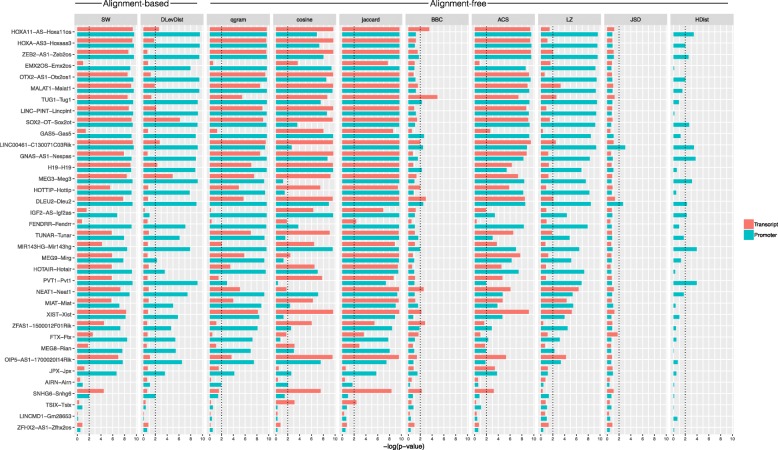
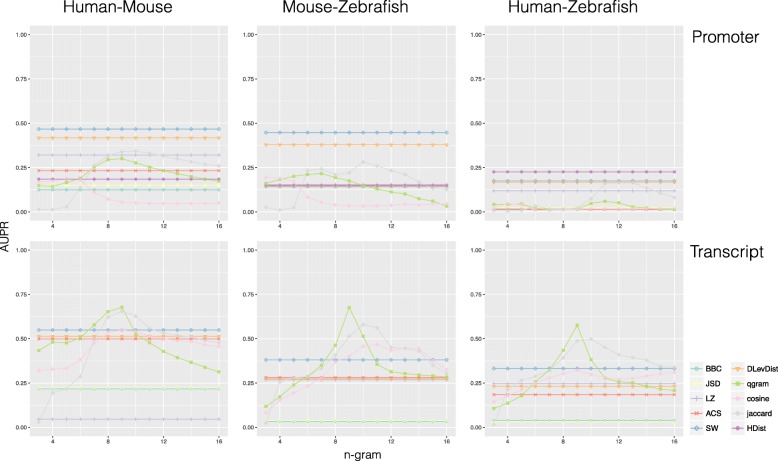
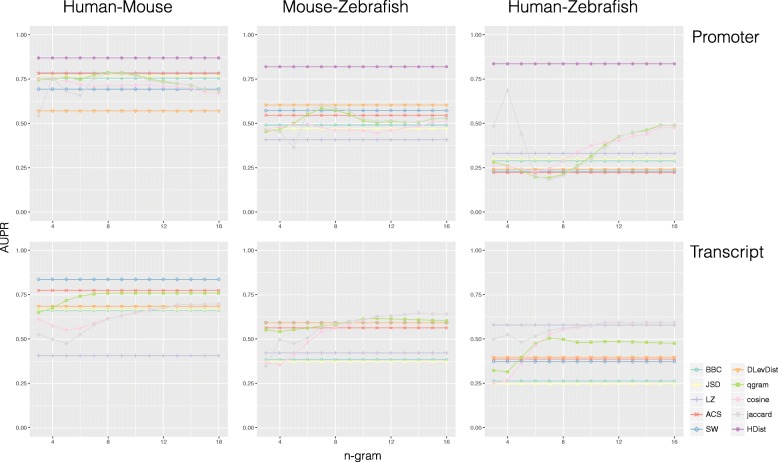
Results: In this study we compare alignment-based and alignment-free string similarity metrics and look at promoter regions as a possible source of conserved information. We show that promoter regions encode relevant information for the conservation of long non-coding genes across species and that such information is better captured by alignment-free metrics. We perform a genome wide test of this hypothesis in human, mouse, and zebrafish.
Conclusions: The obtained results persuaded us to postulate the new hypothesis that, unlike protein coding genes, long non-coding genes tend to preserve their regulatory machinery rather than their transcribed sequence. All datasets, scripts, and the prediction tools adopted in this study are available at https://github.com/bioinformatics-sannio/lncrna-homologs .
Keywords: Homology; Long ncRNA; String similarity.
Conflict of interest statement
Ethics approval and consent to participate
Not applicable.
Consent for publication
Not applicable.
Competing interests
The authors declare that they have no competing interests.
Publisher’s Note
Springer Nature remains neutral with regard to jurisdictional claims in published maps and institutional affiliations.
Figures


References
Publication types
MeSH terms
Substances
Grants and funding
LinkOut - more resources
Full Text Sources
Molecular Biology Databases
