


Global dissection of alternative splicing uncovers transcriptional diversity in tissues and associates with the flavonoid pathway in tea plant (Camellia sinensis)
- PMID: 30400863
- PMCID: PMC6219262
- DOI: 10.1186/s12870-018-1497-9
Global dissection of alternative splicing uncovers transcriptional diversity in tissues and associates with the flavonoid pathway in tea plant (Camellia sinensis)
Abstract
Background: Alternative splicing (AS) regulates mRNA at the post-transcriptional level to change gene function in organisms. However, little is known about the AS and its roles in tea plant (Camellia sinensis), widely cultivated for making a popular beverage tea.
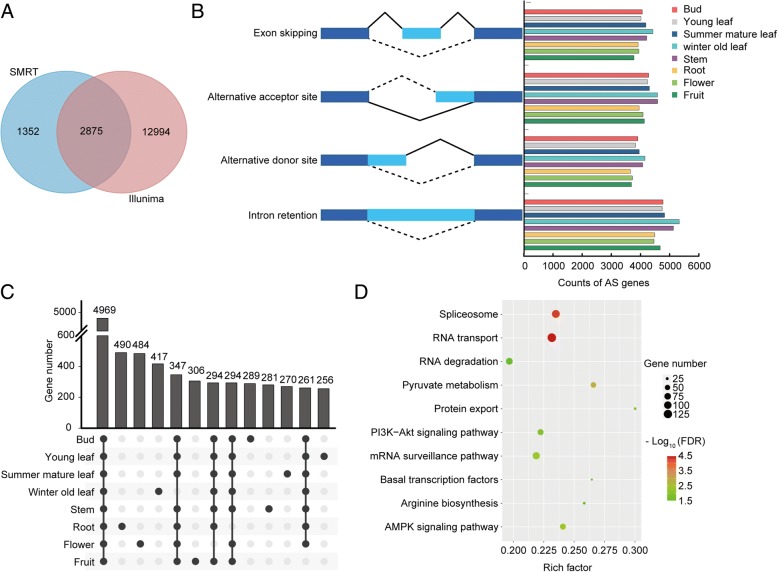
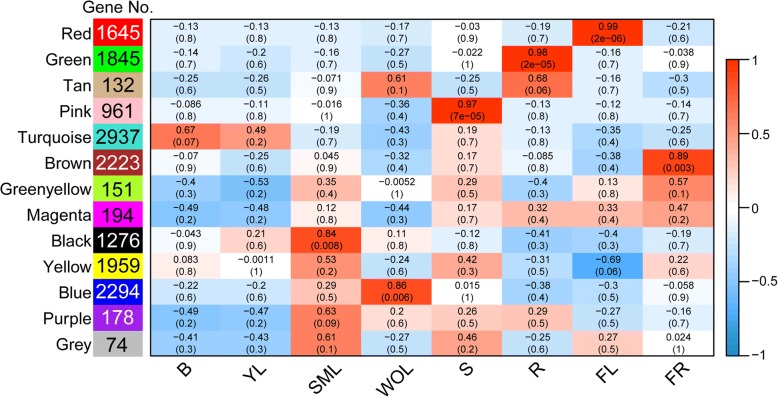
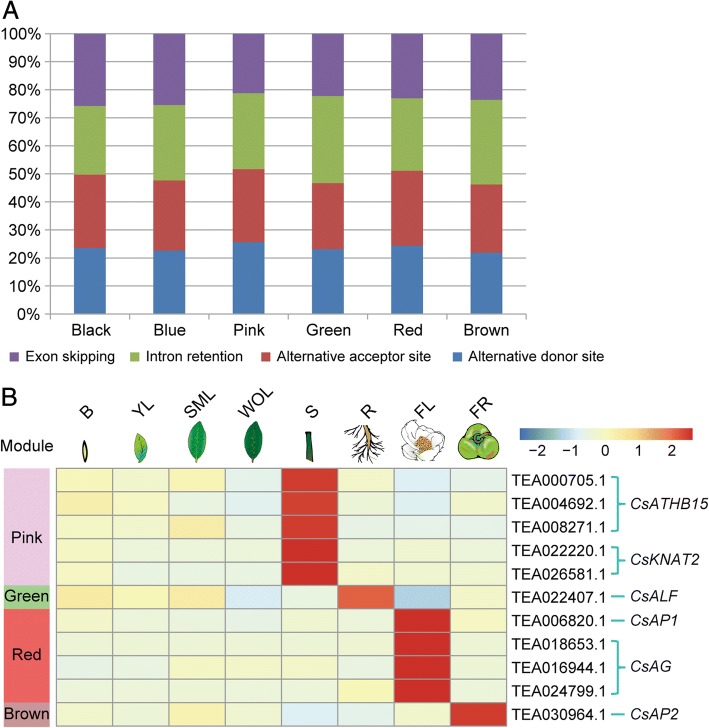
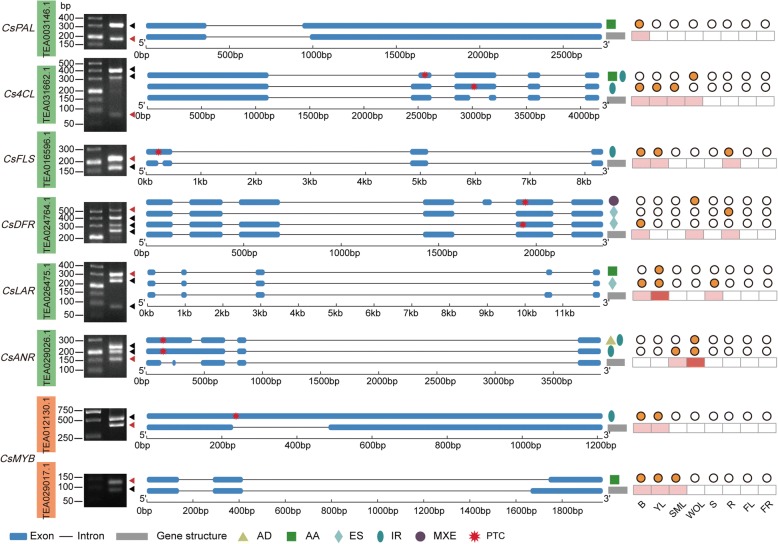
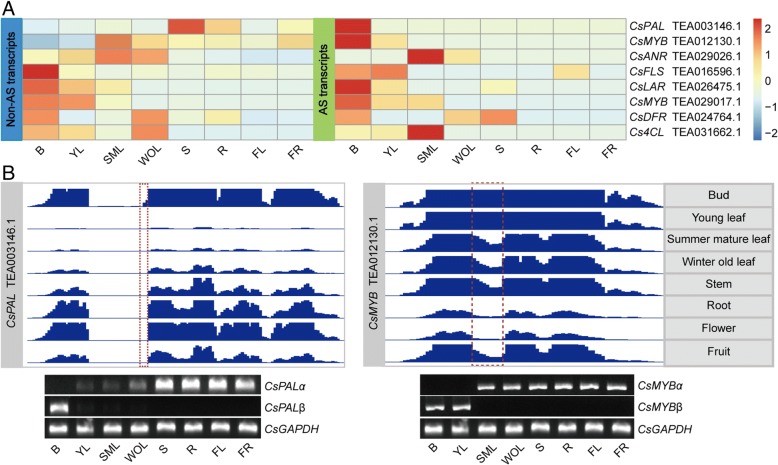
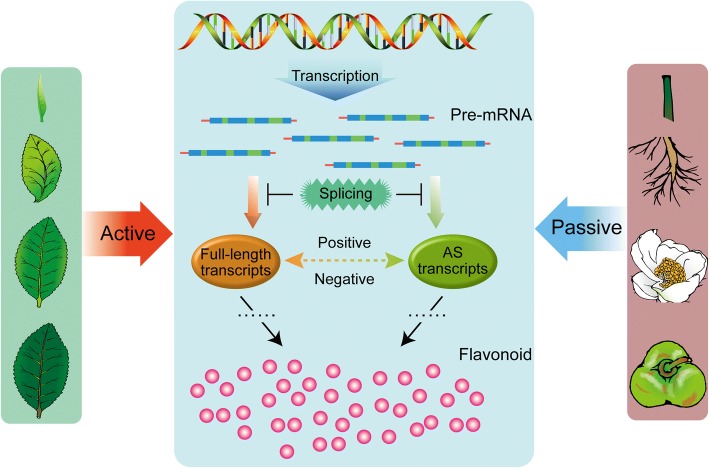
Results: In our study, the AS landscape and dynamics were characterized in eight tissues (bud, young leaf, summer mature leaf, winter old leaf, stem, root, flower, fruit) of tea plant by Illumina RNA-Seq and confirmed by Iso-Seq. The most abundant AS (~ 20%) was intron retention and involved in RNA processes. The some alternative splicings were found to be tissue specific in stem and root etc. Thirteen co-expressed modules of AS transcripts were identified, which revealed a similar pattern between the bud and young leaves as well as a distinct pattern between seasons. AS events of structural genes including anthocyanidin reductase and MYB transcription factors were involved in biosynthesis of flavonoid, especially in vegetative tissues. The AS isoforms rather than the full-length ones were the major transcripts involved in flavonoid synthesis pathway, and is positively correlated with the catechins content conferring the tea taste. We propose that the AS is an important functional mechanism in regulating flavonoid metabolites.
Conclusion: Our study provides the insight into the AS events underlying tea plant's uniquely different developmental process and highlights the important contribution and efficacy of alternative splicing regulatory function to biosynthesis of flavonoids.
Keywords: Alternative splicing; Camellia sinensis; Flavonoid; Tissue-specificity.
Conflict of interest statement
Ethics approval and consent to participate
Not applicable
Consent for publication
Not Applicable
Competing interests
The authors declare that they have no competing interests.
Publisher’s Note
Springer Nature remains neutral with regard to jurisdictional claims in published maps and institutional affiliations.
Figures
References
-
- Shi CY, Yang H, Wei CL, Yu O, Zhang ZZ, Jiang CJ, Sun J, Li YY, Chen Q, Xia T, Wan XC. Deep sequencing of the Camellia sinensis transcriptome revealed candidate genes for major metabolic pathways of tea-specific compounds. BMC Genomics. 2011;12:131. doi: 10.1186/1471-2164-12-131. - DOI - PMC - PubMed
MeSH terms
Substances
Grants and funding
- 31171608/National Natural Science Foundation of China
- 15czs08032/Special Innovative Province Construction in Anhui Province
- 2016080503B024/Special Project for Central Guiding Science and Technology Innovatio of Region in Anhui Province
- IRT1101/Programme for Changjiang Scholars and Innovative Research Team in University
LinkOut - more resources
Full Text Sources
Research Materials
