


Zoonotic Cryptosporidium species and subtypes in lambs and goat kids in Algeria
- PMID: 30400983
- PMCID: PMC6219180
- DOI: 10.1186/s13071-018-3172-2
Zoonotic Cryptosporidium species and subtypes in lambs and goat kids in Algeria
Abstract
Background: Little is known on the occurrence and identity of Cryptosporidium species in sheep and goats in Algeria. This study aimed at investigating the occurrence of Cryptosporidium species in lambs and goat kids younger than 4 weeks.
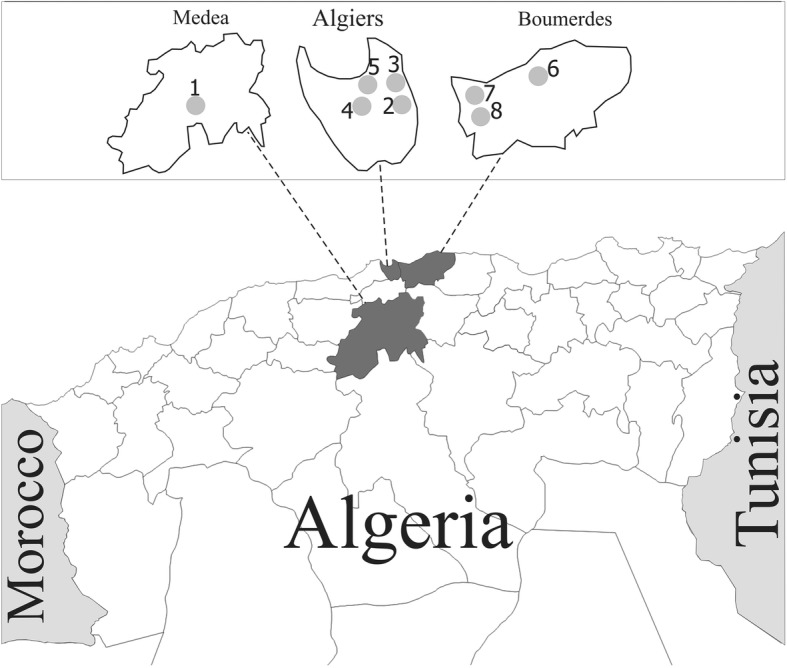
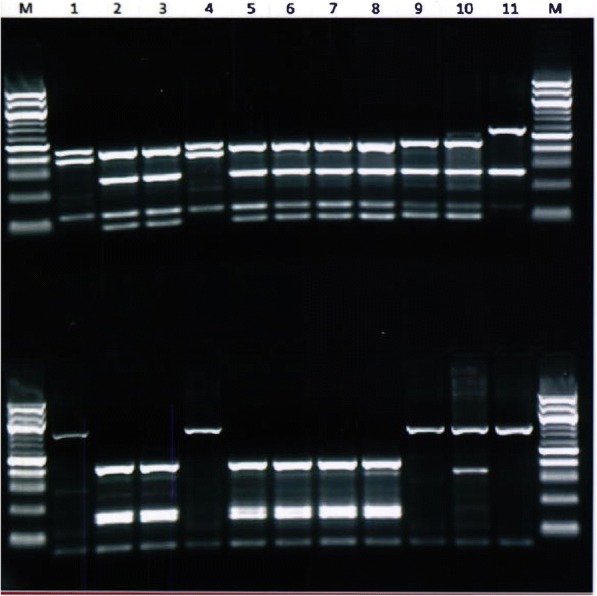
Methods: A total of 154 fecal samples (62 from lambs and 92 from kid goats) were collected from 13 sheep flocks in Médea, Algeria and 18 goat flocks across Algiers and Boumerdes. They were screened for Cryptosporidium spp. by nested-PCR analysis of a fragment of the small subunit (SSU) rRNA gene, followed by restriction fragment length polymorphism and sequence analyses to determine the Cryptosporidium species present. Cryptosporidium parvum and C. ubiquitum were further subtyped by sequence analysis of the 60 kDa glycoprotein gene.
Results: Cryptosporidium spp. were detected in 17 fecal samples (11.0%): 9 from lambs (14.5%) and 8 from goat kids (8.7%). The species identified included C. parvum in 3 lambs, C. xiaoi in 6 lambs and 6 goat kids, and C. ubiquitum in 2 goat kids. Cryptosporidium infections were detected mostly in animals during the first two weeks of life (7/8 for goat kids and 7/9 for lambs) and in association with diarrhea occurrence (7/17 or 41.2% goat kids and 7/10 or 70.0% lambs with diarrhea were positive for Cryptosporidium spp.). Subtyping of C. parvum and C. ubiquitum isolates identified the zoonotic IIaA13G2R1 and XIIa subtype families, respectively. Minor differences in the SSU rRNA gene sequences were observed between C. xiaoi from sheep and goats.
Conclusions: Results of this study indicate that three Cryptosporidium species occur in lambs and goat kids in Algeria, including zoonotic C. parvum and C. ubiquitum. They are associated with the occurrence of neonatal diarrhea.
Keywords: Algeria; Cryptosporidium parvum; Cryptosporidium ubiquitum; Cryptosporidium xiaoi; Goat; Sheep.
Conflict of interest statement
Ethics approval
The procedures used in this investigation comply fully with ethics regulations in Algeria. The study protocol was approved by ethics committee of École Nationale Supérieure Vétérinaire, Algiers, Algeria (PROJET CNEPRU/ CODE: F02620130033).
Consent for publication
Not applicable.
Competing interests
The authors declare that they have no competing interests.
Publisher’s Note
Springer Nature remains neutral with regard to jurisdictional claims in published maps and institutional affiliations.
Figures
References
MeSH terms
Substances
Grants and funding
LinkOut - more resources
Full Text Sources
Medical
Miscellaneous
