


Temporal changes of Sall4 lineage contribution in developing embryos and the contribution of Sall4-lineages to postnatal germ cells in mice
- PMID: 30401915
- PMCID: PMC6219540
- DOI: 10.1038/s41598-018-34745-5
Temporal changes of Sall4 lineage contribution in developing embryos and the contribution of Sall4-lineages to postnatal germ cells in mice
Abstract
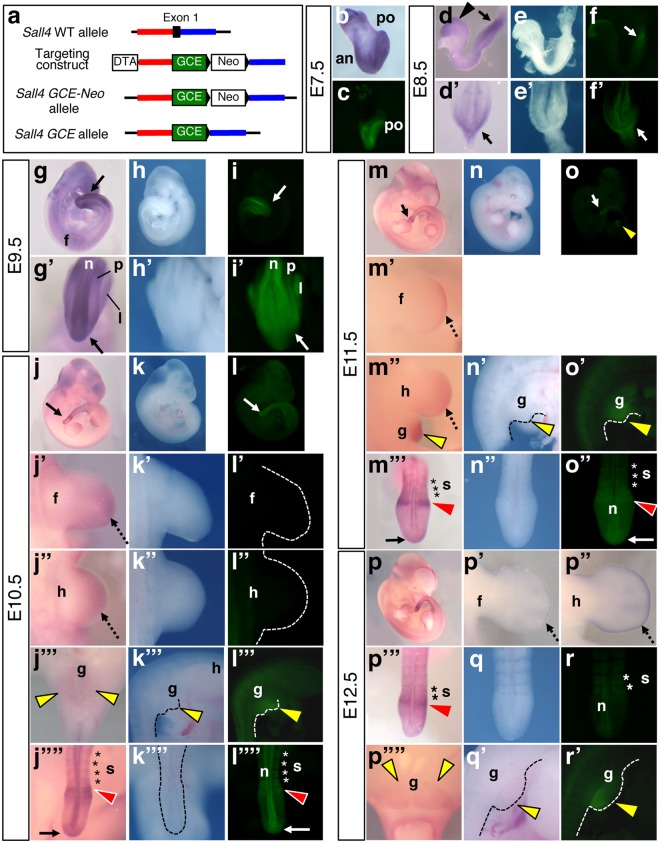
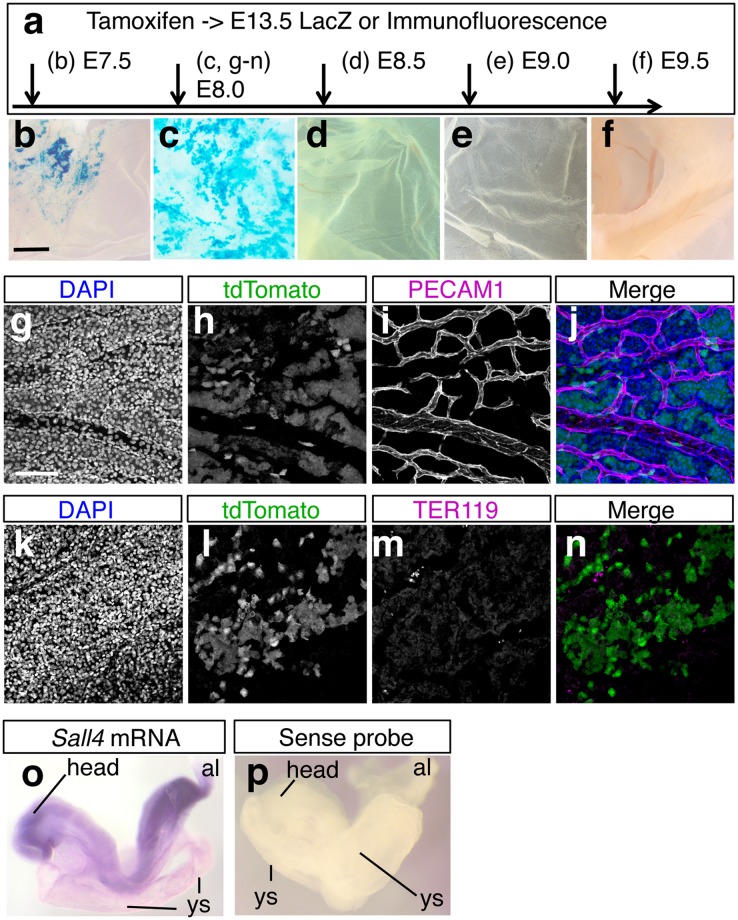
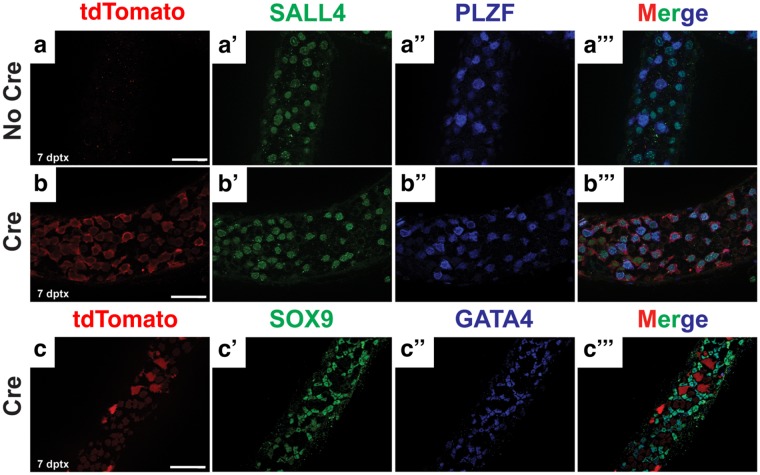
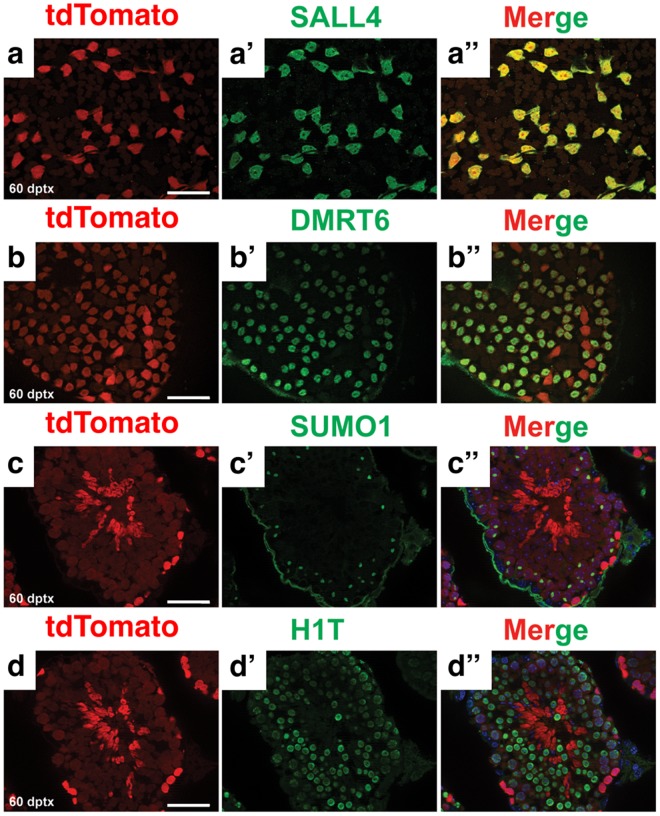
Mutations in the SALL4 gene cause human syndromes with defects in multiple organs. Sall4 expression declines rapidly in post-gastrulation mouse embryos, and our understanding of the requirement of Sall4 in animal development is still limited. To assess the contributions of Sall4 expressing cells to developing mouse embryos, we monitored temporal changes of the contribution of Sall4 lineages using a Sall4 GFP-CreERT2 knock-in mouse line and recombination-dependent reporter lines. By administering tamoxifen at various time points we observed that the contributions of Sall4 lineages to the axial level were rapidly restricted from the entire body to the posterior part of the body. The contribution to forelimbs, hindlimbs, craniofacial structures and external genitalia also declined after gastrulation with different temporal dynamics. We also detected Sall4 lineage contributions to the extra-embryonic tissues, such as the yolk sac and umbilical cord, in a temporal manner. These Sall4 lineage contributions provide insights into potential roles of Sall4 during mammalian embryonic development. In postnatal males, long-term lineage tracing detected Sall4 lineage contributions to the spermatogonial stem cell pool during spermatogenesis. The Sall4 GFP-CreERT2 line can serve as a tool to monitor spatial-temporal contributions of Sall4 lineages as well as to perform gene manipulations in Sall4-expressing lineages.
Conflict of interest statement
The authors declare no competing interests.
Figures



References
-
- Al-Baradie Raidah, Yamada Koki, St. Hilaire Cynthia, Chan Wai-Man, Andrews Caroline, McIntosh Nathalie, Nakano Motoi, Martonyi E. Jean, Raymond William R., Okumura Sada, Okihiro Michael M., Engle Elizabeth C. Duane Radial Ray Syndrome (Okihiro Syndrome) Maps to 20q13 and Results from Mutations in SALL4, a New Member of the SAL Family. The American Journal of Human Genetics. 2002;71(5):1195–1199. doi: 10.1086/343821. - DOI - PMC - PubMed
Publication types
MeSH terms
Substances
Grants and funding
LinkOut - more resources
Full Text Sources
Molecular Biology Databases
Research Materials
