Ehlers-Danlos syndromes: state of the art on clinical practice guidelines
- PMID: 30402275
- PMCID: PMC6203099
- DOI: 10.1136/rmdopen-2018-000790
Ehlers-Danlos syndromes: state of the art on clinical practice guidelines
Abstract
Objective: To report the effort of the European Reference Network for Rare and Complex CONnective tissue and musculoskeletal diseases NETwork working group on Ehlers-Danlos syndromes (EDS) and related disorders to assess current available clinical practice guidelines (CPGs) specifically addressed to EDS, in order to identify potential clinician and patient unmet needs.
Methods: Systematic literature search in PUBMED and EMBASE based on controlled terms (MeSH and Emtree) and keywords of the disease and publication type (CPGs). All the published articles were revised in order to identify existing CPGs on diagnosis, monitoring and treatment of EDS.
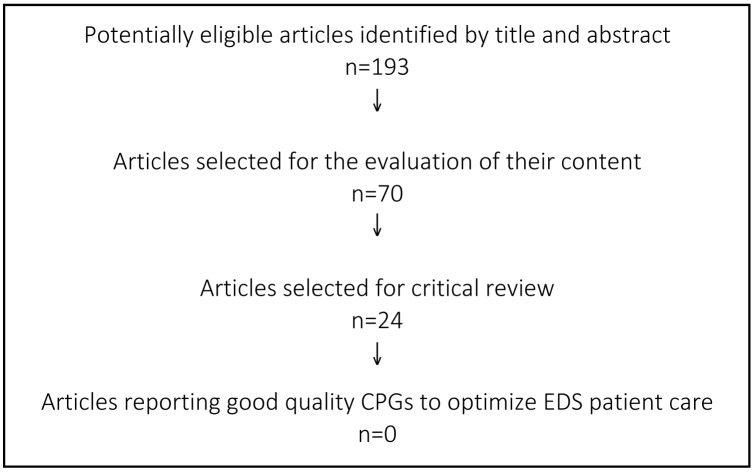
Results: Literature revision detected the absence of papers reporting good quality CPGs to optimise EDS patient care. The current evidence-based literature regarding clinical guidelines for the EDS was limited in size and quality, and there is insufficient research exploring the clinical features and interventions, and clinical decision-making are currently based on theoretical and limited research evidences.
Conclusions: Many clinician and patient unmet needs have been identified.
Keywords: ERN ReCONNET; Ehlers-Danlos syndromes; European Reference Networks; clinical practice guidelines; unmet needs.
Conflict of interest statement
Competing interests: None declared
Figures
References
-
- Beighton P, De Paepe A, Steinmann B, et al. Ehlers-Danlos syndromes: revised nosology, Villefranche, 1997. Ehlers-Danlos National Foundation (USA) and Ehlers-Danlos Support Group (UK). Am J Med Genet 1998;77:31–7. - PubMed
-
- Cutolo M, Castellani P, Borsi L, et al. Altered fibronectin distribution in cultured fibroblasts from patients with Ehlers-Danlos syndrome. Clin Exp Rheumatol 1986;4:125–8. - PubMed
LinkOut - more resources
Full Text Sources