


How we evaluate red blood cell compatibility and transfusion support for patients with sickle cell disease undergoing hematopoietic progenitor cell transplantation
- PMID: 30403414
- PMCID: PMC6911356
- DOI: 10.1111/trf.14871
How we evaluate red blood cell compatibility and transfusion support for patients with sickle cell disease undergoing hematopoietic progenitor cell transplantation
Abstract
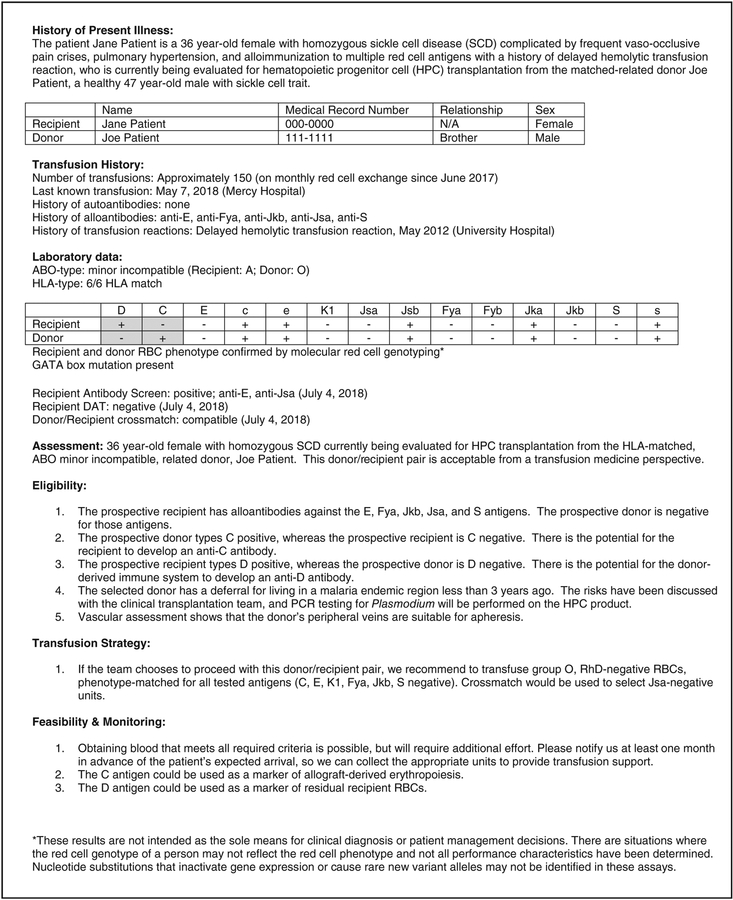
Multiple hematopoietic progenitor cell (HPC) transplantation options for patients with sickle cell disease (SCD) are currently under investigation. Patients with SCD have a high rate of alloimmunization to red blood cell antigens, often complicating transfusion support. Transfusion reactions, including acute and delayed hemolytic reactions, have been observed despite immunosuppressive regimens. Allogeneic donor transplants have been shown to carry a risk of prolonged reticulocytopenia and acute hemolysis with severe anemia in nonmyeloablative regimens. We discuss our experience providing transfusion support to patients with SCD undergoing HPC transplantation, propose an outline for a complete pretransplantation evaluation, and discuss donor/recipient compatibility issues and their implications.
Published 2018. This article is a U.S. Government work and is in the public domain in the USA.
Conflict of interest statement
CONFLICT OF INTEREST
The authors have disclosed no conflicts of interest.
Figures
References
-
- Arnold SD, Bhatia M, Horan J, et al. Haematopoietic stem cell transplantation for sickle cell disease — current practice and new approaches. Br J Haematol 2016;174:515–25. - PubMed
-
- McPherson ME, Anderson AR, Haight AE, et al. Transfusion management of sickle cell patients during bone marrow transplantation with matched sibling donor. Transfusion 2009;49: 1977–86. - PubMed
-
- Klein HG, Anstee DJ. Mollison’s blood transfusion in clinical medicine. 12th ed. Malden (MA): Wiley & Sons, Ltd; 2014.
-
- Evidence-based management of sickle cell disease: expert panel report, 2014. Bethesda: U.S. Department of Health and Human Services, National Institutes of Health, National Heart Lung and Blood Institute; 2014.
