


Caveolin-1 Modulates Mechanotransduction Responses to Substrate Stiffness through Actin-Dependent Control of YAP
- PMID: 30404014
- PMCID: PMC6231326
- DOI: 10.1016/j.celrep.2018.10.024
Caveolin-1 Modulates Mechanotransduction Responses to Substrate Stiffness through Actin-Dependent Control of YAP
Erratum in
-
Caveolin-1 Modulates Mechanotransduction Responses to Substrate Stiffness through Actin-Dependent Control of YAP.Cell Rep. 2019 Feb 5;26(6):1679-1680. doi: 10.1016/j.celrep.2019.01.090. Cell Rep. 2019. PMID: 30726747 Free PMC article. No abstract available.
Abstract
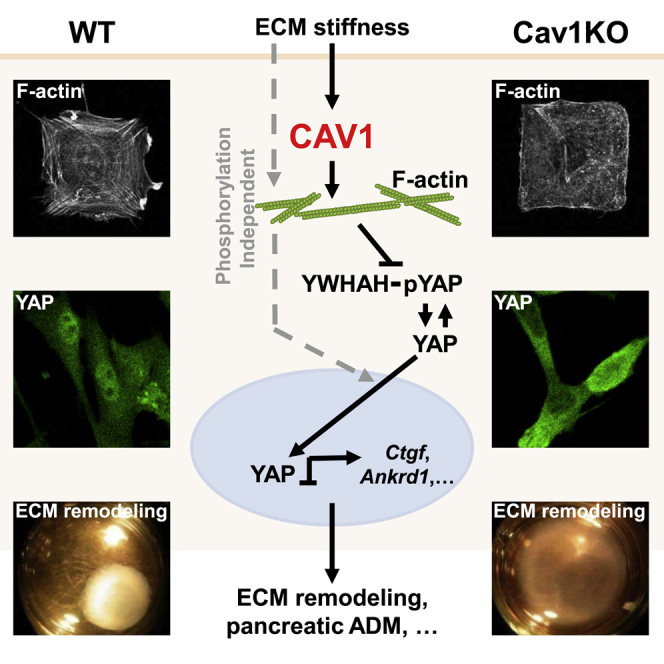
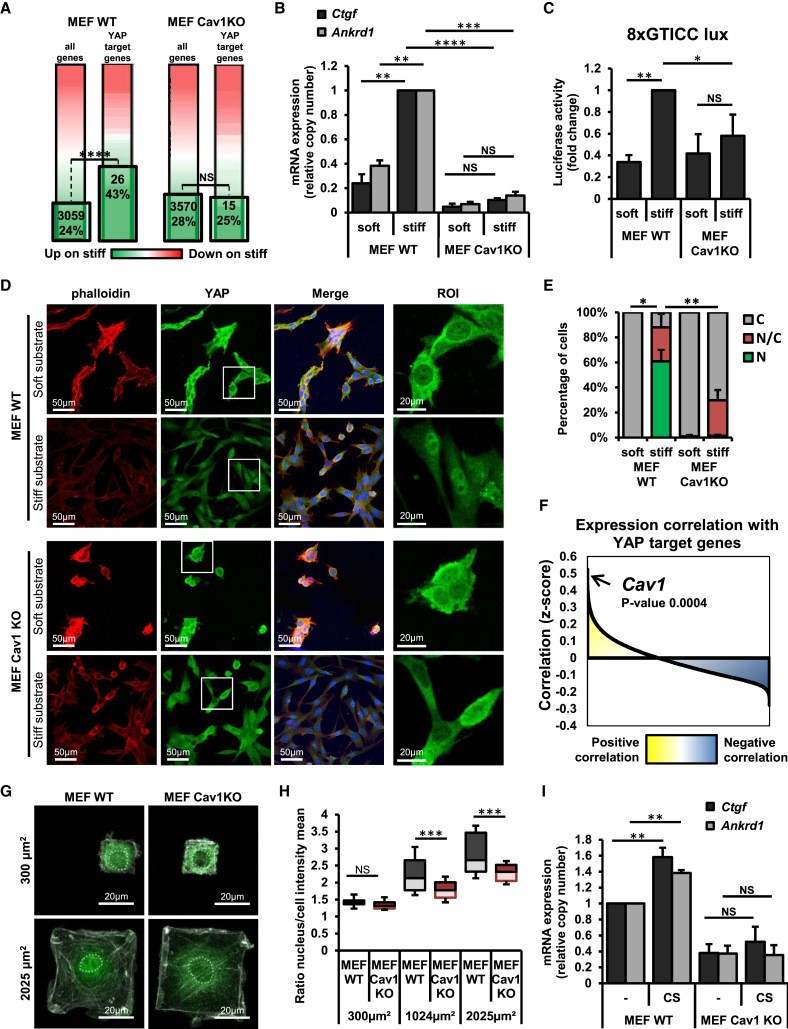
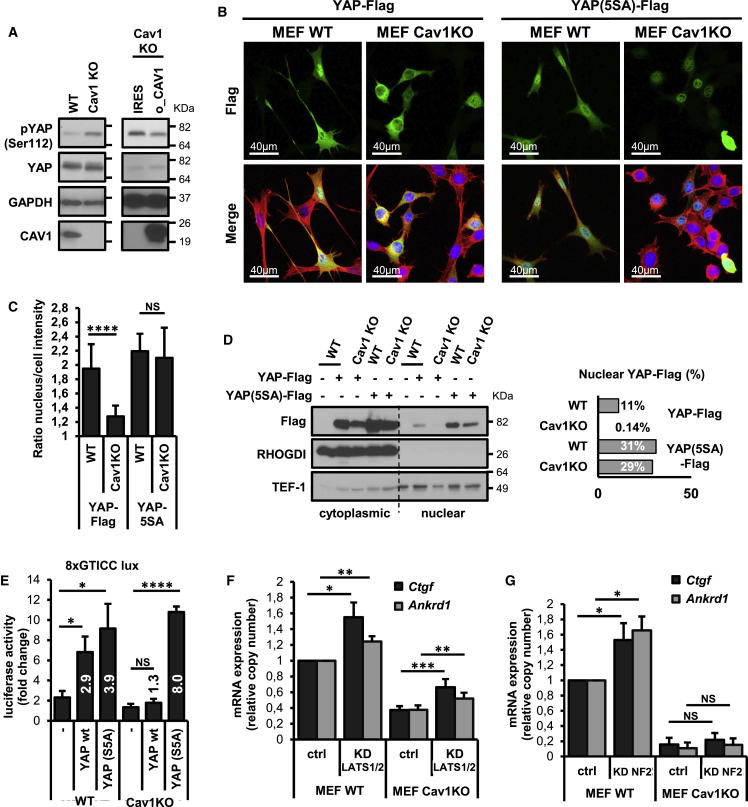
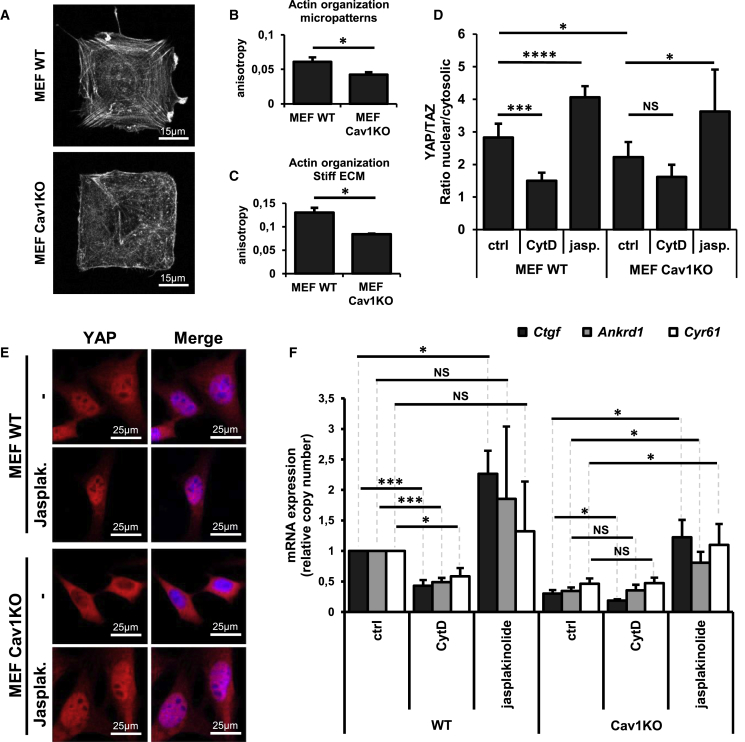
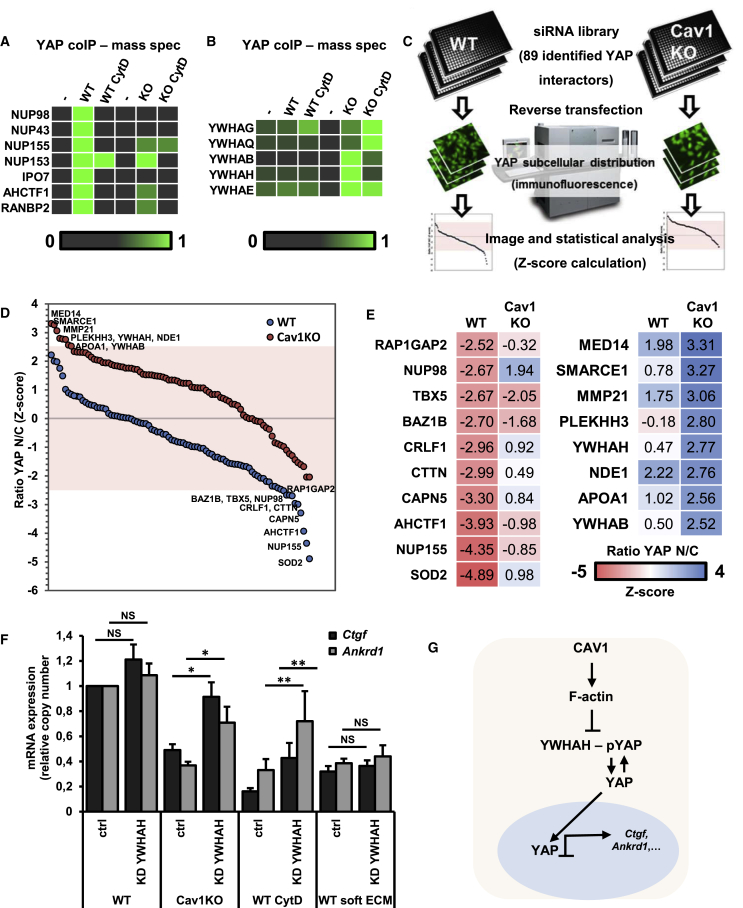
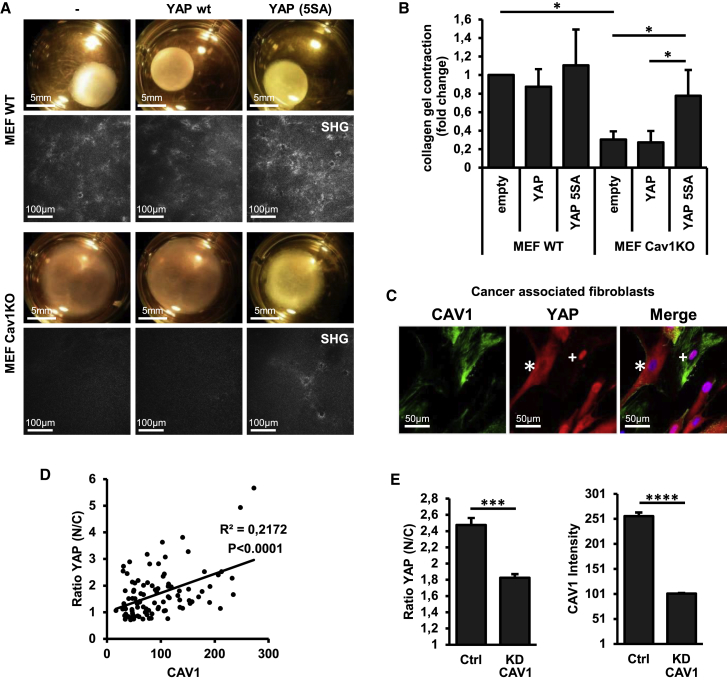
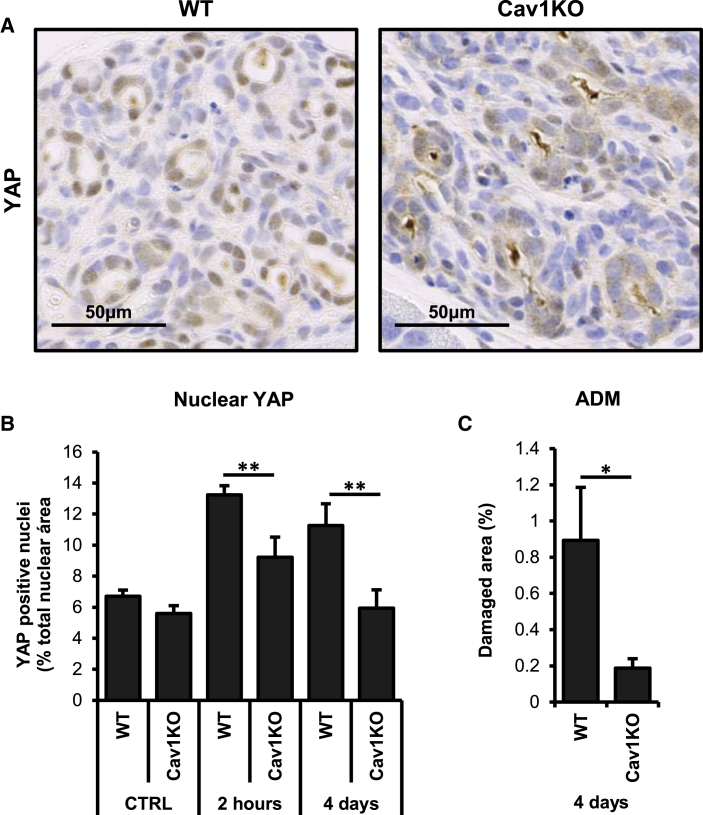
The transcriptional regulator YAP orchestrates many cellular functions, including tissue homeostasis, organ growth control, and tumorigenesis. Mechanical stimuli are a key input to YAP activity, but the mechanisms controlling this regulation remain largely uncharacterized. We show that CAV1 positively modulates the YAP mechanoresponse to substrate stiffness through actin-cytoskeleton-dependent and Hippo-kinase-independent mechanisms. RHO activity is necessary, but not sufficient, for CAV1-dependent mechanoregulation of YAP activity. Systematic quantitative interactomic studies and image-based small interfering RNA (siRNA) screens provide evidence that this actin-dependent regulation is determined by YAP interaction with the 14-3-3 protein YWHAH. Constitutive YAP activation rescued phenotypes associated with CAV1 loss, including defective extracellular matrix (ECM) remodeling. CAV1-mediated control of YAP activity was validated in vivo in a model of pancreatitis-driven acinar-to-ductal metaplasia. We propose that this CAV1-YAP mechanotransduction system controls a significant share of cell programs linked to these two pivotal regulators, with potentially broad physiological and pathological implications.
Copyright © 2018 The Authors. Published by Elsevier Inc. All rights reserved.
Figures
References
-
- Aragona M., Panciera T., Manfrin A., Giulitti S., Michielin F., Elvassore N., Dupont S., Piccolo S. A mechanical checkpoint controls multicellular growth through YAP/TAZ regulation by actin-processing factors. Cell. 2013;154:1047–1059. - PubMed
-
- Basu S., Totty N.F., Irwin M.S., Sudol M., Downward J. Akt phosphorylates the Yes-associated protein, YAP, to induce interaction with 14-3-3 and attenuation of p73-mediated apoptosis. Mol. Cell. 2003;11:11–23. - PubMed
-
- Bertrand A.T., Ziaei S., Ehret C., Duchemin H., Mamchaoui K., Bigot A., Mayer M., Quijano-Roy S., Desguerre I., Lainé J. Cellular microenvironments reveal defective mechanosensing responses and elevated YAP signaling in LMNA-mutated muscle precursors. J. Cell Sci. 2014;127:2873–2884. - PubMed
-
- Bonzon-Kulichenko E., Garcia-Marques F., Trevisan-Herraz M., Vázquez J. Revisiting peptide identification by high-accuracy mass spectrometry: problems associated with the use of narrow mass precursor windows. J. Proteome Res. 2015;14:700–710. - PubMed
-
- Boudaoud A., Burian A., Borowska-Wykręt D., Uyttewaal M., Wrzalik R., Kwiatkowska D., Hamant O. FibrilTool, an ImageJ plug-in to quantify fibrillar structures in raw microscopy images. Nat. Protoc. 2014;9:457–463. - PubMed
Publication types
MeSH terms
Substances
Grants and funding
LinkOut - more resources
Full Text Sources
Molecular Biology Databases
Research Materials
Miscellaneous
