


Associations among Bruxism, Gastroesophageal Reflux Disease, and Tooth Wear
- PMID: 30404150
- PMCID: PMC6262381
- DOI: 10.3390/jcm7110417
Associations among Bruxism, Gastroesophageal Reflux Disease, and Tooth Wear
Abstract
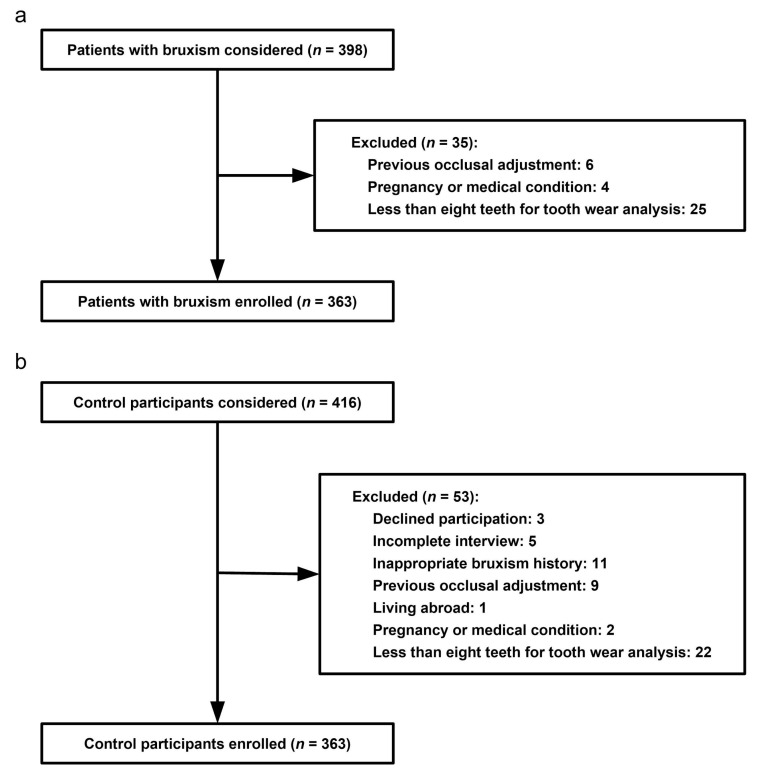
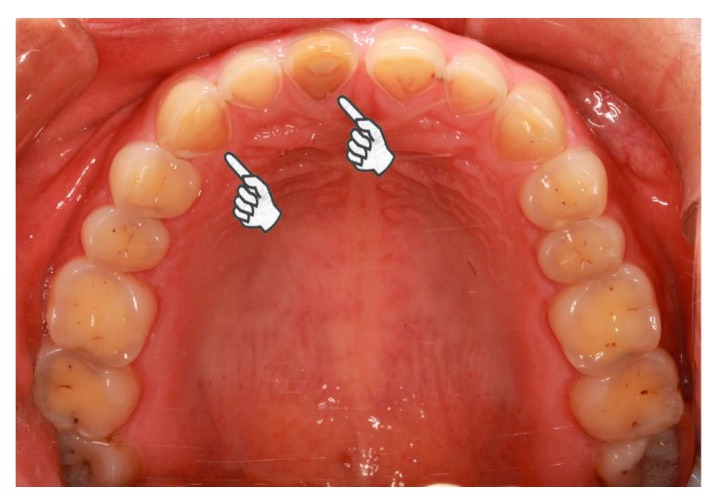
The relationship between bruxism and tooth wear is contentious in the literature. The pathophysiological processes of tooth wear may be complicated by the relationship between bruxism and gastroesophageal reflux disease (GERD). The objective of this study was to evaluate the associations among bruxism, GERD, and tooth wear. Two complementary studies were performed: a case-control study to verify the linkage between GERD and bruxism and a cross-sectional study on the same cohort to establish the connection between GERD and tooth wear in bruxism patients. A cohort of 363 consecutive bruxism patients and 363 matched control participants were recruited. Gastroesophageal reflux disease was diagnosed in accordance with the Montreal criteria. Tooth wear was scored based on the index recommended by Smith and Knight. Logistic regression analyses were performed. After adjustment, GERD was identified as a risk factor of bruxism. Bruxism with reflux symptoms for extensive time-periods was associated with severe tooth wear for the whole dentition (odds ratio, 4.70, 95% confidence interval, 2.04⁻10.83). Increased odds ratios for severe tooth wear were also found in all tooth locations and palatal/lingual and occlusal/incisal surfaces of bruxism patients with GERD for extensive time-periods. In conclusion, strong associations were identified among bruxism, GERD, and tooth wear.
Keywords: bruxism; gastroesophageal reflux; tooth attrition; tooth erosion.
Conflict of interest statement
The authors declare no conflict of interest. The funders had no role in the design of the study; in the collection, analyses, or interpretation of data; in the writing of the manuscript, and in the decision to publish the results.
Figures
References
Grants and funding
LinkOut - more resources
Full Text Sources
