


Dental ontogeny in extinct synapsids reveals a complex evolutionary history of the mammalian tooth attachment system
- PMID: 30404877
- PMCID: PMC6235047
- DOI: 10.1098/rspb.2018.1792
Dental ontogeny in extinct synapsids reveals a complex evolutionary history of the mammalian tooth attachment system
Abstract
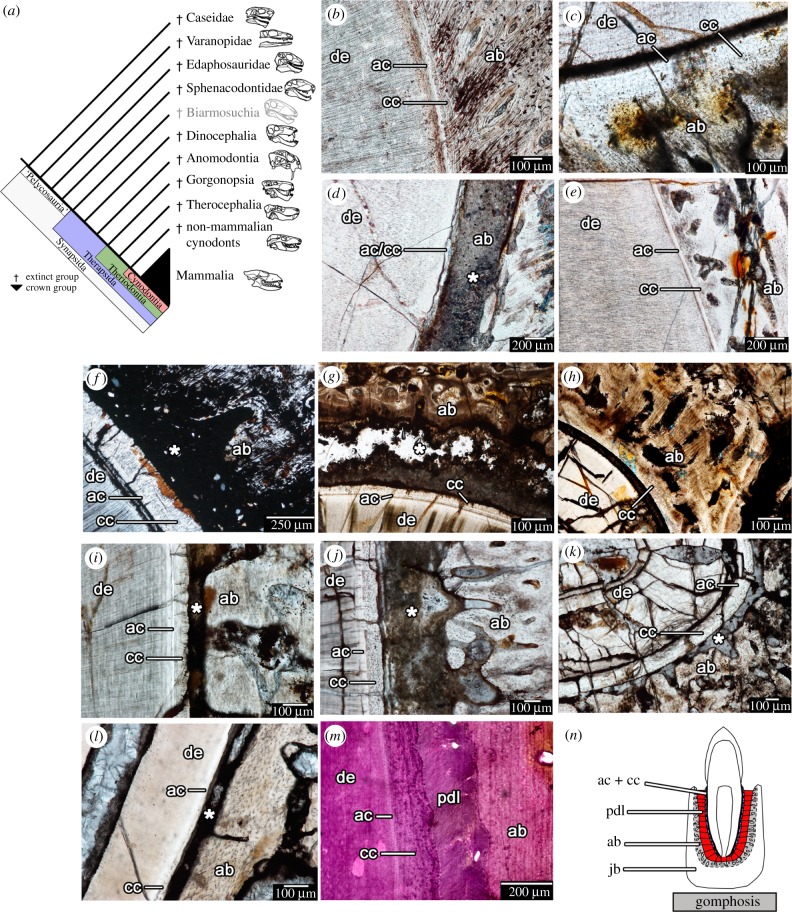
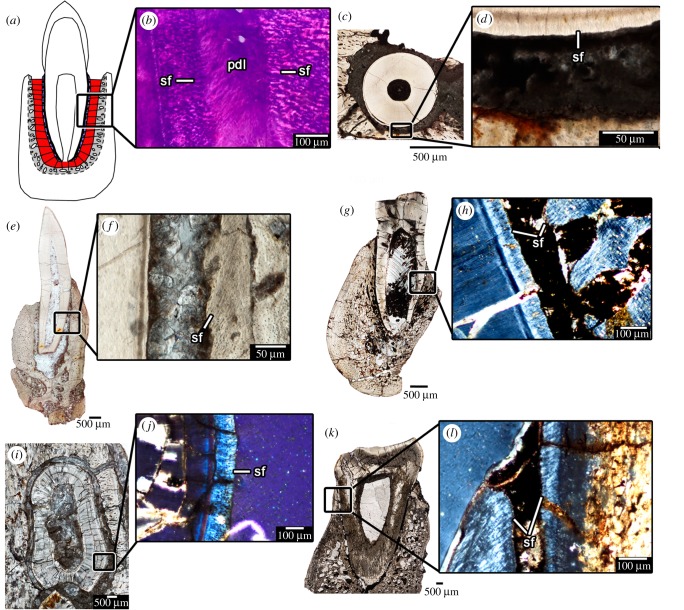
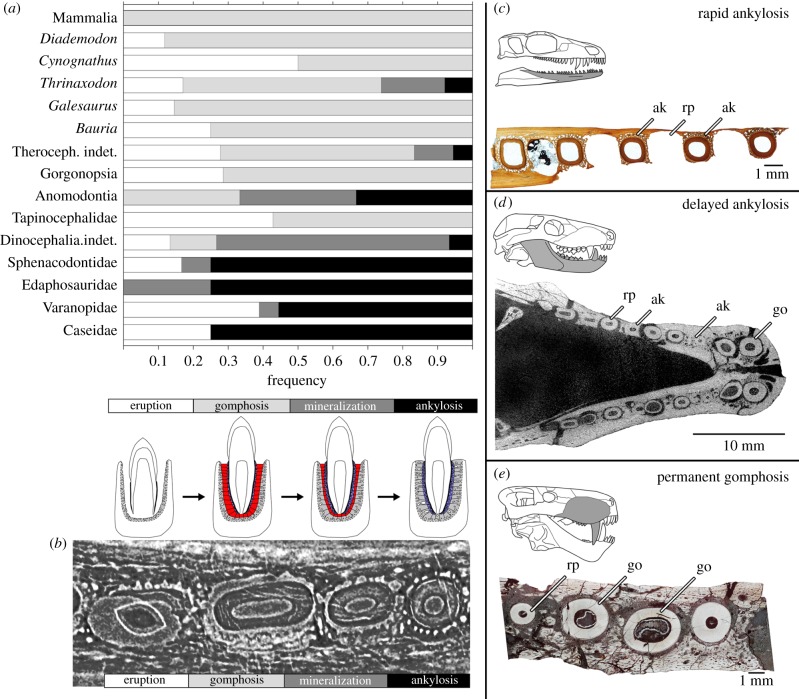
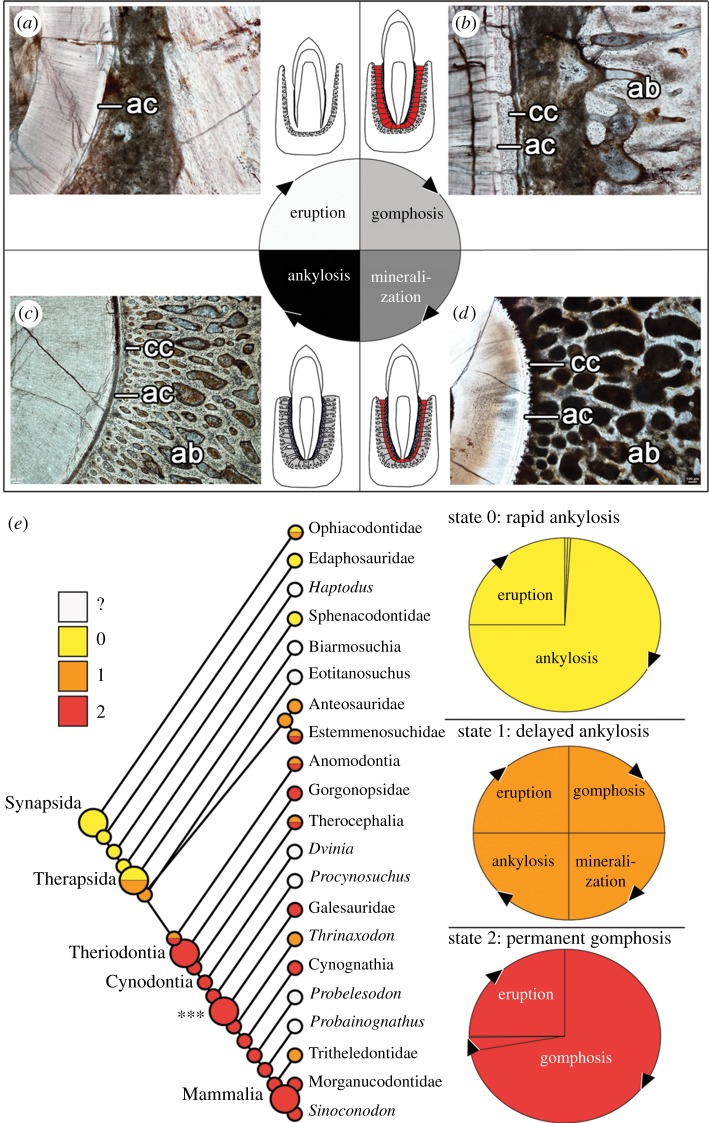
The mammalian dentition is uniquely characterized by a combination of precise occlusion, permanent adult teeth and a unique tooth attachment system. Unlike the ankylosed teeth in most reptiles, mammal teeth are supported by a ligamentous tissue that suspends each tooth in its socket, providing flexible and compliant tooth attachment that prolongs the life of each tooth and maintains occlusal relationships. Here we investigate dental ontogeny through histological examination of a wide range of extinct synapsid lineages to assess whether the ligamentous tooth attachment system is unique to mammals and to determine how it evolved. This study shows for the first time that the ligamentous tooth attachment system is not unique to crown mammals within Synapsida, having arisen in several non-mammalian therapsid clades as a result of neoteny and progenesis in dental ontogeny. Mammalian tooth attachment is here re-interpreted as a paedomorphic condition relative to the ancestral synapsid form of tooth attachment.
Keywords: ankylosis; dental histology; paedomorphosis; pelycosaur; therapsid.
© 2018 The Author(s).
Conflict of interest statement
The authors have no competing interests to declare.
Figures
References
-
- Weller JM. 1968. Evolution of mammalian teeth. J. Paleontol. 42, 268–290.
-
- Kemp TS. 1982. Mammal-like reptiles and the origin of mammals. London, UK: Academic Press Inc.
-
- Sidor CA, Hopson JA. 1998. Ghost lineages and ‘mammalness’: assessing the temporal pattern of character acquisition in the Synapsida. Paleobiol. 24, 254–273.
Publication types
MeSH terms
Associated data
LinkOut - more resources
Full Text Sources
Other Literature Sources
