Review
. 2018 Dec;18(12):1029-1040.
doi: 10.1080/14737159.2018.1544494. Epub 2018 Nov 9.

The potential of tumor-derived exosomes for noninvasive cancer monitoring: an update

Affiliations
Review

The potential of tumor-derived exosomes for noninvasive cancer monitoring: an update

Theresa L Whiteside. Expert Rev Mol Diagn. 2018 Dec.

Abstract

Introduction: Liquid biopsy platforms are being actively developed in the biomarker field. Extracellular vesicles (EVs), especially the tumor-derived exosome (TEX) subsets of EVs, represent a platform that allows for molecular and genetic profiling of parent tumor cells. TEX are ubiquitous in body fluids of cancer patients and are promising clinically relevant surrogates of cancer cells. Areas covered: Isolation from body fluids of cancer patients and subsetting of exosomes based on immunoaffinity capture offers a means of evaluating proteins, lipids, nucleic acids and other molecular contents that are a characteristic of TEX and exosomes produced by reprogrammed normal cells. The same liquid biopsy can inform about the status of a tumor and simultaneously evaluate the competency of immune cells to mediate anti-tumor activities. Expert commentary: TEX and reprogrammed non-TEX isolated from plasma of cancer patients have the potential to become non-invasive biomarkers of cancer diagnosis, prognosis and response to therapies.

Keywords: Extracellular vesicles; cancer; non-invasive biomarkers; tumor-derived exosomes.


Conflict of interest statement

Declaration of Interest

The authors have no other relevant affiliations or financial involvement with any organization or entity with a financial interest in or financial conflict with the subject matter or materials discussed in the manuscript apart from those disclosed.

Figures
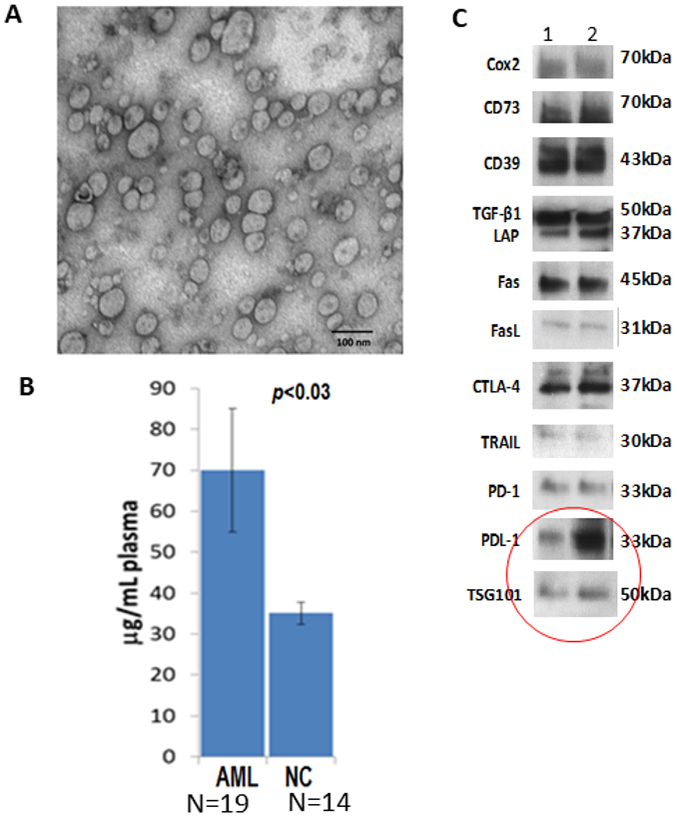
Figure 1.
Figure 1.
Characteristics of blast-derived exosomes isolated from plasma of patients with acute myeloid leukemia (AML). In A, transmission electron microscopy (TME) image of exosomes isolated by size exclusion chromatography (SEC) from plasma of an AML patient at diagnosis. Note the size heterogeneity of these exosomes. In B, protein levels (calculated per 1mL of plasma) of exosome fractions isolated by SEC from plasma of AML patients at the time of diagnosis and from normal controls. In C, representative Western blots of exosomes from plasma of two AML patients showing the presence of several immunoinhibitory proteins. The red circle calls attention to the presence of PD-L1 in the exosome cargo and of TSG101, an endocytic marker.
Figure 2.
Figure 2.
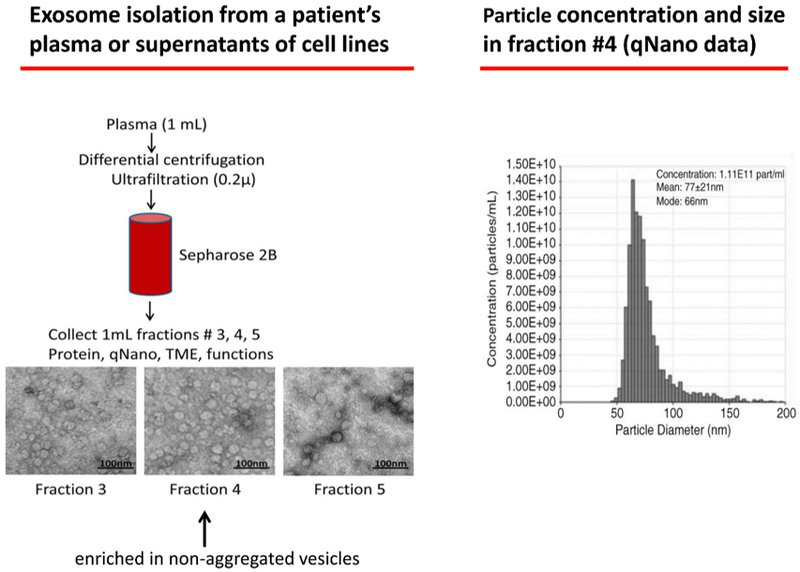
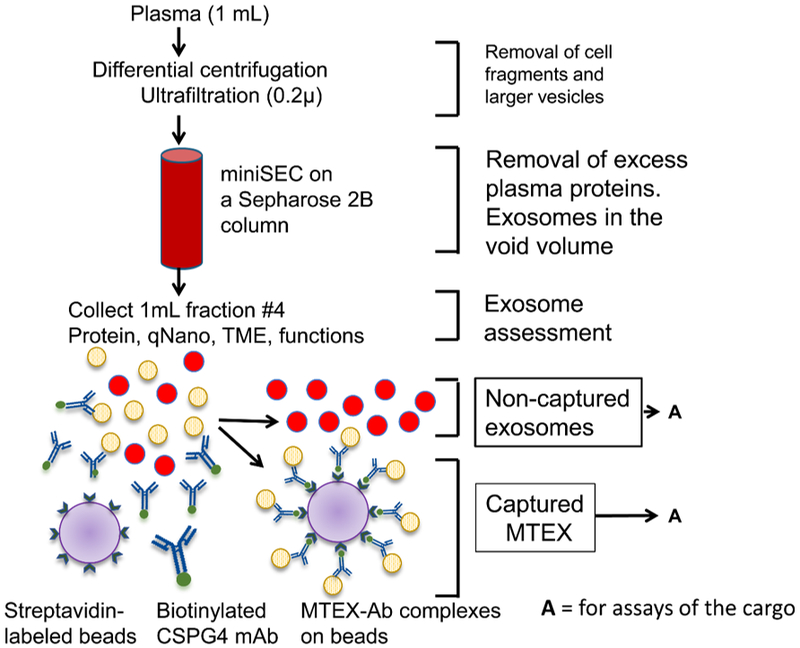
A schema for exosome isolation from plasma using miniSEC on a Sepharose 2B column and PBS as eluent. 1 mL fractions are collected and precleared from cell fragments and large protein aggregates by centrifugations, as previously described (ref. 24) and placed on the column. Under the experimental conditions used, fraction #4 is enriched in morphologically intact, non-aggregated vesicles that are partly depleted of “contaminating” plasma proteins. qNano measurements confirm the particle size and calculate their concentration at 1.1×10¹¹ per mL.
Figure 3.
Figure 3.
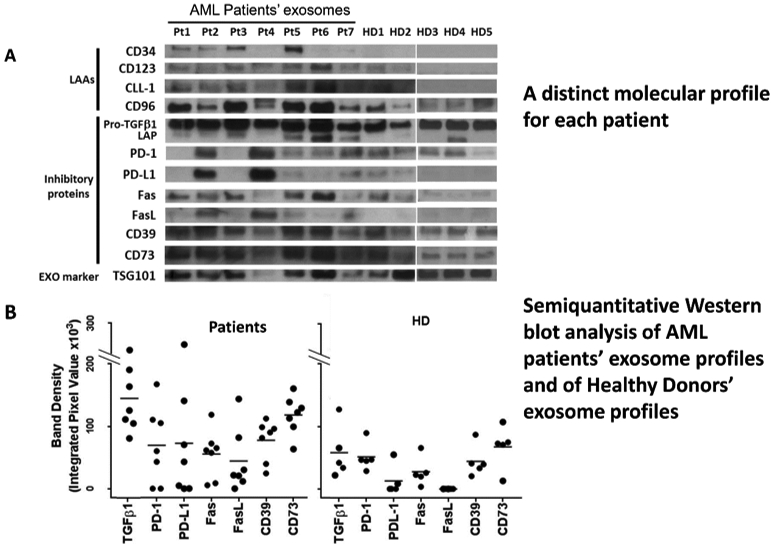
Western blots of exosomes isolated from plasma of 7 AML patients studied at the time of diagnosis and of 5 healthy donors. In A, note the prominent presence of leukemia-associated antigens (LAA) and numerous immunoinhibitory proteins in AML exosomes. In B, semiquantitation of the bands for the immunosuppressive exosome cargo indicates quantitative rather than qualitative differences in exosome proteins. Reproduced from Hong CS et al, ref. under the terms of Creative Commons Attribution 4.0 International License: http://creativecommons.org/licenses/by/4.0/.
Figure 4.
Figure 4.
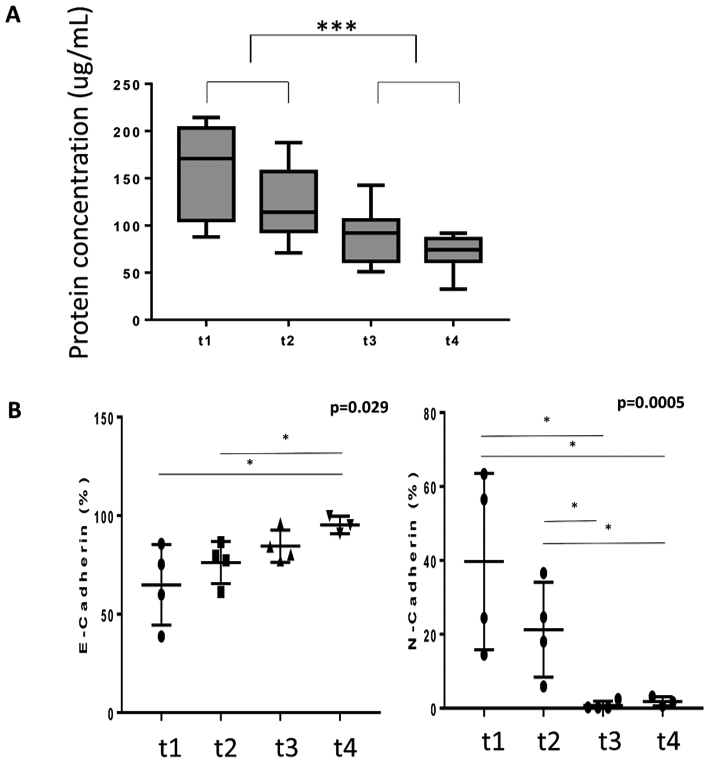
Changes in total exosome protein levels (A) in plasma of HNSCC patients treated with photodynamic therapy (PDT). Plasma exosomes were isolated by SEC and protein levels were measured prior to PDT (t1); 24h after PDT (t2); 7days after PDT (t3) and 4-6 weeks after PDT (t4). All 9 patients responded to PDT. In B, changes in E-cadherin and N-cadherin levels in exosomes isolated from plasma of HNSCC patients treated with and responding to PDT. Reproduced from Theodoraki M-N et al., ref. under the terms of Creative Commons Attribution License 3.0 (CCBY 3.0): https://creativecommons.org/licenses/by/3.0/.
Figure 5.
Figure 5.
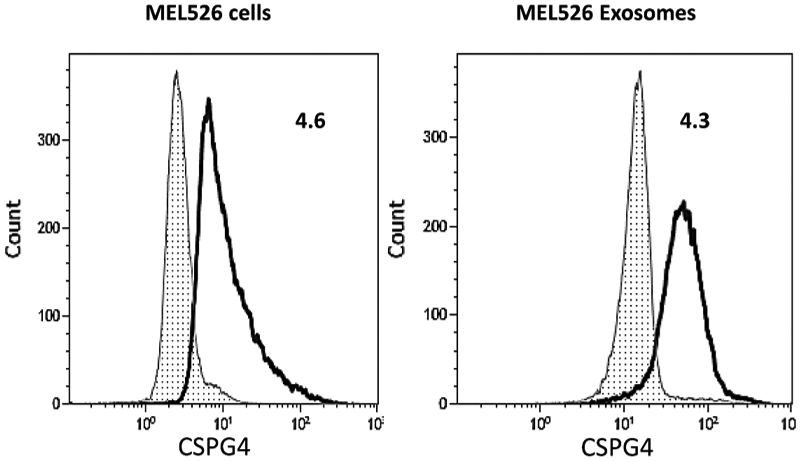
Expression of CSPG4 on MEL526 cells and on exosomes produced by these cells (i.e., on TEX). Note that TEX mimic the CSPG4 content of the parent cell. The data were acquired by flow cytometry using anti-CSPG4 mAbs produced by Dr. Soldano Ferrone. On-bead flow cytometry was used for detection of CSPG4 on exosomes. The data are presented as Relative Flow Intensity (RFI) values. Reproduced from Sharma P. et al., ref. under the terms of Creative Commons Attribution 4.0 International License: http://creativecommons.org/licenses/by/4.0/.
Figure 6.
Figure 6.
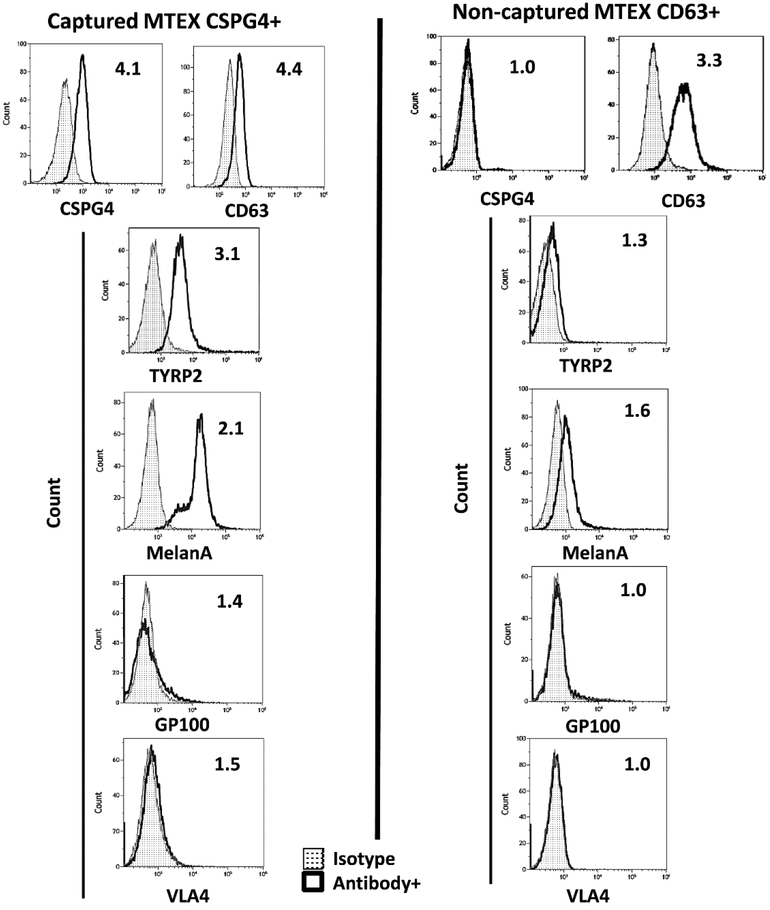
Immune capture with biotinylated anti-CSPG4 Abs of melanoma-derived exosomes (MTEX) on avidin-labeled beads from plasma of patients with melanoma. Non-captured exosomes were re-captured with anti-CD63 Abs for detection by on-bead flow cytometry. Two different anti-CSPG4 Abs (mAb 763.74 and mAb 225.28) specific for distinct epitopes of CSPG4 were used for capture and detection, respectively). Reproduced from Sharma P. et al., ref. under the terms of Creative Commons Attribution 4.0 International License: http://creativecommons.org/licenses/by/4.0/.
Figure 7.
Figure 7.
Representative flow cytometry results for detection of melanoma-associated antigens (MAAs) on the immunocaptured MTEX and on non-captured exosomes from plasma of a melanoma patient. Note that MAAs are carried by CSPG4+ MTEX but not by non-captured exosomes. Reproduced from Sharma P. et al., ref. under the terms of Creative Commons Attribution 4.0 International License: http://creativecommons.org/licenses/by/4.0/.
Figure 8.
Figure 8.
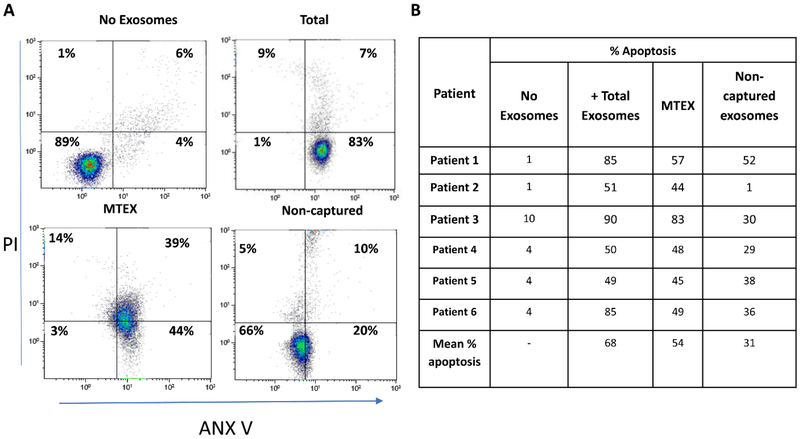
Representative data for apoptosis of activated primary CD8+ T cells after 6h coincubation with isolated MTEX are shown in A. In B, comparative apoptosis data for CD8+ T cells co-incubated with total exosomes, MTEX and non-MTEX from 6 different patients with melanoma (10μg exosome protein/assay). Note that MTEX are largely responsible for apoptosis induced by the total exosome fractions.
Figure 9.
Figure 9.
On bead-flow cytometry illustrating capture from plasma and separation of CD3+ and CD3(neg) exosomes. In A, representative data from two patients show significant enrichment in CD3+ exosomes in the immunocaptured fractions. The data are acquired as RFI values and are translated into percentages of positive exosomes for convenience only. In B and C, evidence that CD3(neg) exosomes are enriched in CD44v3+ exosomes, an indication that they are tumor-cell derived. Reproduced with permission from Theodoraki M-N et al., ref. .
Figure 10.
Figure 10.
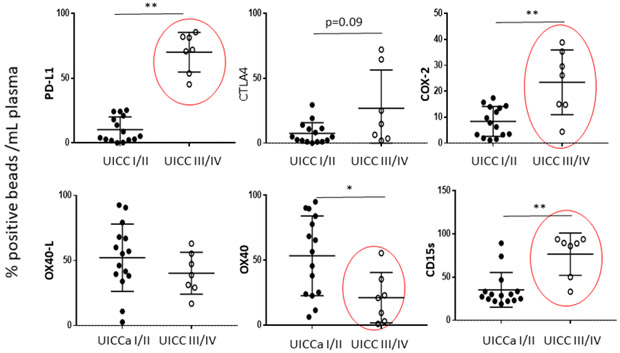
Correlations of the protein cargo in CD3+ exosomes from plasma of HNSCC patients with the tumor stages. The red circles indicate significant differences. The unpublished data were provided by Dr. M-N. Theodoraki.

References

    1. Pavlou MP, Diamandis EP. The cancer cell secretome: a good source for discovering biomarkers? J Proteomics, 73(10), 1896–1906 (2010). - PubMed
    1. Cramer DW, O’Rourke DJ, Vitonis AF et al. CA125 immune complexes in ovarian cancer patients with low CA125 concentrations. Clin Chem, 56(12), 1889–1892 (2010). - PMC - PubMed
    1. Oppenheim JJ. The Future of the Cytokine Discipline. Cold Spring Harb Perspect Biol, (2017). - PMC - PubMed
    1. Burz C, Pop VV, Buiga R et al. Circulating tumor cells in clinical research and monitoring patients with colorectal cancer. Oncotarget, 9(36), 24561–24571 (2018). - PMC - PubMed
    1. Heitzer E, Ulz P, Geigl JB. Circulating tumor DNA as a liquid biopsy for cancer. Clin Chem, 61(1), 112–123 (2015). - PubMed

Publication types

Substances

LinkOut - more resources