


Mindfulness-Based Relapse Prevention in a Jail Drug Treatment Program
- PMID: 30409061
- PMCID: PMC6473813
- DOI: 10.1080/10826084.2018.1491054
Mindfulness-Based Relapse Prevention in a Jail Drug Treatment Program
Abstract
Background: More than half of prisoners in the United States are estimated to suffer from a substance use disorder. Mindfulness involves attention to the present moment, and nonjudgmental acceptance of sensations, thoughts, and emotional states. Mindfulness-based relapse prevention (MBRP) following substance use disorder treatment has been shown to reduce substance use.
Objective: We sought to adapt and test MBRP for a jail substance use disorder treatment setting.
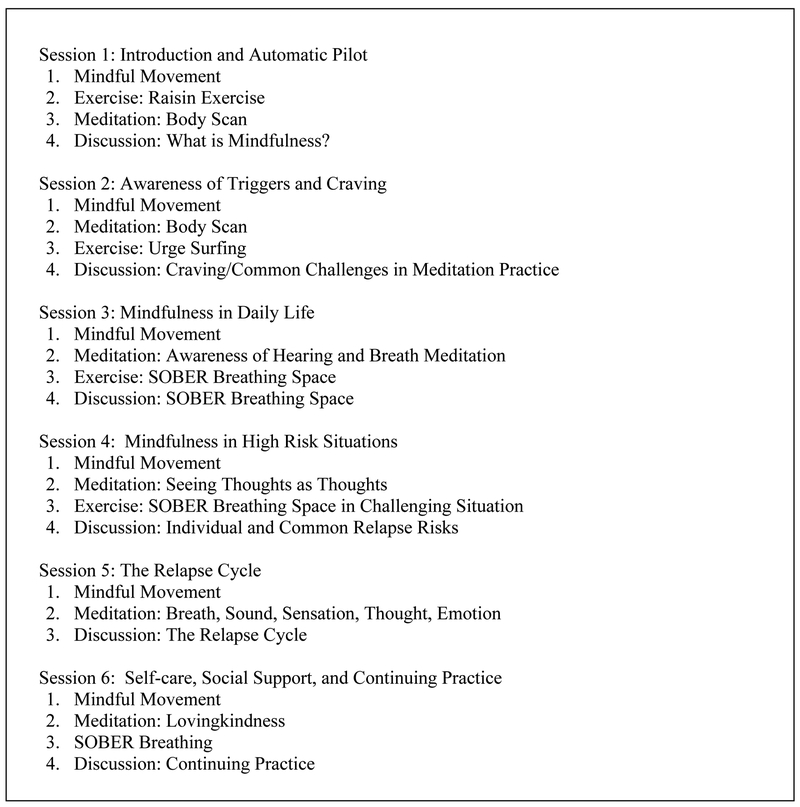
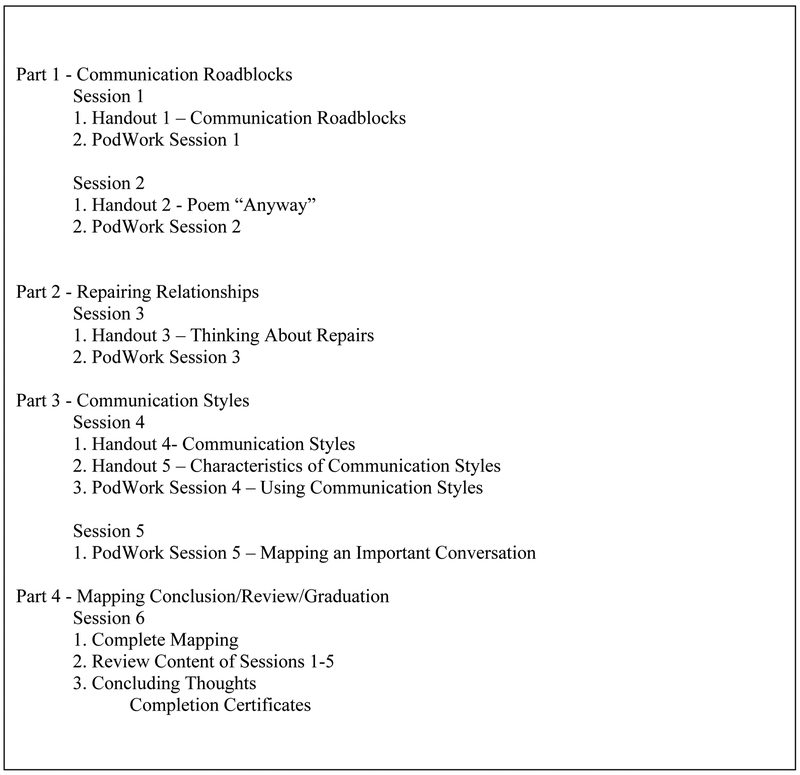
Methods: We enrolled successive cohorts of incarcerated men participating in a drug treatment program in a large urban jail (n = 189) into six weekly sessions of either MBRP or an comparison communication skills intervention, between 2013 and 2015. MBRP was delivered by a culturally competent African-American trainer. Pre- and post-test measures included mindfulness, anxiety, posttraumatic stress disorder (PTSD), and drug craving.
Results: At baseline, measures of mindfulness were significantly inversely correlated with anxiety, PTSD symptoms and drug cravings. Anxiety, PTSD symptoms and cravings declined significantly in both treatment arms, and mindfulness increased. Comparison of the two study arms using maximum likelihood estimation suggested a small but significantly greater increase in mindfulness in the treatment arm. Conclusions/Importance. An attention control trial of a mindfulness intervention, delivered by a culturally competent trainer, is feasible in a jail setting.
Keywords: Mindfulness; correctional treatment; meditation; relapse prevention; yoga.
Figures
References
-
- Amaro H (2014). Implementing Mindfulness-Based Relapse Prevention in diverse populations: Challenges and future directions. Substance Use and Misuse 49:612–616. - PubMed
-
- Amaro H, Spear S, Vallejo Z, Conron K, Black D (2014) Feasibility, acceptability, and preliminary outcomes of a mindfulness-based relapse prevention intervention for culturally-diverse, low-income women in substance use disorder treatment. Substance Use and Misuse. 49(5). 547–559. - PubMed
-
- Auty KM, Cope A, & Liebling A (2017). A systematic review and meta-analysis of yoga and mindfulness meditation in prison: Effects on psychological well-being and behavioural functioning. Journal of Offender Therapy and Comparative Criminology 61: 689–710. - PubMed
-
- Beck AT, Epstein N, Brown G, & Steer RA (1988). An inventory for measuring clinical anxiety: Psychometric properties. Journal of Consulting and Clinical Psychology 56: 893–897. - PubMed
-
- Blanchard EB, Jones-Alexander J, Buckley TC, & Forneris CA (1996). Psychometric properties of the PTSD Checklist (PCL). Behaviour Research and Therapy, 34, 8, 669–73. - PubMed
Publication types
MeSH terms
Grants and funding
LinkOut - more resources
Full Text Sources
Medical
