


Genome-wide associations for benign prostatic hyperplasia reveal a genetic correlation with serum levels of PSA
- PMID: 30410027
- PMCID: PMC6224563
- DOI: 10.1038/s41467-018-06920-9
Genome-wide associations for benign prostatic hyperplasia reveal a genetic correlation with serum levels of PSA
Abstract
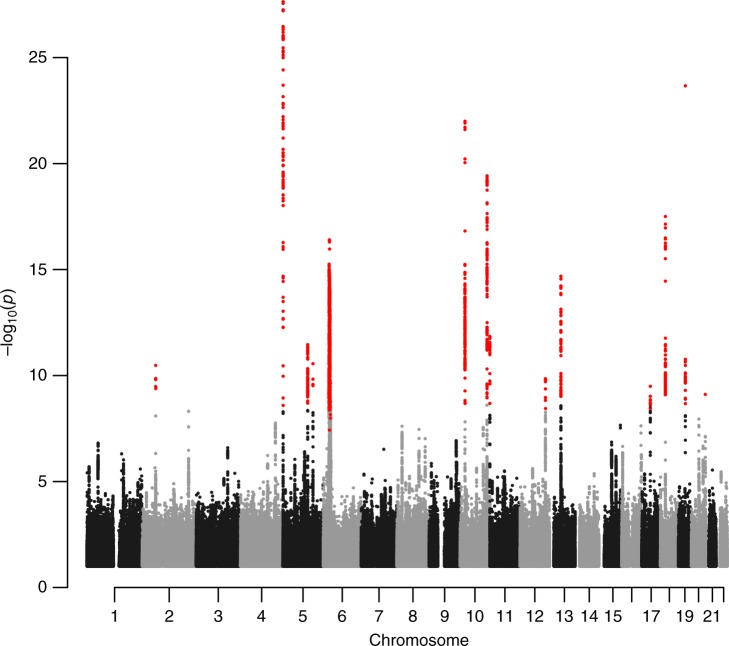
Benign prostatic hyperplasia and associated lower urinary tract symptoms (BPH/LUTS) are common conditions affecting the majority of elderly males. Here we report the results of a genome-wide association study of symptomatic BPH/LUTS in 20,621 patients and 280,541 controls of European ancestry, from Iceland and the UK. We discovered 23 genome-wide significant variants, located at 14 loci. There is little or no overlap between the BPH/LUTS variants and published prostate cancer risk variants. However, 15 of the variants reported here also associate with serum levels of prostate specific antigen (PSA) (at a Bonferroni corrected P < 0.0022). Furthermore, there is a strong genetic correlation, rg = 0.77 (P = 2.6 × 10⁻¹¹), between PSA and BPH/LUTS, and one standard deviation increase in a polygenic risk score (PRS) for BPH/LUTS increases PSA levels by 12.9% (P = 1.6×10-55). These results shed a light on the genetic background of BPH/LUTS and its substantial influence on PSA levels.
Conflict of interest statement
The authors that are affiliated with deCODE are employees of deCODE genetics/Amgen are employees of deCODE genetics/AMGEN. The remaining authors declare no competing interests.
Figures
References
-
- Calais Da Silva F, et al. Relative importance of sexuality and quality of life in patients with prostatic symptoms. Results Int. Study Eur. Urol. 1997;31:272–280. - PubMed
Publication types
MeSH terms
Substances
LinkOut - more resources
Full Text Sources
Medical
Research Materials
Miscellaneous
