


Association of sleep duration with metabolic syndrome and its components in children and adolescents; a propensity score-matched analysis: the CASPIAN-V study
- PMID: 30410582
- PMCID: PMC6215637
- DOI: 10.1186/s13098-018-0381-y
Association of sleep duration with metabolic syndrome and its components in children and adolescents; a propensity score-matched analysis: the CASPIAN-V study
Abstract
Objective: This study aims to evaluate the association of sleep duration with metabolic syndrome (MetS) and its components in a pediatric population.
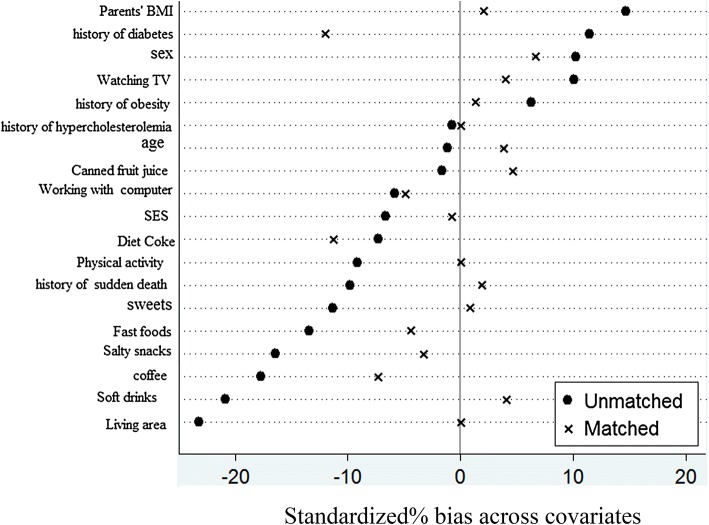
Methods: This multi-centric cross-sectional study was conducted in 2015 in 30 provinces of Iran. Participants consisted of 4200 school students aged 7-18 years, studied in a national school-based surveillance program (CASPIAN-V). Physical examinations and laboratory tests were performed using standard protocols. The analysis was conducted based on the propensity score matching and conditional logistic regression was used to evaluate the association of short sleep (less than 8 h a day) and the onset of sleep with MetS and its components. Results of conditional logistic regression was reported as odds ratios (OR) and 95% confidence intervals (CI).
Results: Overall, 3843 of participants completed the survey (response rate: 91.5%). Their mean (SD) age was 12.3 (3.2) years and 50.6% were boys. In the multivariate model, individuals who slept less than 8 h a day had significantly higher odds of MetS (OR 2.05, 95% CI 1.19-3.63) and high blood pressure (BP) (OR 1.46, 95% CI 1.04-2.06). Association between short sleep duration with other MetS components (including abdominal obesity, hypertriglyceridemia, hyperglycemia, and low levels of high-density lipoprotein-cholesterol was not statistically significant (P > 0.05). Moreover, association between the onset of sleep with MetS and its components was not statistically significant (P > 0.05).
Conclusion: Short sleep duration is associated with increased risk of MetS and high BP in children and adolescents. The clinical impact of current findings should be assessed in future longitudinal studies.
Keywords: Adolescents; Cardiovascular risk factors; Children; Metabolic syndrome; Sleep duration.
Figures
References
-
- Sobhani S, Asayesh H, Sharifi F, Djalalinia S, Baradaran HR, Arzaghi SM, Mansourian M, Rezapoor A, Ansari H, Masoud MP, Qorbani M. Prevalence of diabetic peripheral neuropathy in Iran: a systematic review and meta-analysis. J Diabetes Metab Disord. 2014;13(1):97. doi: 10.1186/s40200-014-0097-y. - DOI - PMC - PubMed
LinkOut - more resources
Full Text Sources
Molecular Biology Databases
