


Pisa Syndrome in Parkinson's Disease: Evidence for Bilateral Vestibulospinal Dysfunction
- PMID: 30410718
- PMCID: PMC6205319
- DOI: 10.1155/2018/8673486
Pisa Syndrome in Parkinson's Disease: Evidence for Bilateral Vestibulospinal Dysfunction
Abstract
Introduction: Pisa syndrome (PS) is a postural complication of Parkinson's disease (PD). Yet, its pathophysiology remains unclear, although a multifactorial component is probable. Cervical vestibular evoked myogenic potentials (cVEMPs) explore vestibulospinal pathway, but they have not been measured yet in PD patients with PS (PDPS) to assess a potential vestibular impairment.
Materials and methods: We enrolled 15 PD patients, 15 PDPS patients, and 30 healthy controls (HCs). They underwent neurological examination and were examined with Unified Parkinson's Disease Rating Scale II-III (UPDRSII-III), audiovestibular workup, and cVEMP recordings. Data were analysed with Chi-square, one-way ANOVA, multinomial regression, nonparametric, and Spearman's tests.
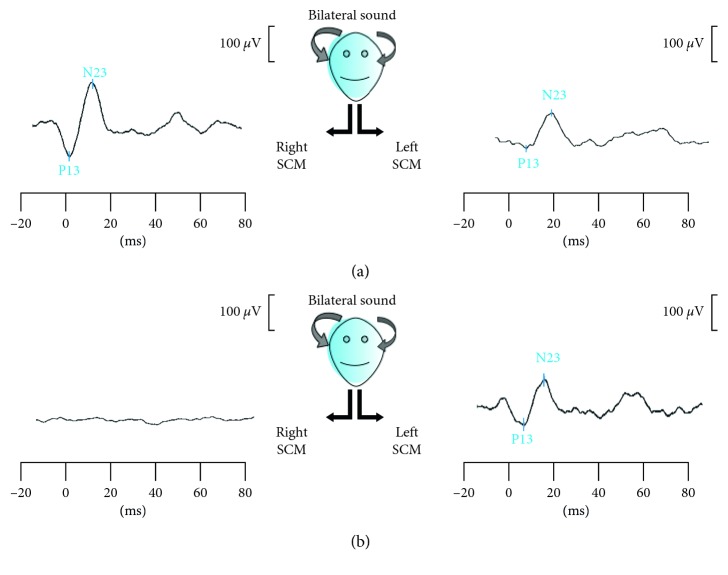
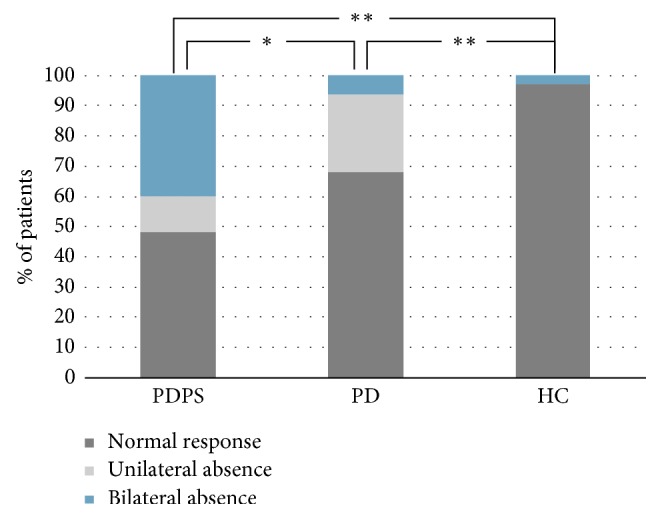
Results: cVEMPs were significantly impaired in both PD and PDPS compared with HCs. PDPS exhibited more severe cVEMP abnormalities with prevalent bilateral loss of potentials, compared with the PD group, in which a prevalent unilateral loss was instead observed. No clinical-neurophysiological correlations emerged.
Conclusions: Differently from HC, cVEMPs are altered in PD. Severity of cVEMPs alterations increases from PD without PS to PDPS, suggesting an involvement of vestibulospinal pathway in the pathophysiology of PS. Our results provide evidence for a significant impairment of cVEMPs in PDPS patients and encourage further studies to test validity of cVEMPs as diagnostic and prognostic biomarkers of PD progression.
Figures
References
LinkOut - more resources
Full Text Sources
