Review
. 2018 Nov 1:5:28.
doi: 10.1186/s40662-018-0122-1. eCollection 2018.

Cellular therapy of the corneal stroma: a new type of corneal surgery for keratoconus and corneal dystrophies

Affiliations
Review

Cellular therapy of the corneal stroma: a new type of corneal surgery for keratoconus and corneal dystrophies

Jorge L Alió Del Barrio et al. Eye Vis (Lond). .

Abstract

Cellular therapy of the corneal stroma, with either ocular or extraocular stem cells, has been gaining a lot of interest over the last decade. Multiple publications from different research groups are showing its potential benefits in relation to its capacity to improve or alleviate corneal scars, improve corneal transparency in metabolic diseases by enhancing the catabolism of the accumulated molecules, generate new organized collagen within the host stroma, and its immunosuppressive and immunomodulatory properties. Autologous extraocular stem cells do not require a healthy contralateral eye and they do not involve any ophthalmic procedures for their isolation. Mesenchymal stem cells have been the most widely assayed and have the best potential to differentiate into functional adult keratocytes in vivo and in vitro. While embryonic stem cells have been partially abandoned due to ethical implications, the discovery of the induced pluripotent stem cells (iPSC) has opened a new and very promising field for future research as they are pluripotent cells with the capacity to theoretically differentiate into any cell type, with the special advantage that they are obtained from adult differentiated cells. Cellular delivery into the corneal stroma has been experimentally assayed in vivo in multiple ways: systemic versus local injections with or without a carrier. Encouraging preliminary human clinical data is already available although still very limited, and further research is necessary in order to consolidate the clinical applications of this novel therapeutic line.

Keywords: Cellular therapy; Cornea; Corneal stroma; Corneal transplant; Decellularized cornea; MSC; Mesenchymal stem cells; Regenerative medicine; Stem cells.


Conflict of interest statement

The authors declare that they have no competing interests.

Figures
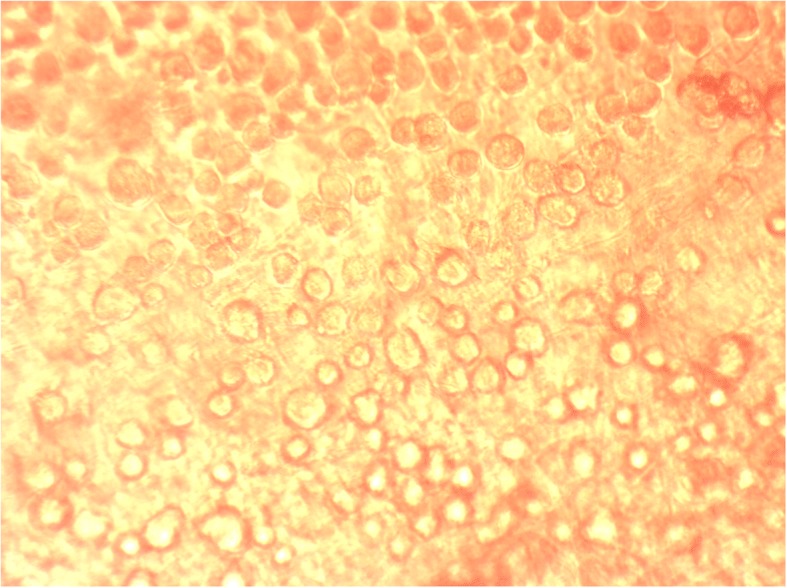
Fig. 1
Fig. 1
Microscopic appearance (phase-contrast photograph) of human ADASCs (10× magnification)
Fig. 2
Fig. 2
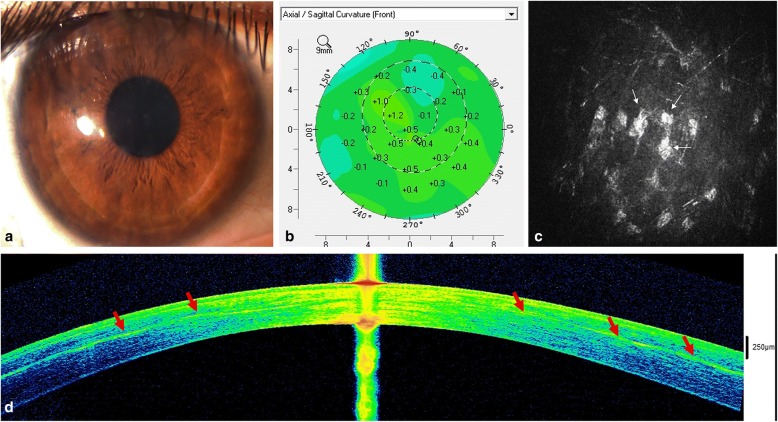
Autologous h-ADASC corneal stroma implantation for advanced keratoconus. a) Slit lamp picture one year after the procedure; b) Topographic changes (Pentacam) between preop and 12 months after surgery. Observe the stability of the keratometric parameters; c) Corneal confocal biomicroscopy pictures at the surgical plane in the first postoperative month. Stem cell survival is confirmed by the presence of cells showing a more rounded morphology (white arrows) (image corresponds to an area of 100 × 100 μm); d) AS-OCT picture 1 year postoperatively. Note the patched hyper-reflective areas (red arrows) at the level of the stromal pocket compatible with areas of new collagen production
Fig. 3
Fig. 3
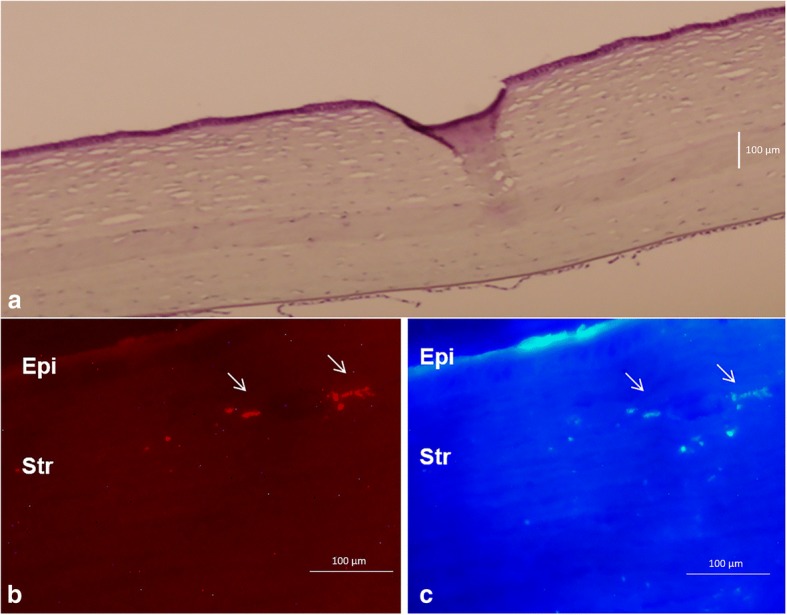
Corneal stroma enhancement with decellularized human corneal stroma with h-ADASC recellularization in the rabbit animal model. a Hematoxylin-eosin staining of a rabbit cornea with an implanted graft of decellularized human corneal stroma with h-ADASC colonization. (magnification 200×); b) Human cells (arrows), labelled with CM-DiI, around and inside the implant confirming the presence of living human cells inside the rabbit corneal stroma; c) Same section showing human keratocan and their eventual differentiation into human keratocytes (arrows) (magnification 400×); Abbreviations: Epi: epithelium; Str: stroma
Fig. 4
Fig. 4
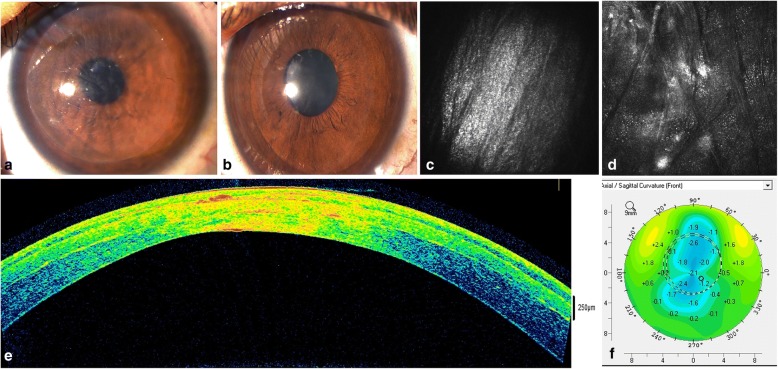
Corneal stroma enhancement with decellularized human corneal stroma with or without autologous h-ADASC recellularization. a-b Slit lamp pictures 1 week (A) and 3 months (B) after surgery. Observe the complete restoration of corneal transparency; c) Corneal confocal biomicroscopy picture. The implanted lamina showed a complete acellular pattern 3 months after surgery; d) Recellularization signs of the implanted lamina 12 months after surgery (images correspond to an area of 100 × 100 μm); e) AS-OCT image one year after corneal stroma enhancement; f) Topographic changes between preop and 12 months after surgery. Observe the significant flattening of the keratometry

References

    1. De Miguel MP, Casaroli-Marano RP, Nieto-Nicolau N, et al. Frontiers in Regenerative Medicine for Cornea and Ocular Surface. In: Rahman A, Anjum S, et al., editors. Frontiers in Stem Cell and Regenerative Medicine Research. 1. PA: Bentham e-Books; 2015. pp. 92–138.
    1. Ruberti JW, Zieske JD. Prelude to corneal tissue engineering—gaining control of collagen organization. Prog Retin Eye Res. 2008;27:549–577. doi: 10.1016/j.preteyeres.2008.08.001. - DOI - PMC - PubMed
    1. Isaacson A, Swioklo S, Connon CJ. 3D bioprinting of a corneal stroma equivalent. Exp Eye Res. 2018;173:188–193. doi: 10.1016/j.exer.2018.05.010. - DOI - PMC - PubMed
    1. Arnalich-Montiel F, Pastor S, Blazquez-Martinez A, Fernandez-Delgado J, Nistal M, Alio JL, et al. Adipose-derived stem cells are a source for cell therapy of the corneal stroma. Stem Cells. 2008;26:570–579. doi: 10.1634/stemcells.2007-0653. - DOI - PubMed
    1. Alió del Barrio JL, Chiesa M, Gallego Ferrer G, Garagorri N, Briz N, Fernandez-Delgado J, et al. Biointegration of corneal macroporous membranes based on poly(ethyl acrylate) copolymers in an experimental animal model. J Biomed Mater Res A. 2015;103:1106–1118. doi: 10.1002/jbm.a.35249. - DOI - PubMed

LinkOut - more resources