


Oral Anticoagulation in Patients With End-Stage Kidney Disease on Dialysis and Atrial Fibrillation
- PMID: 30413255
- PMCID: PMC6233322
- DOI: 10.1016/j.semnephrol.2018.08.006
Oral Anticoagulation in Patients With End-Stage Kidney Disease on Dialysis and Atrial Fibrillation
Abstract
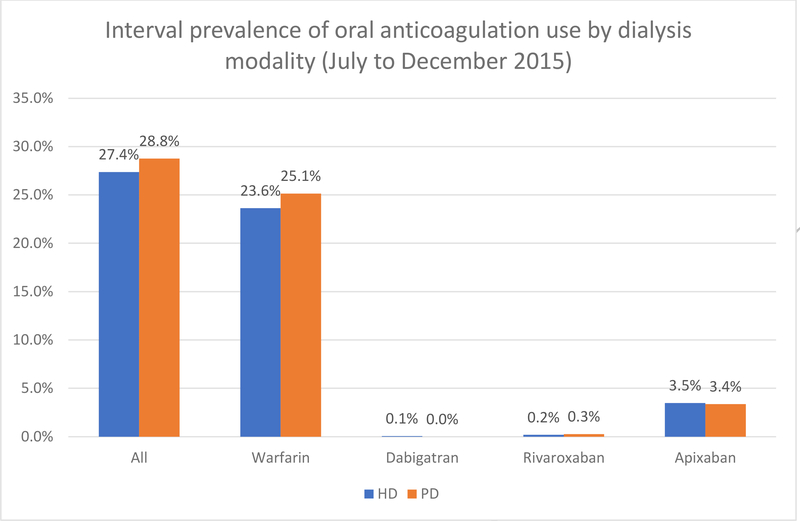
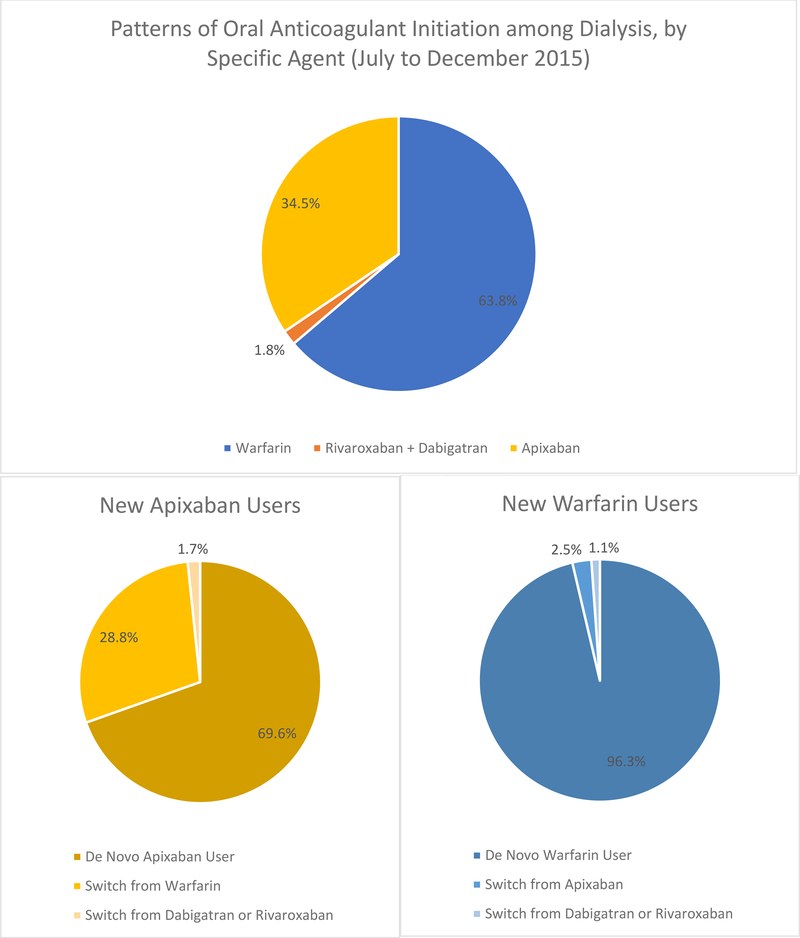
Patients with end-stage kidney disease (ESKD) have an elevated incidence of atrial fibrillation (AF) and are at increased risk for thromboembolic events. However, these patients are also at increased risk for bleeding and it is unclear whether they benefit from an oral anticoagulant. Point prevalent on July 1, 2015, only ~28% of dialysis patients with AF were on oral anticoagulation. Warfarin was the most commonly used oral anticoagulant, followed by apixaban, while dabigatran and rivaroxaban were rarely used. This article reviews the current evidence regarding each oral anticoagulant especially as they relate to patients with ESKD.
Keywords: Hemodialysis; arrhythmia; drug safety; outcomes; peritoneal dialysis.
Copyright © 2018. Published by Elsevier Inc.
Figures
References
-
- January CT, Wann LS, Alpert JS, et al. 2014 AHA/ACC/HRS guideline for the management of patients with atrial fibrillation: a report of the American College of Cardiology/American Heart Association Task Force on Practice Guidelines and the Heart Rhythm Society. J Am Coll Cardiol 2014;64:e1–76. - PubMed
-
- Hart RG, Pearce LA, Aguilar MI. Meta-analysis: antithrombotic therapy to prevent stroke in patients who have nonvalvular atrial fibrillation. Ann Intern Med 2007;146:857–67. - PubMed
-
- Hogg K, Weitz JI. Blood Coagulation and Anticoagulant, Fibrinolytic, and Antiplatelet Drugs In: Brunton LL, Hilal-Dandan R, Knollmann BC, eds. Goodman & Gilman’s: The Pharmacological Basis of Therapeutics, 13e . New York, NY: McGraw-Hill Education; 2017.
Publication types
MeSH terms
Substances
Grants and funding
LinkOut - more resources
Full Text Sources
Medical
