


Effects of Cage Enrichment on Behavior, Welfare and Outcome Variability in Female Mice
- PMID: 30416435
- PMCID: PMC6212514
- DOI: 10.3389/fnbeh.2018.00232
Effects of Cage Enrichment on Behavior, Welfare and Outcome Variability in Female Mice
Abstract
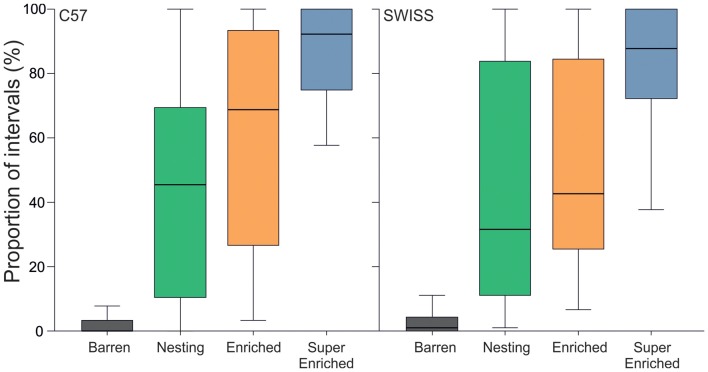
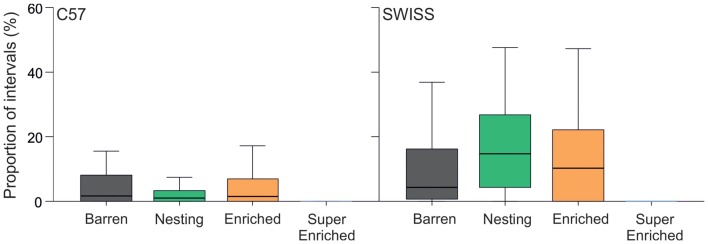
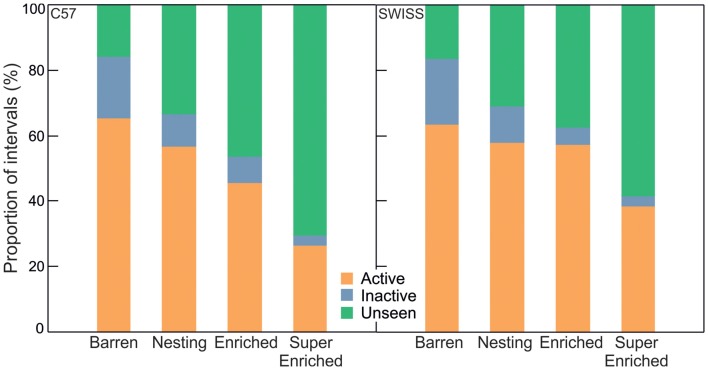
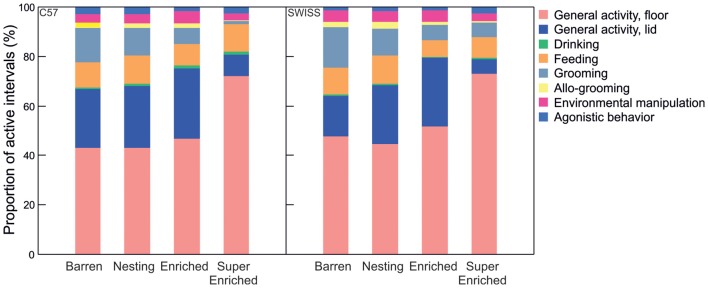
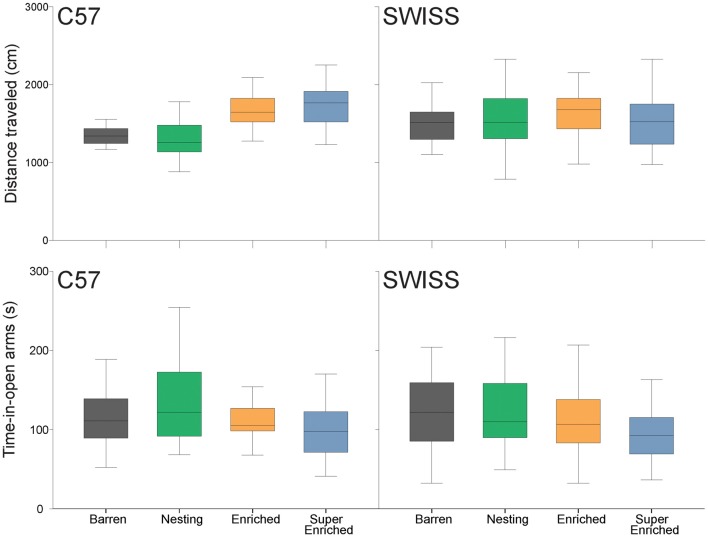
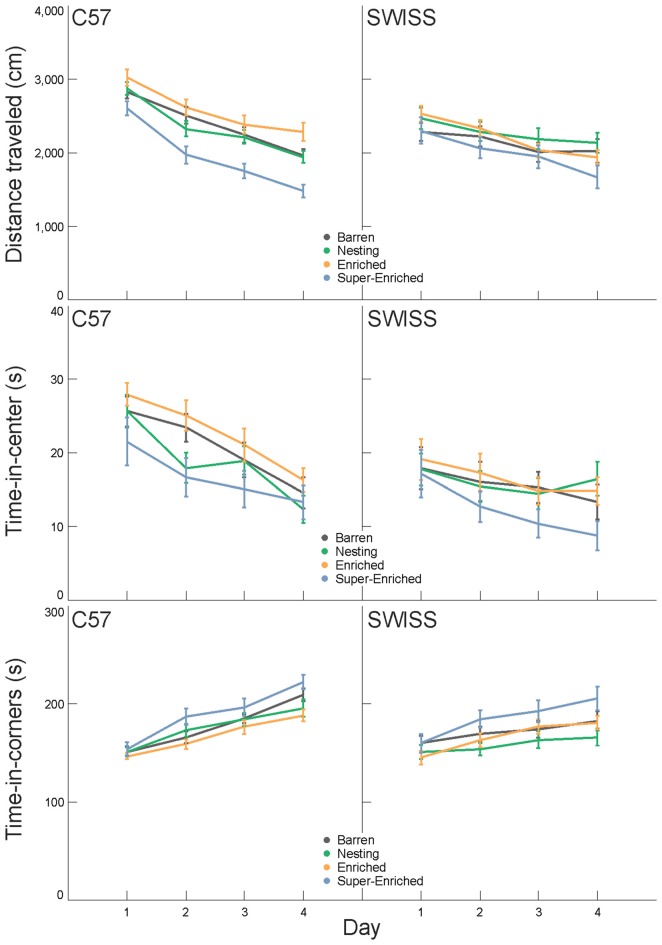
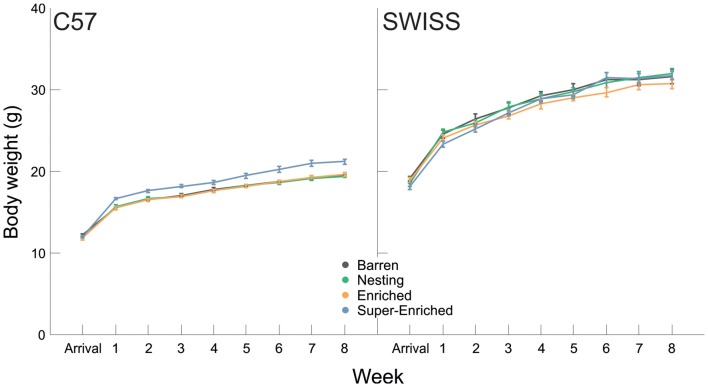
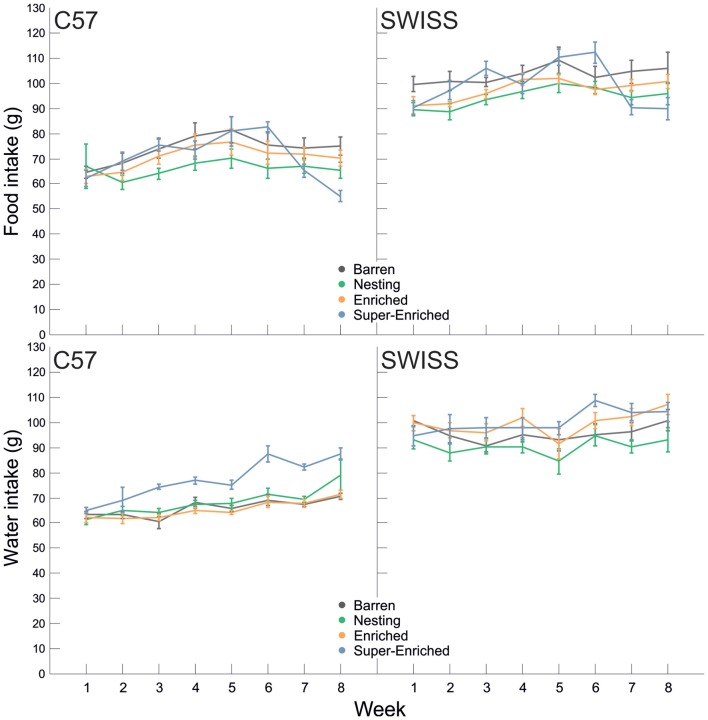
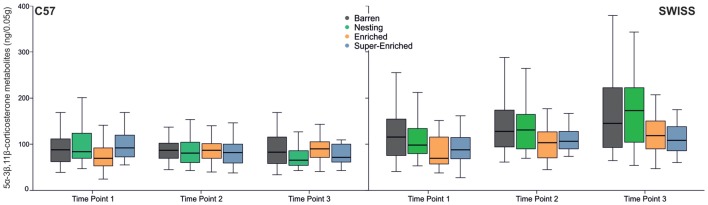
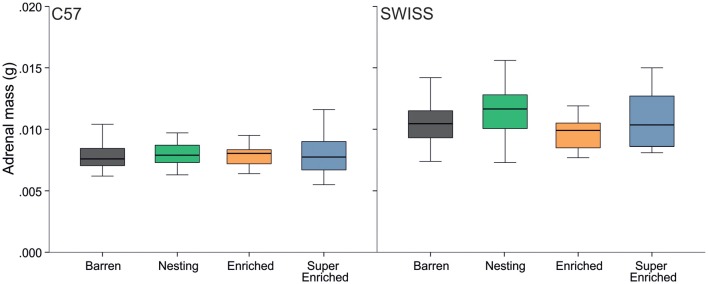
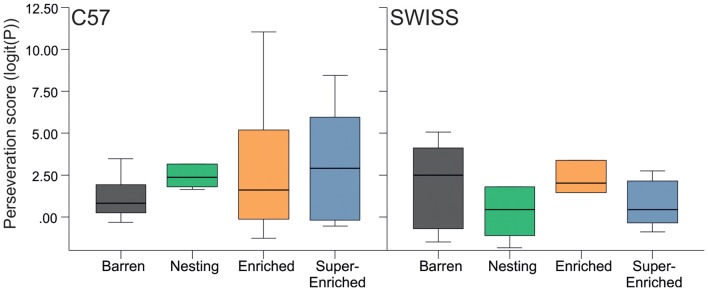
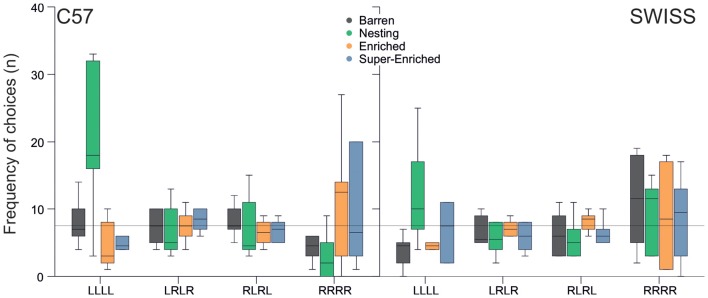
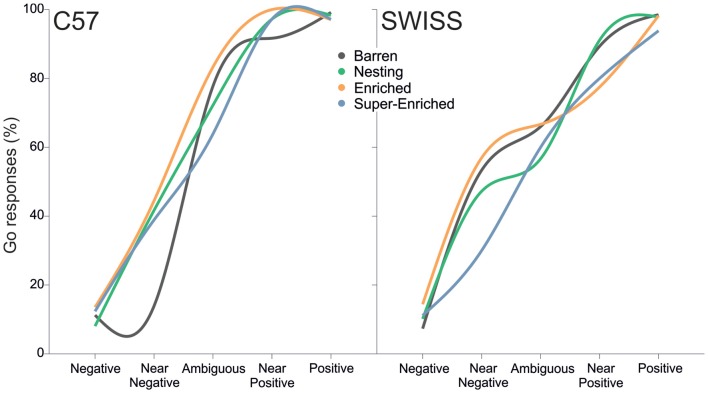
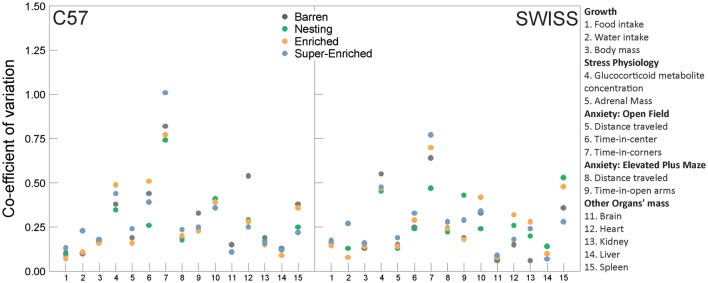
The manner in which laboratory rodents are housed is driven by economics (minimal use of space and resources), ergonomics (ease of handling and visibility of animals), hygiene, and standardization (reduction of variation). This has resulted in housing conditions that lack sensory and motor stimulation and restrict the expression of species-typical behavior. In mice, such housing conditions have been associated with indicators of impaired welfare, including abnormal repetitive behavior (stereotypies, compulsive behavior), enhanced anxiety and stress reactivity, and thermal stress. However, due to concerns that more complex environmental conditions might increase variation in experimental results, there has been considerable resistance to the implementation of environmental enrichment beyond the provision of nesting material. Here, using 96 C57BL/6 and SWISS female mice, respectively, we systematically varied environmental enrichment across four levels spanning the range of common enrichment strategies: (1) bedding alone; (2) bedding + nesting material; (3) deeper bedding + nesting material + shelter + increased vertical space; and (4) semi-naturalistic conditions, including weekly changes of enrichment items. We studied how these different forms of environmental enrichment affected measures of animal welfare, including home-cage behavior (time-budget and stereotypic behavior), anxiety (open field behavior, elevated plus-maze behavior), growth (food and water intake, body mass), stress physiology (glucocorticoid metabolites in fecal boluses and adrenal mass), brain function (recurrent perseveration in a two-choice guessing task) and emotional valence (judgment bias). Our results highlight the difficulty in making general recommendations across common strains of mice and for selecting enrichment strategies within specific strains. Overall, the greatest benefit was observed in animals housed with the greatest degree of enrichment. Thus, in the super-enriched housing condition, stereotypic behavior, behavioral measures of anxiety, growth and stress physiology varied in a manner consistent with improved animal welfare compared to the other housing conditions with less enrichment. Similar to other studies, we found no evidence, in the measures assessed here, that environmental enrichment increased variation in experimental results.
Keywords: animal welfare; behavioral phenotypes; environmental enrichment; mice; variation.
Figures

Comment in
-
Enrichment and outcomes in female lab mice.Lab Anim (NY). 2019 Feb;48(2):53-54. doi: 10.1038/s41684-018-0220-7. Lab Anim (NY). 2019. PMID: 30643276 No abstract available.
References
-
- Akre A. K., Bakken M., Hovland A. L., Palme R., Mason G. (2011). Clustered environmental enrichments induce more aggression and stereotypic behaviour than do dispersed enrichments in female mice. Appl. Anim. Behav. Sci. 131, 145–152. 10.1016/j.applanim.2011.01.010 - DOI
