Review
. 2018 Nov 1;10(1):e2018061.
doi: 10.4084/MJHID.2018.061. eCollection 2018.

Human Herpesvirus 8 and Lymphoproliferative Disorders

Affiliations
Review

Human Herpesvirus 8 and Lymphoproliferative Disorders

Maria Luisa Calabrò et al. Mediterr J Hematol Infect Dis. .

Abstract

The spectrum of lymphoproliferative disorders linked to human herpesvirus 8 (HHV-8) infection has constantly been increasing since the discovery of its first etiologic association with primary effusion lymphoma (PEL). PEL is a rapidly progressing non-Hodgkin's B-cell lymphoma that develops in body cavities in an effusional form. With the increase in the overall survival of PEL patients, as well as the introduction of HHV-8 surveillance in immunocompromised patients, the extracavitary, solid counterpart of PEL was later identified. Moreover, virtually all plasmablastic variants of multicentric Castleman's disease (MCD) developing in HIV-1-infected individuals harbor HHV-8, providing a strong etiologic link between MCD and this oncogenic herpesvirus. Two other pathologic conditions develop in HIV-1-infected persons concomitantly with MCD: MCD with plasmablastic clusters and HHV-8-positive diffuse large B-cell lymphoma not otherwise specified (HHV-8+ DLBCL NOS), the first likely representing an intermediate stage preceding the full neoplastic form. MCD in leukemic phase has also been described, albeit much less commonly. The germinotropic lymphoproliferative disorder (GLPD) may resemble extracavitary PEL, but develops in immune competent HHV8-infected individuals, and, unlike the other disorders, it responds well to conventional therapies. Almost all HHV-8-mediated lymphoproliferative disorders are the result of an interaction between HHV-8 infection and a dysregulated immunological system, leading to the formation of inflammatory niches in which B cells, at different developmental stages, are infected, proliferate and may eventually shift from a polyclonal state to a monoclonal/neoplastic disorder. Herein, we describe the association between HHV-8 and lymphoproliferative disorders and highlight the predominant distinctive features of each disease.

Keywords: Germinotropic lymphoproliferative disorder; HHV-8; Human herpesvirus; KSHV; Kaposi’s sarcoma-associated herpesvirus; Lymphoproliferative disease; Multicentric Castleman’s disease; Primary effusion lymphoma.


Conflict of interest statement

Competing interests: The authors have declared that no competing interests exist.

Figures
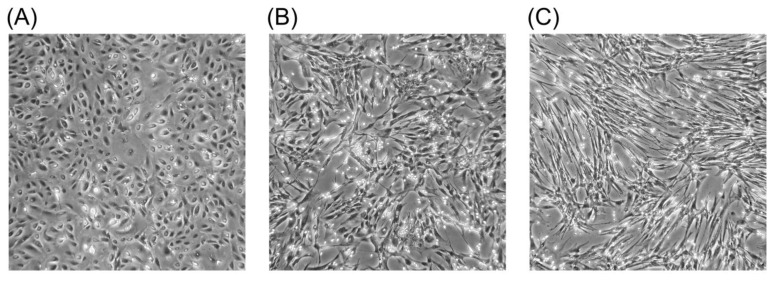
Figure 1
Figure 1. PEL cells induce a myofibroblastic morphology in mesothelial cells
Phase-contrast images of a primary culture of normal human mesothelial cells (A) showing a cobblestone-like morphology. Transition to a myofibroblastic morphology, characterized by elongated, spindle shaped cells, and a crisscross pattern of growth, is induced after co-culture with PEL-derived cell lines. Mesothelial cells are shown after 4 (B) and 8 (C) days of co-culture with CRO-AP/2 cells. This morphological change is consistent with the induction of epithelial-mesenchymal transition by the TGF-beta released by PEL cells.
Figure 2
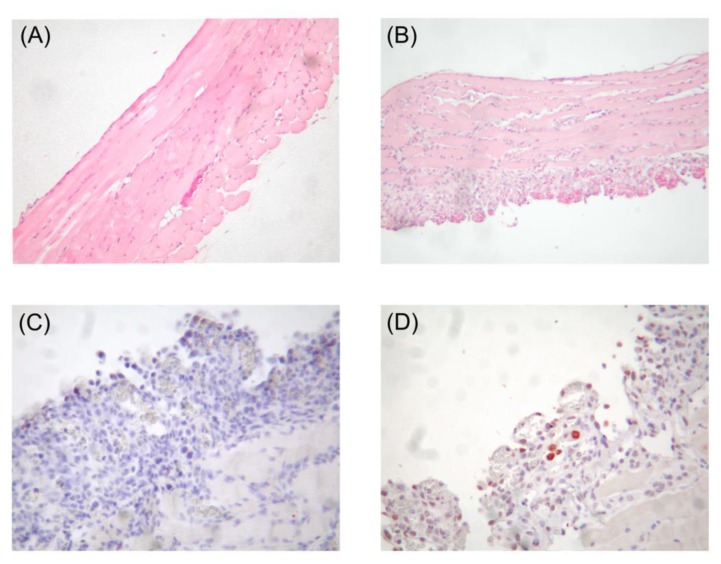
Figure 2. Mesothelium response in a PEL preclinical model. (A–D)
Histological and immunohistochemical staining of serosal membranes during in vivo growth of an ascitis induced by intraperitoneal injection of a PEL-derived cell line into a SCID mouse (SCID/PEL mouse model). Normal serosal membranes are characterized by a uniform and flat monolayer of mesothelial cells, as documented by haematoxylin/eosin staining of the peritoneum in a control mouse (A, magnification 100X). During intracavitary development of prominent ascites, histological examination of the mesothelium response shows a hyperplastic process, with discontinuity of the mesothelial surface and progressive thickening of the serosal membranes (B, diaphragm of a SCID/PEL mouse sacrificed at 12 days, original magnification 100X), with new enlarged capillaries containing erythrocytes and granulation tissue. Thickening of serosal membranes with an inflammatory process and neoangiogenesis is indicative of fibrosis. Immunostaining with an HHV-8-specific anti-latency-associated nuclear antigen (LANA) antibody shows the infiltration of PEL cells in the submesothelial region (D), suggesting that PEL cells, through the discontinuity of the mesothelial lining, may reach extracavitary sites and generate solid masses (C, negative staining control of the diaphragm of a SCID/PEL mice; D, immunohistochemical staining with anti-LANA antibody. Original magnification ×200).

References

    1. Chang Y, Cesarman E, Pessin MS, Lee F, Culpepper J, Knowles DM, Moore PS. Identification of herpesvirus-like DNA sequences in AIDS-associated Kaposi’s sarcoma. Science. 1994;266:1865–9. doi: 10.1126/science.7997879. - DOI - PubMed
    1. Lisitsyn N, Lisitsyn N, Wigler M. Cloning the differences between two complex genomes. Science. 1993;259:946–51. doi: 10.1126/science.8438152. - DOI - PubMed
    1. Moore PS, Chang Y. Detection of herpesvirus-like DNA sequences in Kaposi’s sarcoma in patients with and those without HIV infection. N Engl J Med. 1995;332:1181–5. doi: 10.1056/NEJM199505043321801. - DOI - PubMed
    1. Huang YQ, Li JJ, Kaplan MH, Poiesz B, Katabira E, Zhang WC, Feiner D, Friedman-Kien AE. Human herpesvirus-like nucleic acid in various forms of Kaposi’s sarcoma. Lancet. 1995;345:759–61. doi: 10.1016/S0140-6736(95)90641-X. - DOI - PubMed
    1. Dupin N, Grandadam M, Calvez V, Gorin I, Aubin JT, Havard S, Lamy F, Leibowitch M, Huraux JM, Escande JP, et al. Herpesvirus-like DNA sequences in patients with Mediterranean Kaposi’s sarcoma. Lancet. 1995;345:761–2. doi: 10.1016/S0140-6736(95)90642-8. - DOI - PubMed